Asana, Pranayama, and Yoga Practice | Community and Family | Food for the Body | Gardening | Meditation
Signs Around Town (Excerpt)

Peace and light, E — Posted with WordPress for BlackBerry.
Discussion of physical aspects of yoga (on and off the mat)
Peace and light, E — Posted with WordPress for BlackBerry.
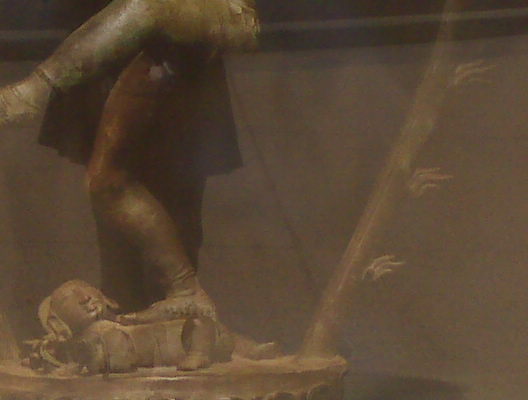
Peace and light, E — Posted with WordPress for BlackBerry.
Sometimes it is good to remind ourselves not to take things too seriously.

Peace and light, E — Posted with WordPress for BlackBerry.
Seeking
Illumination
In the depths,
I catch mySelf
In the mystery
Of reflection.
I invite you to ponder, dear yogins, why I have titled this “pratyabijna” and not “vimarsa.”

Peace and light, E — Posted with WordPress for BlackBerry.
Last month, Sianna Sherman taught a weekend workshop at Willow Street Yoga. At the beginning of one of the segments of the workshop, she talked about the story of the monkey god Hanuman and his leap to Lanka (he did this to rescue Sita, who had been abducted by her own demons. Sita sent Hanuman back to India without her, asking Hanuman where was Ram, but that’s a whole different thread in the Ramayana.)
The first demon Hanuman encountered was Mainaka, a golden mountain who rose up out of the sea. She gave Hanuman a place to rest. She was helper. But she was also demon in that she wanted Hanuman to stay and rest with her and to give up his journey. Some of the stories characterize Mainaka only as a helper, and not as a demon. If Hanuman had become stuck in the comfort Mainaka offered, though, and failed in his journey, she would have been for him the demon of complacency. The question Sianna left with us to consider about Mainaka was where have we been too comfortable? Where do we need to express gratitude and appreciation, but move on?
The second demon, Surasa, was a fierce water serpent who emerged from the water to swallow Hanuman up as he was flying over the ocean. To escape, he first tried making himself so big that she Surasa could not swallow him, but she just opened her mouth wider and wider, gnashing at him with her razor-sharp teeth. Hanuman escaped by then shrinking himself to the size of a dust mote and flying out from between Surasa’s teeth. Being able to make himself immense was one of the powers he needed to be able to fight the various demons, but he needed also to be willing and able to make himself small to complete the journey. He would have been stuck if he had not been capable of taking on different shapes and approaching things from different perspectives. Surasa may have tried to swallow him up, but she also taught him perspective. “Are there places where you could use more perspective?” asked Sianna.
The third demon , Sinhaka, at least according to some versions, tried to eat Hanuman’s shadow. Inseparable from his shadow, the only way to escape was to turn back to face and claim his shadow as his own to battle Sinhaka. Running away would have just kept Sinhaka champing at his tail and dragging him back from success. We have to recognize and face our shadows in order to be complete and to understand the full spectrum of being. We were invited to ask whether there were particular fears from which we were running.
What stayed with me, and has me still thinking about the workshop, was that the emphasis was on treating ourselves and the obstacles we face on and off the mat with compassion. We often give lip service in Western tantra to seeing the good or the necessary in our demons. For example, whereas classical yoga thinks desire needs to be eradicated, tantra recognizes both that we would not get out of bed in the morning without it and that desire is what can lead us to practice and seek spiritual connection. When we can truly look at our demons (both our own personal ones and those we see in both wider and more intimate relationships), our demons are not evidently nor necessarily to be slain or eschewed or to be seen as only malignant or pestilent. When we approach our own demons and those of others with true compassion, we open the possibility of change through deeper awareness, connection, and recognition of humanity.
Savasana–pose of the corpse, the pose of final relaxation, the pose without which no practice is fully complete– is both a very simple pose and one that is rather advanced.
Sometimes when I teach beginners I ask them what was the first Sanskrit word they learned. Usually they guess the word is “yoga.” The first Sanskrit pose name they get, though, and it doesn’t take more than a couple of classes is savasana. For most beginning the practice of yoga, the permission to stretch out on the back after an hour or more of new ways of engaging body, mind, and spirit is welcome indeed. This is particularly true for those who are overly busy and chronically sleep-deprived as are so many people I know.
What teachers often miss about savasana is that it can be very hard for some students. Injuries (chronic or episodic), tightness, or habitual misalignment (or expectations of how lying down should feel) make it challenging to be in the pose. The default can be to put supports under the knees or head without taking the time to recognize that it may be necessary to focus on and adjust the alignment before relaxing to see if ease can be found without props.
Other practitioners find it agitating to be asked to lie still for 5-10 minutes, because they are so used to being active all the time. Even if they can make their bodies still, their minds race around, and the idea of final relaxation seems anathema.
At the beginning,
savasana can be just stopping movement and enjoying letting go and relaxing.
But the pose is something much deeper than relaxing after a good workout. The pose of the corpse is not about being unmoving like a dead body, but about ceasing consciously acting and surrendering to the elemental vibration of universal being so that the inner fullness becomes indistinguishable from that which infuses all of the matter of the universe. As one gets more advanced, the alignment in the pose evidently becomes one of inner fullness and luminousity supporting the draping of the physical body. We practice going to earth and light, dissolving the constant awareness of our individuality.

Peace and light, E — Posted with WordPress for BlackBerry.
Honor your ancestors–both of blood and of teaching lineage (parampara). Yes, it is a critical element of the yoga practice, regardless of whether one practices in the guru tradition (I do not–more on that in coming weeks, I think).
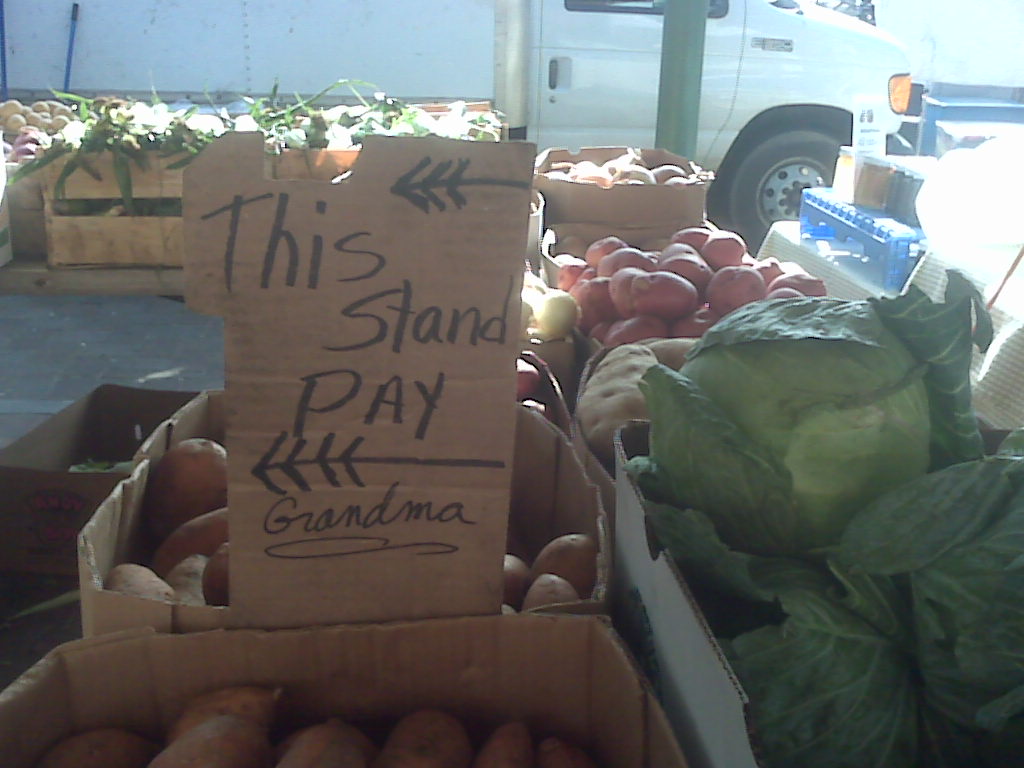
Peace and light, E — Posted with WordPress for BlackBerry.
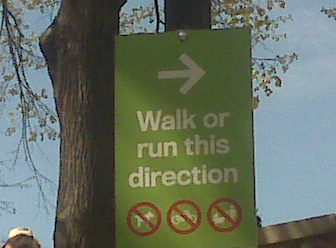
Peace and light, E — Posted with WordPress for BlackBerry.
How to think of this as an exhortation is a grammatical puzzle.
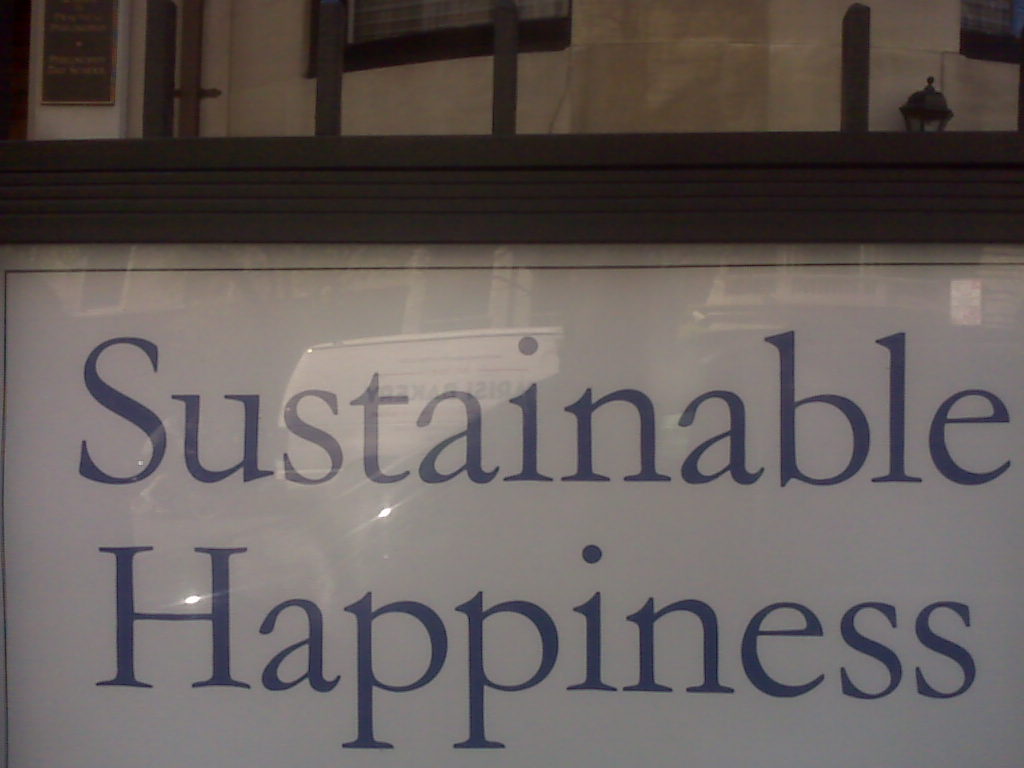
Peace and light, E — Posted with WordPress for BlackBerry.