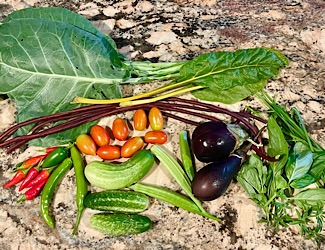
Avoid food-borne diseases, limit fossil fuel consumption, save money, have the joy of getting in the dirt, learn to balance preparation and planning with going with the flow, and have tastier food.
Still have a lawn? Put a few container beds on it. Live in an apartment? Grow some herbs on a windowsill.
When I was on the bus to go to Meeting for Worship, police officers boarded the bus and came up to young couple with an infant who had been sitting quietly and minding their own business. The police said they just wanted to talk and they also insisted they get off the bus because the police weren’t going to be holding up the bus. Even though the police wouldn’t answer why they were stopping them, the family got off the bus.
I managed to have the presence of mind to record the interaction, being obvious and also quietly in my seat. I held the phone horizontally, recorded the police, not those under scrutiny, etc.
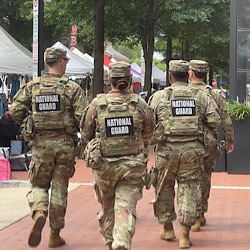
When the bus was moving towards the next stop, I saw National Guard walking briskly in the direction of where the police had been.
The challenge is how to be aware and alert, to be responsive, to help in the fight, and also remain lovingly present, to hold all present and impacted in the light.
I saw other clutches of National Guards throughout the residential parts of the city. I choose not to find my peace of mind by becoming inured to their ubiquitous presence.
Patanjali provides in the Yoga Sutras (2.32) that the second niyama, samtosha (contentment) is an ongoing practice. It is not something that we can expect to arise on its own and if not, lament its absence.
I feel hope, without which it would be hard to experience contentment, too, is something that requires steady practice.
My personal experience is that only thing that gives me hope when I am feeling despondent about the state of things is to do something, whether it is giving resources or time or connecting and expanding community.
This week, after having let it go for far too long long, I had my cooking knives professionally sharpened.
How often should I be getting them sharpened, I asked the expert. It depends was the response, along with the question how much time I used the knives. Professional chefs get them done every couple of weeks. I would need something less, but for the knives I use most often, more frequently than I have been doing.
Then I was offered this: a knife needs to be sharpened when it takes unnecessary effort to cut something with it.
Same guidance applies, I think, to living in balance. When work/activities are taking more and unnecessary effort than usual, it’s a sign we are run down and need some maintenance.
The other day I was visiting with a friend who finds themselves with sudden responsibilities that are complicated and challenging.
As is my general inclination, especially when talking with those who are around the age of children I might have had and who have asked for input in the past, I gave some suggestions for things to read and possible strategies for some aspects.
As the conversation continued, my friend mentioned the unnecessary quantity of unsolicited advice being offered. Oops, I thought, and checked to see if my suggestions had overstepped the mark.
They said what I offered was helpful and not like the advice that was troubling. I just offered techniques that might be helpful for navigating the circumstances more effectively. The unwelcome advice offered said what the outcome/choices should be.
I think about this fine balance and how that applies to sharing and leading practices.