-
-
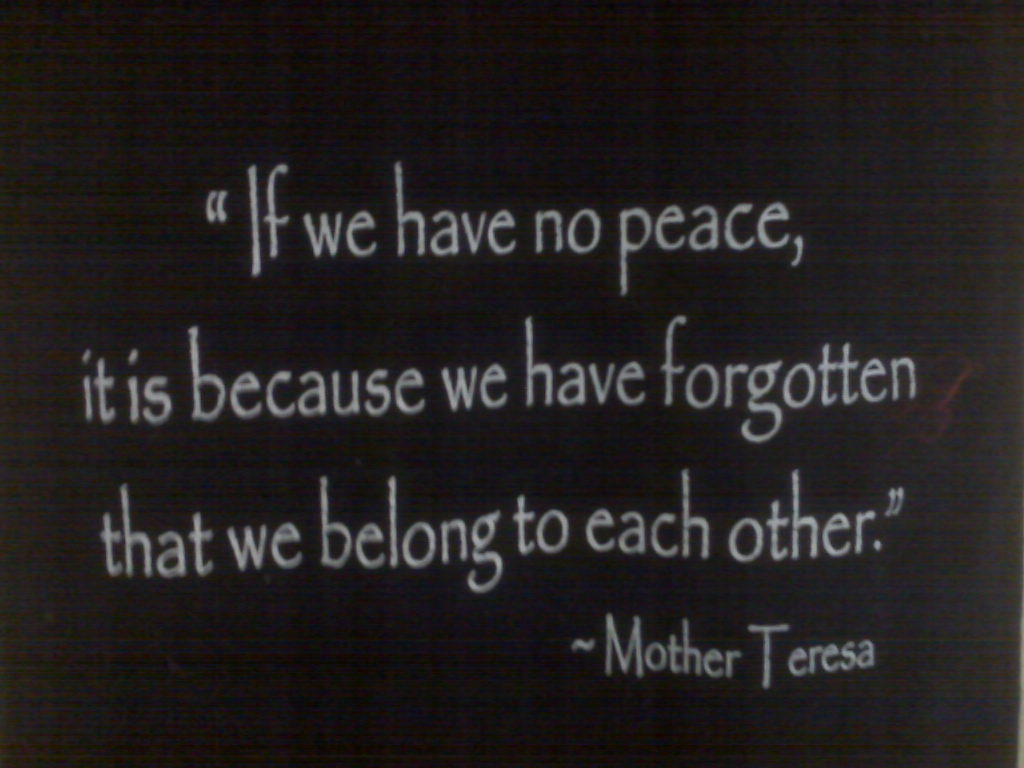
Found Exhortation That Raises More Questions Than It Answers
What do they mean by “God?”
Do they mean anyone’s “God” or just the signwriting collective’s “God?”
Do they extend the wishes of their notion of “God” only to those who believe in the same “God” or is this just meant to convey undifferentiated wishes of auspiciousness and love to all?
Inquiring minds want to know.Peace and light, E — Posted with WordPress for BlackBerry.
-
-
Found Exhortation (Tantric?)
Some systems of yoga describe the body as consisting of five sheaths or koshas. The outermost sheath is the annamaya kosha, literally the food body. Food, here, is anything we ingest with the five senses. Including sights and sounds. The tantrikas think of themselves as rasikas–ones who taste the very essence of life, who through the practices refine their senses seeking to be able to discern the divine in all being. All sense perception becomes a fully creative, artistic endeavor.
Peace and light, E — Posted with WordPress for BlackBerry.
-
-
Asana, Pranayama, and Yoga Practice | Community and Family | Food for the Mind (Yoga Philosophy, etc) | Meditation
Quote for the Day
My chosen reading for the train journey to New York and New Jersey to visit with friends and to attend a weekend workshop at Dig Yoga with Paul Muller-Ortega and Sianna Sherman is Mariana Caplan’s Eyes Wide Open.
I have my reasons to have reservations about some of what she says and advocates. I am finding the book interesting and not untimely reading, though, and fully agree with her caution: “To approach spiritual paths and practices with intelligent skepticism is advisable.” I would add to this statement that the discerning, questioning approach should not just be at first experience, but should be cultivated continuously and progressively more insightfully as explorations and relationships deepen.
Peace and light, E — Posted with WordPress for BlackBerry.
-
-
Art and Culture | Asana, Pranayama, and Yoga Practice | Food for the Mind (Yoga Philosophy, etc) | Meditation
Did You Ever Wonder…
The Hindu pantheon has a trinity in which Brahma is the creator, Vishnu is the preserver, and Shiva is the destroyer. Have you ever wondered why it is Shiva, the destroyer, and not Brahma, the creator, who is represented by the lingam–symbol of the progenitor?
Peace and light, E — Posted with WordPress for BlackBerry.
-
-
What Do You Think It Means?
Can you imagine looking at this photograph without ascribing to the image what you know of red and white stripes coupled with stars on a blue background and of a circle divided by lines in this particular pattern?
How much differently would an Indian Hindu look at a painting of an elephant than would an American voter in the weeks leading up to a Presidential election?
If you don’t know all the meanings carried by an icon, what message do you get from a picture of such icon? If you think it is anything other than a pretty picture, but think a meaning that is not its iconography are you just suffering from deluded ignorance?
Is knowledge binding (jnanam bandaha) or does it liberate?
Peace and light, E — Posted with WordPress for BlackBerry.