Unplanned and Exquisite Detour (Old Westbury Gardens)

Peace and light, E — Posted with WordPress for BlackBerry.
Peace and light, E — Posted with WordPress for BlackBerry.
Desiree Rumbaugh, in the afternoon break-out session on hip openers yesterday, referenced the earlier teachings at the gathering on love, and said with a giggle that her class was “hip openers for peace.”
She shared a story of a teacher having his students create pictures representing peace. He picked two images that best depicted peace. The first was a serene picture of a mirror lake in the mountains (not unlike the tantric yoga principle of using our practice to find in ourselves the mirror of divine spirit). The second was of a barren and craggy landscape with a stormy sky. In a corner of the painting, though, was a nest with a small bird singing. Amidst challenge and chaos, one being living peacefully and joyously. This is why we do yoga, suggested Desiree, to find our own place of peace amidst whatever chaos is life. Noting how challenging hip openers can be for body and mind, especially if our bodies feel tight, she said that the practice can be like the second picture. We want to learn how to feel calm and centered even when we are deeply challenging ourselves on the mat, so we can tap into that place when life gets harder than we think we can bear.
The technology she offered for finding peace in hip openers was not tricks for stretching, but rather to strengthen the core muscles so that the outer hips and the hamstrings do not need to clench to protect themselves. When the core is powerful (as John Friend would say, “adamantine”) then the outside can soften and be open to what comes. This principle, in my experience and as given by my teachers, holds equally true for facing life and the most challenging of yoga poses.
Peace and light, E — Posted with WordPress for BlackBerry.
Because when your teacher has intentionally placed a message where you can see it, the message is more received than it is found.

Peace and light, E — Posted with WordPress for BlackBerry.
In the health food store across the street from my friend Suzanne’s yoga studio in Saratoga Springs.

Peace and light, E — Posted with WordPress for BlackBerry.
The young woman sitting next to me on the train north from New York, who is impossibly tall and has lovely, strong features (i.e., is perfectly cast), is memorizing Lady Macbeth’s lines.
I had on my own lap print-outs of mantras that Paul Muller-Ortega has invited us to memorize as part of our continuing studies.
To enter the character of Lady Macbeth, one of the first steps is to memorize the lines, to know completely what she says and not just to hear it and appreciate it. Memorizing the lines is an essential part of the route to becoming Lady Macbeth.
Paul Muller-Ortega has suggested that the reason to memorize various mantras is not to acquire them, not to be able to demonstrate a superficial knowledge or skill, but to aid in the profound practice of
bhavana–deep contemplation at the heart level. It is not the fact of memorization, but the activity of memorizing. It is no accident that we call memorizing, “knowing by heart.” We seek to learn by heart to invite ourselves into the space of concentration that requires. It is a slow and difficult process for me. I persist, though, because of the deepening and expanding understanding it facilitates.
I note for those yogis (and other readers) who might find the idea of learning mantras alien or uncomfortable or apparently at odds with your own religious beliefs or practices, that studying the mantras does not require or make one a Hindu. I think of it as an invitation to understand and embody the highest archetypes and principles they invoke and represent and compatible with my other observances.

Peace and light, E — Posted with WordPress for BlackBerry.

Peace and light, E — Posted with WordPress for BlackBerry.
Monument to Andy (but, I ask, does he really need one?)

Peace and light, E — Posted with WordPress for BlackBerry.
I entered Union Station this morning to head first to NY and then on to Vermont for the Anusara Grand Gathering for the summer solstice. I admired for the several thousandth time how grand and extraordinary a space it is. As I looked up and around its lovingly crafted vastness, I thought of how we live in the samscaric wake of those who put their dreams, their hopes, and their pride in traveling from one place to another, believing that it was at the next place happiness would manifest. Then I thought, this is home and not just a place of departure and arrival. This grandeur is a space that is part of my every day.

Peace and light, E — Posted with WordPress for BlackBerry.
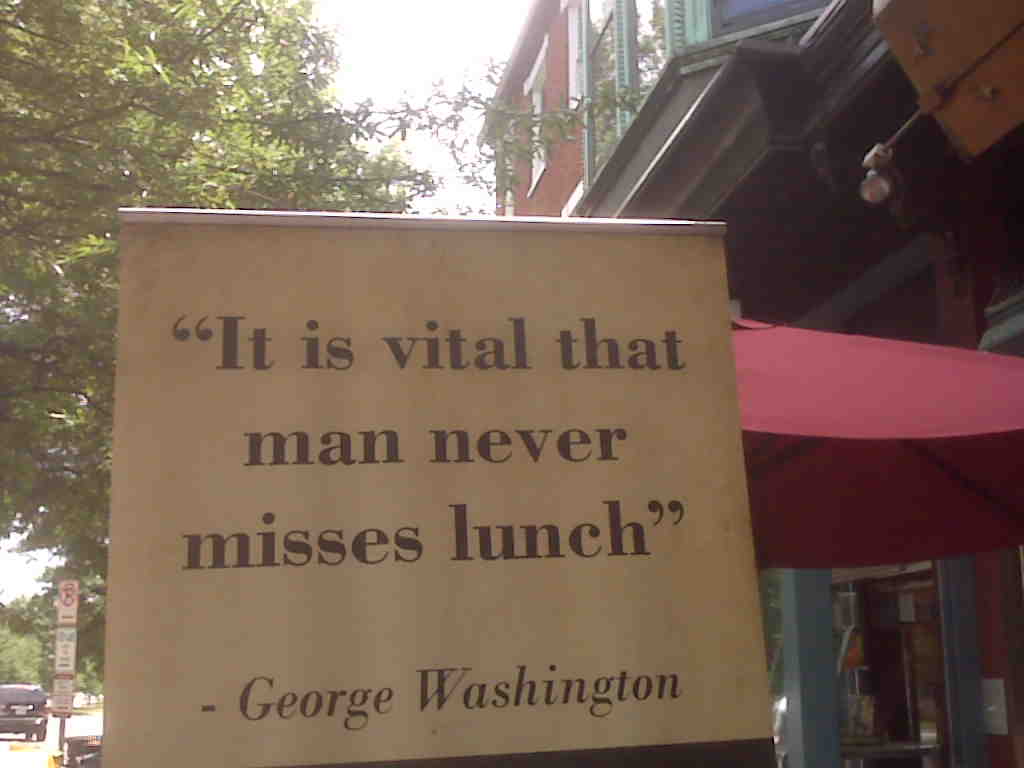
Imagine what our world would be like if we based our societal structures on the premise that every being should never have to miss lunch.
Peace and light, E — Posted with WordPress for BlackBerry.
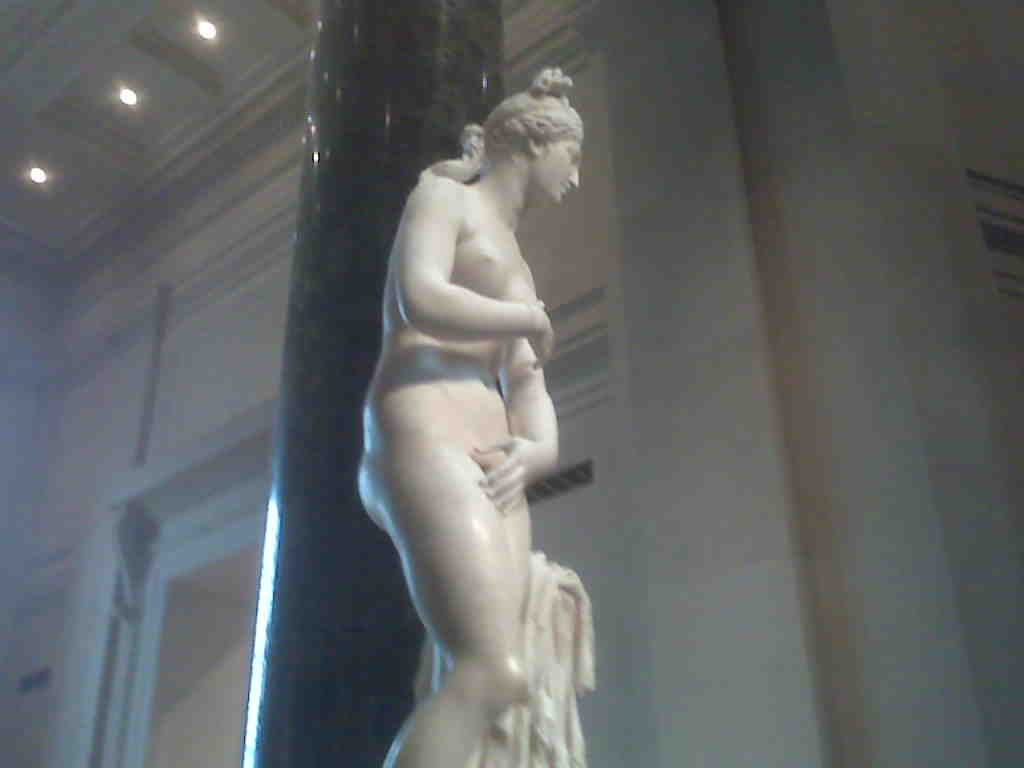
The Capitoline Venus arrived in DC last week from Rome–the first time this circa 200 CE sculpture has been out of Rome in nearly 200 years. What makes it especially beautiful is the apparent softness of flesh of the cool, carved marble, the seeming etherealness of the ancient solid stone.
Looking at the Venus made me think about how carving in stone can help us understand the concept of sruti. The hindu scriptures generally are classified as either sruti (revealed) or smriti (remembered) and until recent centuries were passed on through oral tradition. Those scriptures that are sruti are said to have been revealed by a divine source to the original listener. They were already there as part of the wholeness of the universe and then manifested to a particular enlightened being in a way that could be witnessed and passed on. The essence of the text was always already present, but not tangible, until it was revealed in the mind of a listener, who then passed it on.
Carving in marble takes both the emergence of idea and form in the mind/imagination of the artist and the revealing of that idea from the original stone by the craft of the artist. The sculptor has studied and practiced art and is always open to the emerging into consciousness of a particular image or idea, just as the great yogis continuously meditated and studied, open to what might be revealed.
As the sculptor may find the block of marble first or have the idea and then go looking for the right stone to express the idea, the yogi pulses between experiencing spirit and enhancing the experience through practice. It is not just an act of imagination that builds and creates something out of nothing. To some extent, the form of the final sculpture is already there in the stone. The work of the artist is to remove that part of the stone that is obscuring the witnessing and expression of the exquisite shape revealed from within by the educated and painstaking act of making art.
Peace and light, E — Posted with WordPress for BlackBerry.