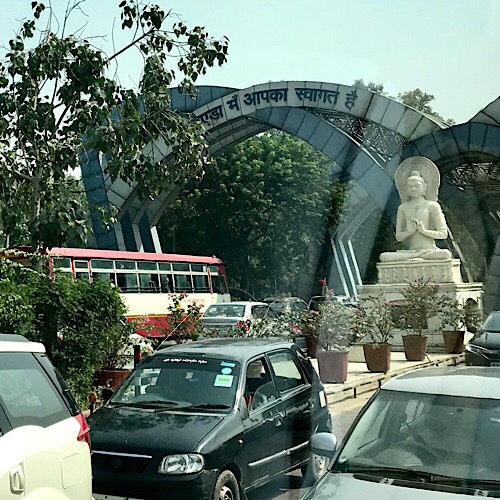
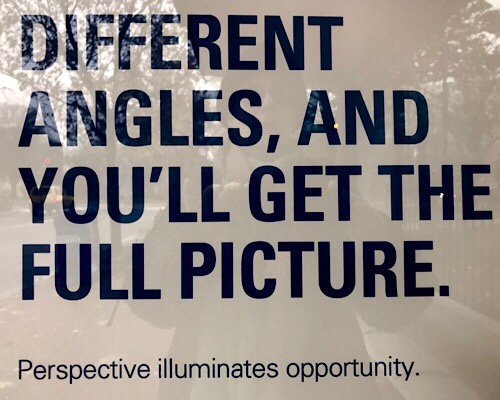
Sign Around Town and Found Exhortation
Imagine what our world would be like if we based our societal structures on the premise that every being should never have to miss lunch.
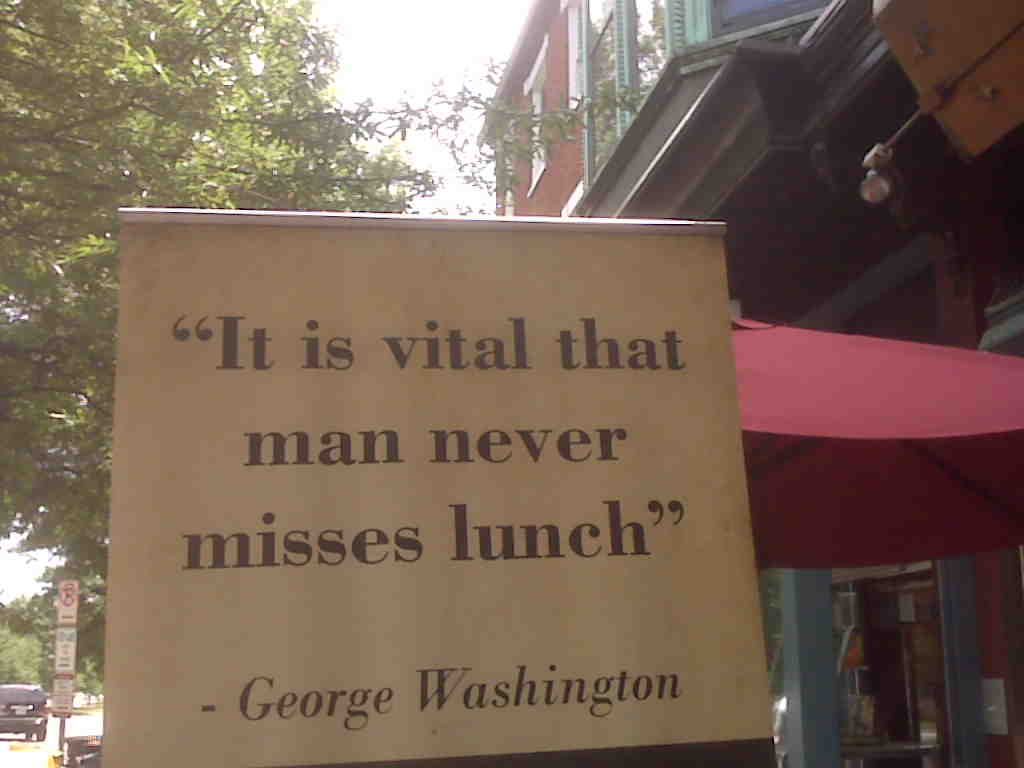
Peace and light, E — Posted with WordPress for BlackBerry.
Imagine what our world would be like if we based our societal structures on the premise that every being should never have to miss lunch.
Peace and light, E — Posted with WordPress for BlackBerry.


I looked at these words hanging together and thought I wasn’t quite certain what was intended to be said. Consider:
Read from top to bottom or try it out from left to right.
Put in a comma or an exclamation point.
Just an period or perhaps two. Omit punctuation entirely.
Think of all the meanings of both words and mix them around with various punctuation marks.
What about a question mark (or two)?
Then stop all that and just let meaning come to you.
I hear a lot that there’s always a rainbow after the storm. That platitude is looking for and being open to joy and not toxic positivity unless we recognize some people do not survive the storm and some people are not situated to see the rainbow through no fault of their own.

When a student asks a question and I do not know the answer, I do not try to answer it then and there. I do go home and take the time to try and find an answer. If I find enough information to be useful, I follow up. Last night, before the William Penn House class, a student asked whether I had received a recent mass e-mailing from John Friend in which he mentioned teaching about biotensegrity. I knew the answer to whether I had received the email–yes, a friend had forwarded it. I did not know, though, how John was using the term biotensegrity. I went and did a little research.
Buckminster Fuller coined the word “tensegrity”as the conjunction of tension and integration. The idea of tensegrity is being actively taught by anatomy teacher Tom Myers, a student of both Buckminster Fuller and Ida Rolf and a teacher of certain of my yoga teachers. It also bears a trademark when called “Carlos Castenada tensegrity.” I never got into the “magical passes” of Castenada’s students turned teachers, but at some point relatively recently found a used copy of “Magical Passes.” As I had delved fairly deeply into Carlos Castenada in my youth, I picked up the book and made it part of my library, though did not read it at the time.
I am not surprised that John is talking about biotensegrity. From my few hours of reading, it seems resonant with the “universal principles of alignment” that were the foundation of his Anusara teachings and also consistent with his movement towards the exploration and teaching of “sacred geometry” near the end of his Anusara days.
Yes, I know I haven’t actually said what is tensegrity or biotensegrity in the yoga/body awareness and movement context. But I do not teach unless I have learned something well enough to integrate it fully into mind and body such that I can articulate it in my own words, and I have not thought enough about the term tensegrity as it relates to yoga practice, though the concept makes initial intuitive sense. If the links inspire interest, I invite you to look more deeply. And I’m going to put “Magical Passes” on my stack of reading, though not necessarily at the top.
We have a choice. We can emphasize what we don’t think enhances life (for example, an over-sized, gas-guzzling, suburban SUV with city plates) or we can focus on an exquisite reflection of beauty. That we see what optimally would better be changed or shifted to be more fully aligned with nature or that we speak of it does not mean that we are not seeing beauty or embracing the whole of life with love.