| | | |

Expanding to Receive the Beauty, Opening to Grace, and the Isha Upanishad

In Anusara yoga, one of the ways the first principle of “opening to grace” can be experienced and practiced  is as a radical expansion of the capacity to receive and appreciate the very wonder of being.  During my visit to India with Professor Douglas Brooks, I found myself repeatedly thinking of the concept of radical expansion and also the preamble to the Isha Upanishad (long a favorite of mine; Shantala on their first CD, Love Window, have done an exquisite rendition), which can be roughly translated as saying that adding fullness to fullness is itself fullness (fullness can also be translated here as perfection).

What I believe this is saying that being itself is infinitely full; thus, we cannot make it more infinite by adding to it.  Human consciousness of the infinitude of being, though, is limited by the filters of space and time.   One of the key reasons to practice yoga (including meditation) is to expand both our capacity to appreciate the fullness and to receive its full wonder by uniting our own consciousness with the infinitude.  When we can appreciate ever more the wonder of our being, we will naturally be more joyous, and I believe, led to be more compassionate and generous with ourselves and others.

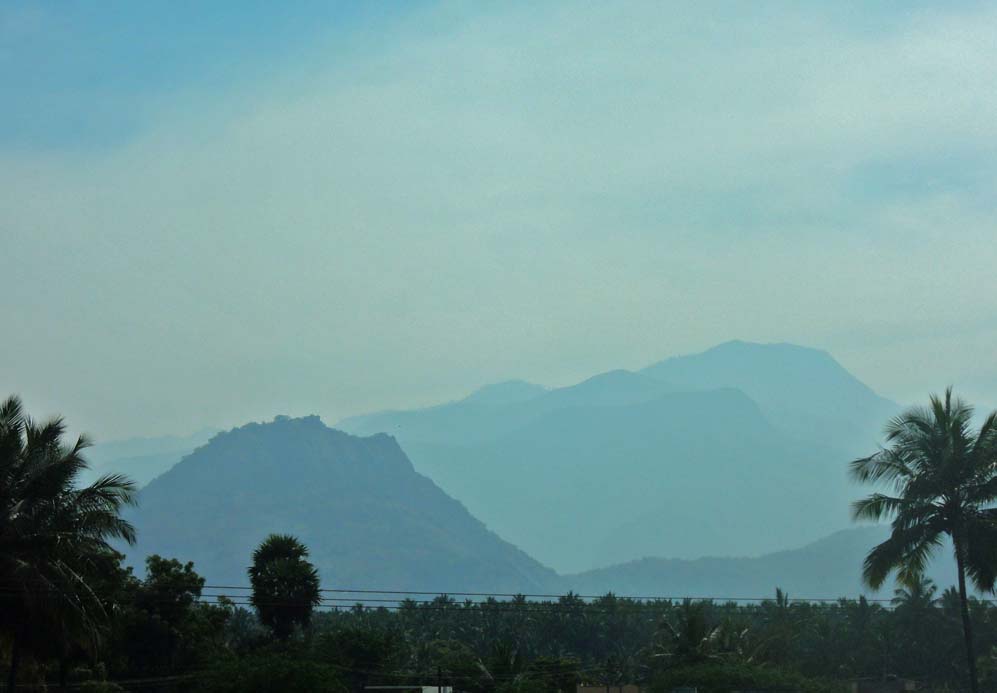
Day after day on the India pilgrimage, just when I thought my heart and mind were already full to bursting, there were yet more experiences of the beauty and extraordinariness of life and creativity and nature.  I found myself chanting the Isha Upanishadpurnamadah, purnamidam, puranata purnamudatacyate.  Fullness and fullness is fullness.  “Let me expand still more to appreciate to its utmost yet more beauty,” I thought to myself again and again.  Though I already thought I’d developed a fairly full understanding of the concept through study and practice, I thought, “this is what John Friend means when he is talking about radical expansion.” I look forward to studying and practicing to experience and share ever more beauty.

Similar Posts

  • | |

    State of the Garden (Out of Doors and Inside)

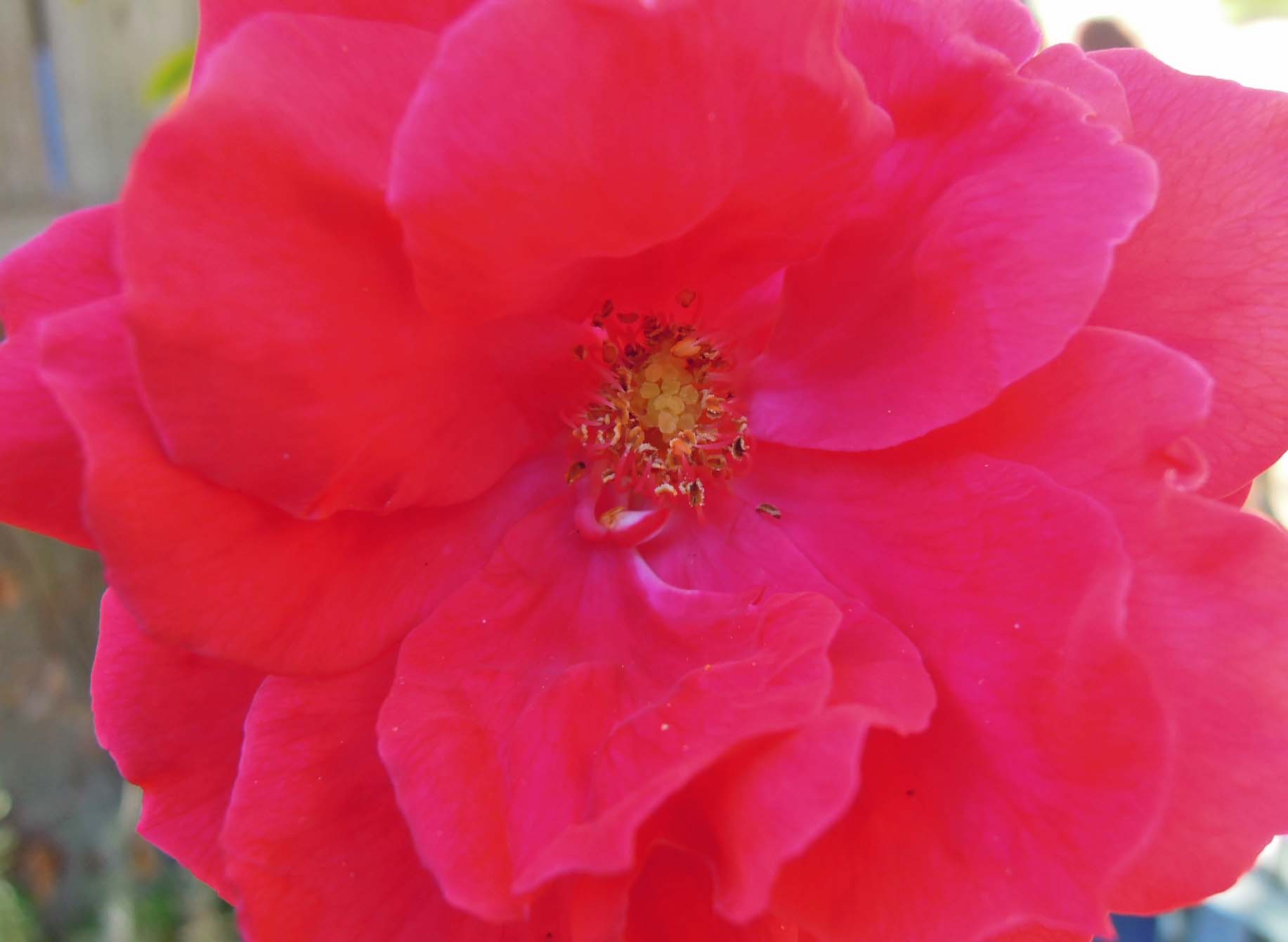
    ripe cayenne, unripe cayenne, arugula, black cherokee tomato, kale, red leaf lettuce, snow pea shoots, grape tomatoes, spinach, leaf lettuce, carrots, more snow peas, licorice mint, marigold, romaine lettuce, turnip, beets, green garlic, rose, orchids, night-blooming cereus, various tropical plants, spider plants, oregano, rosemary, lemon grass, lemon verbena

  • | | | |

    Web Version of Hot Summer E-Newsletter

    Dear Friends,

    Recent newsletters I have received from well-known yoga teachers, in addition to sharing their wonderful offerings and teachings about yoga, have included references to the Gulf Oil Spill, the on-going economic crisis, and the humanitarian tragedies in Chili and Haiti and elsewhere.  The information is presented as showing what yoga can do to help us better serve those in need, seek change in ourselves and the world around us, and find our own light in the face of things we cannot change, but these teachers are no longer keeping quiet about the presence of serious turmoil and tragedy.

    As one who has been outspoken (perhaps too much so) about such issues in the context of yoga, as those of you who follow my blog know, it seems that it is no longer possible to be silent.  We are all familiar with adages, “silence is golden” and “silence speaks louder than words.”  We are also invited, as yogis, to observe the four gates of speech to the best of our ability, on and off the mat:  (1) is it truthful?  (2) is it necessary? (3) is it the right time? and (4) is it said in a kind manner?  These gates are important for evaluating individual utterances.

    For the past couple of weeks, I have been thinking about turning the “four gates” on their head, turning them upside-down in the tantric tradition, and asking how they apply to silence.  When we are silent on an issue, on something that moves us, on something in a relationship that is important to us, are we being true to ourselves to be silent?  Are we being honest by saying nothing (for saying nothing is, indeed, saying something)? Is staying silent timely or is it truly timely to speak up (using the four gates as guidance on how to speak up?); is being silent kind–we’ve all done it ourselves or experienced cold or hostile silences?

    For me, more than ever, it is no longer the time to be silent.  We must speak for the light, for action, for aligning better with nature, for deepening community, for enhancing the subtle energies that will help us heal and grow and shift society.  As long as we are not practicing true “renunciate” yoga–giving up family, friends, shelter, and creature comforts, but instead are practicing the yoga of those still engaged in “regular” life, then we need to become more and more sensitive to how we can joyously affirm life, but passionately engage in seeking change that makes the light more available to all, while still going about our daily business.  This is a razor’s edge balance.  It can be so difficult to live consistently with our ideals, to speak and act in truth and kindness for ourselves and others the ideal all of the time.  Our yoga invites us to cultivate and celebrate our strengths, to affirm ourselves and then to expand.  Expansion can be intensely challenging and sometimes as much painful as exhilerating, but I think it is worth it.

    This summer, in classes, I will be inviting all to join me in the questions I am exploring for myself:  what is my intention?  How can manifesting my intention make life sweeter for myself and those around me?

    Join me for both class offerings and a special workshop up at Willow Street.  William Penn House classes continue with special pricing for public interest workers, students, seniors, and those with other challenges.  A portion of the proceeds from every student goes to support William Penn House’s work.

    At Willow Street, the Saturday morning class has changed:  it is now a “Fusion Flow” from 8:45-10.  What’s the difference between the flow class and Level 2?  We’ve already been doing a slow flow, but there will be fewer breaks, and more time for silence (a timely, nurturing silence), for students to get into their own groove to work towards manifesting their intention.  We will have music most times to bring in a stronger sense of the dance, but I will continue, as always, to emphasize healthy alignment for the class as a whole and be responsive to questions.  Gentle/Therapeutics is at noon as usual.  There’s a free class weekend up at Willow Street where I will be teaching both types of classes on July 17th in the Takoma Park studio and Gentle/Therapeutics in the Silver Spring Studio on Sunday July 18th.  The summer session starts on July 24th.  Those who sign up for a class and a workshop simultaneously, get a $20 discount.  For more information or to register on-line, please visit www.willowstreetyoga.com.

    Want a siesta-like retreat from the heat?  Ready for some relaxation and self-nurture?  Treat yourself to two blissful hours of restorative yoga poses for a sweet afternoon retreat without all the travel!  All levels welcome at the:  Summertime Restorative Extravaganza, Saturday, July 31, 2010, 2:30pm-4:30pm, Willow Street Yoga Center, Takoma Park.  $35.

    As always, feel free to email me with questions or comments or join me on the blog:  www.rosegardenyoga.com.  Just FYI, we’ve fixed the issues with subscribing to the blog.  If you haven’t already, just hit subscribe on the home page, follow the instructions, and then get an email in your inbox the day after I’ve posted a new blog entry.

    Hope you are all having a great start to your summer and look forward to seeing you soon.
    Peace and light,

    Elizabeth

  • | |

    An Armload of Radishes

    This morning I went to my community garden plot around the corner before I got ready to head into Georgetown to volunteer at The Lantern Bookshop.

    I ws delghted to find enough snowpeas for a good-sized stir-fry and several zucchini almost ready to be picked (I only get zucchini at the very beginning of the season before the squash borers invade, but if I start early enough, I can get a few pounts of squash and a couple of meals worth of blossoms before I surrender and plant something else).

    The tomatoes were flourishing (no sign of blight. If you have your own plants, keep an eye close for blight; it’s aleady been seen in Maryland. Cherry tomatoes are more resistant, so I’ve concentrated on those).

    I should have the first cucumbers big enough to pick next week, and I have plenty of lettuce.

    The radishes, though, had exploded. “Should I have a radish-themed dinner party?” I thought. “What am I going to do with all of them?” I am not especially fond of radishes. I plant them because they mature very early, they thrive on benign neglect, I have friends who like them, and they give the same crunch I’d prefer from a cucumber weeks earlier.

    I’ve also discovered I like them cooked. Just as you can prepare turnips and their greens together, it also works well with radishes.

    As I was walking home with a bunch of radishes that I could hardly get my hands around, I bumped into a neighbor. I don’t know her well, just recognize her face. “Do you want some radishes?” I asked, hoping I did not sound like I was begging. She hesitated, but then seemed to realize that she would be doing me a great service by accepting them. “You can cook the greens,” I said as I handed her a nice-sized bunch, “and also the radishes themselves if they are too strong.”
    “I’ve never done that,” she said.

    Here’s the recipe I gave her on the street (with a little more detail here):

    Wash radishes and their greens well. Cut radishes into thick coins (this works best with oblong radishes sich as French Breakfast). Cut off the white part of stem nearest radish. Then cut the bunch horizontally so that you have half inch wide shreds. Mince some garlic, onion, and ginger. Stir-fry aromatics in peanut, safflower, or canola oil until translucent. Add the radish coins and stir until well-coated with oil. Add greens, stirring continuously until all the greens are wilted. Add some rice wine vinegegar and cook until absorbed and the grrens are just tender. Take off heat and sprinkle with soy sauce or Bragg’s Amino Liquid and toasted sesame oil to taste.

    “What a nice morning,” my neighbor said, “fresh radishes from the garden and a recipe.

  • | | | |

    Found Exhortation (with Commentary)

    This bumper sticker (on an enormous black SUV with suburban plates) is likely intended to have only a message about the current wars in which the US is engaged. I wholeheartedly support the sentiment at that level.

    What if we took it at other levels? What if we applied it to spiritual-religious practices? We could interpret this as suggesting that we honor the great teachers who have gone before us, invite religious observance and spiritual practice to heal ourselves and others, and dissolve notions of differences among religions and spiritual practices as bases for conflict. How many wars between countries or civil wars would end if saw unity while still honoring difference in this regard?

    Perhaps most cogent for the yogi: what if we thought of the exhortation in terms of our own personal practice? It would be an invocation to honor our ancestors, heal the wounds of our family and upbringing (samskaras), and release inner conflict. This is, I think the point of practicing (whatever the style of practice) so that true peace can abound.

    Peace and light, E — Posted with WordPress for BlackBerry.

  • |

    Privilege and Periphery

    purple-gatephotographingperiphery-6periphery-5periphery-41african-american-catholic-churchchange-we-can-believe-inperiphery-1periphery-2periphery-3

    At about 10:30 am, I left my house and walked over to the Capitol.  I knew that by leaving the house at that hour, instead of at 7am, I would be outside the fence, but I instead practiced in the morning and opened myself to the sense of amazement and hope filling my city.

    My friends who were inside the fence either are press or have other jobs that got them an invitation or they arrived at 5am to volunteer. I look forward to hearing their stories and seeing their pictures.

    It felt urgent to be present for this occasion.  One of the things that made it especially poignant is that where I went was on my walk to work.  I forget, sometimes, the import of the capitol and the Mall because they are so much a part of my daily geography.

    The audio visual we had in my spot just north of the Capitol (turned out to be next to the cannons for the salute) was a couple of ipods with speakers and boom boxes, rather than the big, fancy rock concert screens, but we were in fact physically closer than most on the Mall.  Some of us were just happy to be there together celebrating and being less densely packed into the crowd.  Some, so used to being marginalized by society — being able to see privilege and insider status, but have it be completely out of reach — grumbled that they might as well have stayed home as they witnessed even those with tickets not getting through the security lines towards the end.

    But every one was hushed, even in the crowd, even without a view, for the oath of office and for the President’s speech.  It was a privilege to stand with these neighbors and fellow citizens.  It was an honor to see grown men unashamed to let their eyes fill with tears as they witnessed what they never saw they would see in the Nation’s Capitol, in their town, an African-American President.

    I am filled with hope, not because I think there will be almost instantaneous and miraculous “change,” but because we have just witnessed an enormous step in a better direction.

2 Comments

  1. If I didn’t know better I would have thought these photos were from some professional photographer from National Geographic. Truly beautiful. Thank you for sharing!

Leave a Reply

Your email address will not be published. Required fields are marked *

This site uses Akismet to reduce spam. Learn how your comment data is processed.