Questions Around Town

I am planning to be unwired for the next couple of weeks, though if there is an opportunity for a wireless connection or to use hotel internet, I may check emails. I will be in touch when I go back on-line. In the meantime, this is to wish you the best of holidays.

Peace and light, E — Posted with WordPress for BlackBerry.
At the Tillai Kali temple in Chidambaram, above the murti of Kali where ritual offerings are made, is a mirror that reflects the viewers, bringing their reflection into the puja. I noticed the mirror and asked Douglas Brooks, who was standing next to me on the trip he was leading, “prakasha and vimarsha”? He affirmed my guess—saying it had taken him many visits to appreciate the presence of the mirror and its purpose to remind of the S/self reflected in the light of consciousness.
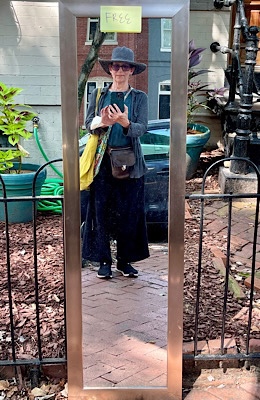
Seeing the “free” sign on this mirror when I was out walking, that place and time came to mind.
For me, an important part of living yoga off the mat is knowing how I fit into the flow of energies (and money is a big flow of energy and power) in community and what I do to try and shift things where and when I can. One big step in being empowered is not to accept powerlessness, but to act even if yours is only one small voice.
Click here to see the analysis prepared by the Friends Committee on National Legislation to show where your tax dollars go, along with some suggestions for individual action. Participating (at a minimum by being educated about the issues, registering to vote, and actually voting) is important for all of us.
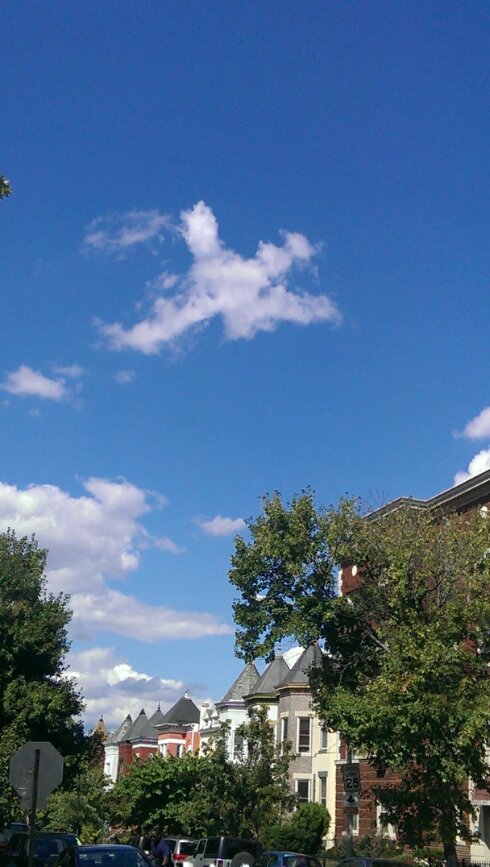
The trishula represents all the philosophical threesomes:
sat cit ananda (being, consciousness, bliss);
iccha, jnana, kriya (will, knowledge, action);
siva and shakti and the dance of relationship between the two.
The me and the you and the us–for where there are two ones there is also the third and all the play (lila) and pulsation (spanda) that is part of the dance cosmic and divine and personal.
As I think about whether I will be able to get up to Willow Street to teach my last classes of the session, how much shoveling I will need to do , whether the next forecast storm (middle of next week) might create challenges for my planned trip to NY, etc, etc, my favorite (well, in the top 10) sutra of Patanjali, sprang to mind: heyam dukham anagatam, 2.16, which means roughly: the pain that has yet to come can be avoided.
I have several translations/commentaries of the Patanjali’s Yoga Sutras in my library. All have a different spin on what this means in practice. What I know is that it is at least partly about being in the present and taking things as they come. One should still practice and plan. By practicing and planning, we are better prepared for inevitable pains and challenges. (For those of you who are giddy with excitement with the thought of a “white Christmas,” this Sutra still helps. Part of the pain that can be avoided is disappointment when expectations are not realized the way we hoped they would be realized.) Once we have prepared in a healthy way, though, there is no point in agonizing about what might come, in being in pain in the present because of the possibility (or even inevitability) of a future pain.
The snow seems inevitable. I am charging my camera battery. I’m picking what is probably the last of the chard and the baby leeks from the garden, and I am getting ready for Serenity Saturday restoratives. As long as I can walk to the studio — eight inches is just plain fun, not impassable — I’ll be there with a warm and full offering. In the meantime, I am enjoying my day instead of worrying about the potential barriers to enjoyment.