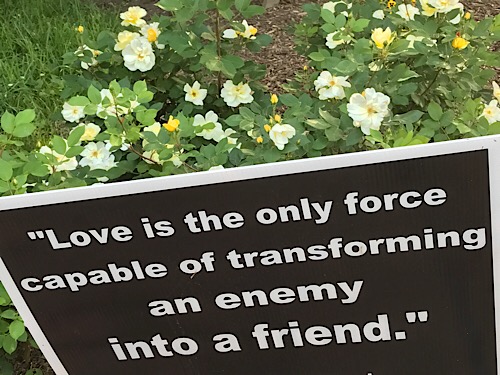
On the Way to William Penn House for Tuesday Night Yoga Practice
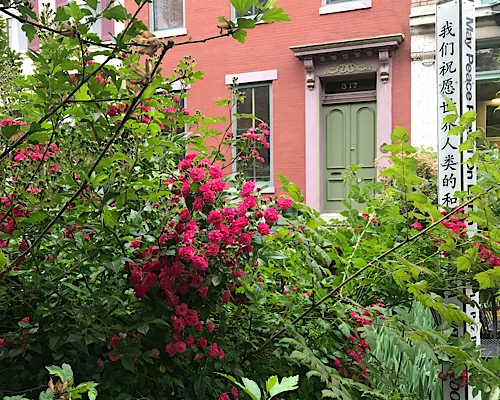
If I had more space for planting, I would grow enough beans to eat green and share plentifully in summer and also have enough for dried and frozen beans through the winter.
This year I ate and shared fully most of the summer, but don’t have much for storage. Good thing I can buy food.

In classical yoga systems, we are taught that all the world is an illusion (maya) and the only thing that is “real” is Atman (spirit, the One). I do not subscribe to that belief, but I do believe in the principle that is espoused in the Bhagavad Gita of actionless action — working because it is my nature to work, but accepting that I ultimately am not in charge of the results. I thus can be fully engaged in my work, but be freer of anxiety, disappointment, and frustration or overcharged attachment to pleasure and success. From a tantric perspective, I believe it is all real and full and something to be experienced as part of the marvelous complexity of being.
This principle carries over into my relationship to my dreams. I have always had extremely vivid and present dreams most nights. Sometimes, like last night, my dreams are full of convoluted challenges and difficulties that could be filled with anxiety. I used to chew on dreams like that through the day. Now I wake up and think: what an amazingly inventive mind I have. Isn’t the subconscious fascinating? I pay attention to what lessons might be in the dream and let them release the dreams from holding on to my day. As I get more skilled with meditation and yoga, I often can find this place of simultaneous engagement/non-engagement even while I am still dreaming. This makes it so the dreams have no more hold on my ability to sleep or act than would watching a movie that raises challenging issues.
Kali dances peace
Rages against injustice
Grieves for beauty.