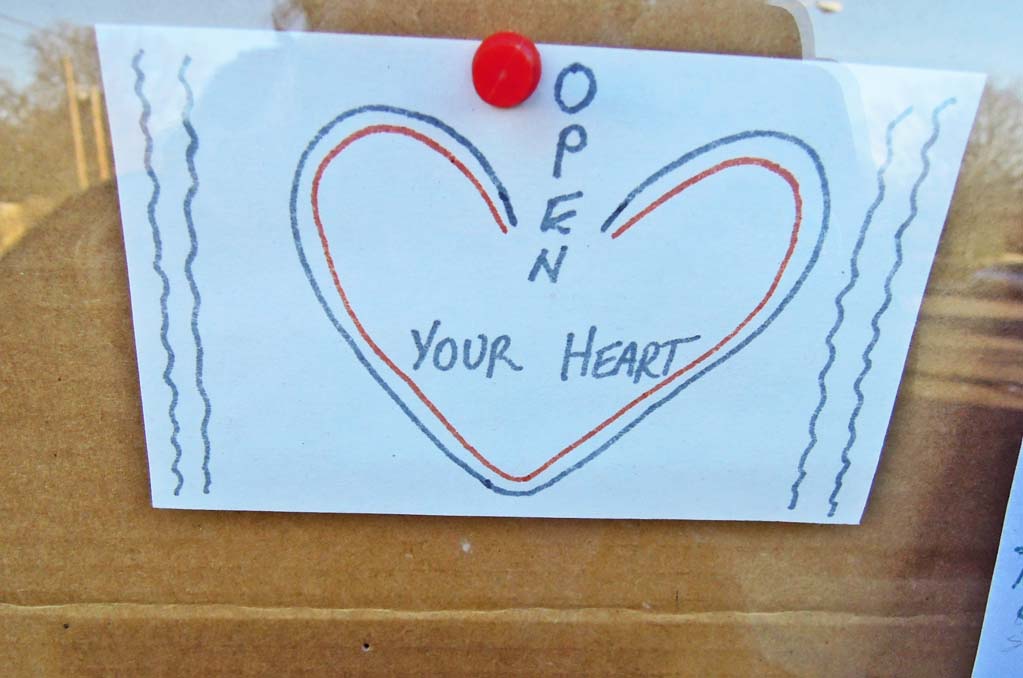
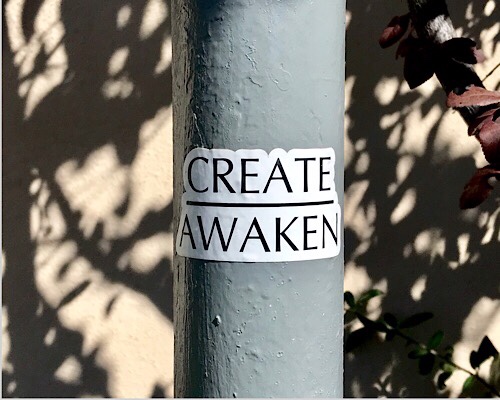
We Never Know Where We Will Find Music or the Form It Will Take (Penn Station LIRR Level)

Thursday night, I took a dance improvisation workshop at Dance Exchange, the second in a series of three workshops. One of the exercises we did was in groups of two. The game was to do simultaneous improvisation. Without designating a particular person as a leader, each dancer was to try and stay in synchronized movement with his or her partner. When we were done with the exercise, some of the dancers talked about their goal having been to be in control of the lead or trying to push their partner past his or her edge. I had been innocently (or perhaps naively) unaware of these dynamics, as I had been seeking to find where the dance could be the leader rather than either partner.
After the workshop, when I was walking to the metro with the teacher and another participant, both of whom are performers in their 20s, I raised the issue of people trying to push others past their edge (I’d held off raising it in the group as it seemed too many were in a different space). I said that knowing that my partner was a lot less flexible than me, though lots stronger, and knowing his competitive edge, I never would have tried to push him beyond his physical limits.
The teacher said he liked being pushed past where it seemed like a good idea; it made him get to another place. I agreed that it is good to try to expand, to go beyond what we think are our limits. I have been taught, though, by my teacher John Friend, not to blow past my limits. Rather, in the practice of Anusara yoga, we seek to be intimately and exquisitely aware of our edge at every moment, and then expand it. The game with the partner using this paradigm would have been to find the edge and then see if the dance could expand it rather than to try and exert control or see if we could push our partner past his or her limits at our partner’s risk. When we operate in a paradigm of straining and striving, or we push for control or try to compete with ourselves or with others, that is where we get injured. I’ve had my share of dance injuries, I added, but to continue dancing through the decades, I cannot be blowing past my limits, though I am still growing. I was not sure that what I said felt relevant, but I could also tell that it was information that went into the thought mix for later.
It is times like these where the importance of one’s personal home practices is emphasized.
I was first taught how to make cranberry sauce in 3rd or 4th grade. We made the recipe off of the back of the bag, which recipe I am fairly certain is still on the bag of “conventionally grown” cranberries. The recipe is: One bag cranberries + one cup water + one cup sugar. Bring all ingredients to a boil. Maintaining a vigorous simmer, stir continuously until most of the cranberries have popped and the liquid has thickened. Allow to cool. OK to make in advance; store in refrigerator. From that time on, we did not eat cranberry sauce from a can, which was a big deal in the late 60s, early 70s.
This year’s variation is organic and uses some local ingredients. Three generous cups (this is about the same as the typical bag of cranberries) of cranberries + one cup apple cider + 1/2 cup sucanat + a splash of cognac or brandy. Maintaining a vigorous simmer, stir continuously until most of the cranberries have popped and the liquid has thickened. Allow to cool. Optional: add another splash of cognac while cooling. OK to make in advance; store in refrigerator.
Variations: (1) use pomegranate juice instead of cider; include a vanilla bean and a sliver of lemon rind while cooking. (2) replace cognac or brandy with Calvados and include a cinnamon stick while cooking. (3) replace the cider with orange juice, the cognac with triple sec, and use turbinado sugar instead of sucanat. The variations are many. Just have the types of fruit, flavorings (spices and liquor) meld with eachother, and make sure there is enough sugar to gel the sauce.