Asana, Pranayama, and Yoga Practice | Dance/Contact Improvisation | Food for the Body | Food for the Mind (Yoga Philosophy, etc)
Found Exhortation (Relevant Excerpt)

Sri Chakra and a Rhetorical question from a Douglas Brooks lecture on YogaGlo that caught my attention while I was drawing.
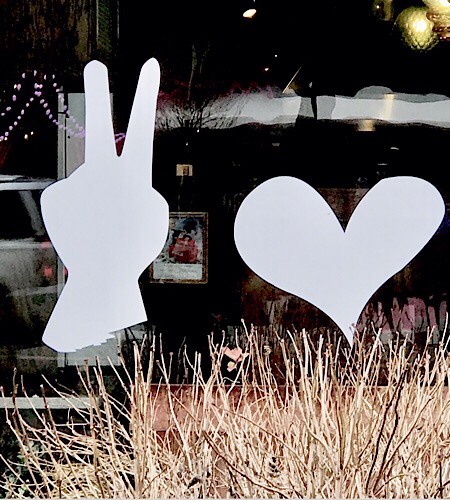
This bumper sticker (on an enormous black SUV with suburban plates) is likely intended to have only a message about the current wars in which the US is engaged. I wholeheartedly support the sentiment at that level.
What if we took it at other levels? What if we applied it to spiritual-religious practices? We could interpret this as suggesting that we honor the great teachers who have gone before us, invite religious observance and spiritual practice to heal ourselves and others, and dissolve notions of differences among religions and spiritual practices as bases for conflict. How many wars between countries or civil wars would end if saw unity while still honoring difference in this regard?
Perhaps most cogent for the yogi: what if we thought of the exhortation in terms of our own personal practice? It would be an invocation to honor our ancestors, heal the wounds of our family and upbringing (samskaras), and release inner conflict. This is, I think the point of practicing (whatever the style of practice) so that true peace can abound.

Peace and light, E — Posted with WordPress for BlackBerry.
The other day a friend commented that it seemed that a major contributor to global climate change is how we have set out to control our environment instead of aligning with it (my paraphrase). So much, he said, of what contributes to global climate change is how we heat and cool and light our homes and work places. For example, instead of honoring the change of seasons, we overcool in summer and overheat in winter, so that we can wear the same clothes and eat the same foods year round in apparent comfort.
This comment resonated with me deeply. It brought to mind what I have been taught about possible approaches to pranayama — the yoga practice of conscious breathing. Pranayama usually as translated as breath control or restraint. This assumes that the conjunction in sanskrit is of the two words “prana” and “yama.” Prana here refers to the subtle energy of the life force in general, which we can understand best through the breath. Yama means restraint. If, however, we think of pranayama as the conjunction of “prana” and “ayama,” which is a reasonable way of looking at the way the word is formed, we can understood pranayama to be the practice of expansion or alignment with prana.
When we seek with our yoga breathing practices on the mat or with our technology and lifestyles off the mat to restrain and control nature at the expense of listening and understanding, we will be at war with ourselves and the earth. If, however, we seek to align better with nature on and off the mat, to expand and enhance our relationship with the life force, rather than to restrain and control nature, we will expand our awareness of the subtle forces of the earth and live in a more life-affirming way.
I walked round trip to Georgetown today. It was good to walk. It was good to be with the books. It was good to have a simple meal offered by a friend when I got home.