Art and Culture | Asana, Pranayama, and Yoga Practice | Food for the Body | Food for the Mind (Yoga Philosophy, etc) | Gardening | Meditation | Photos
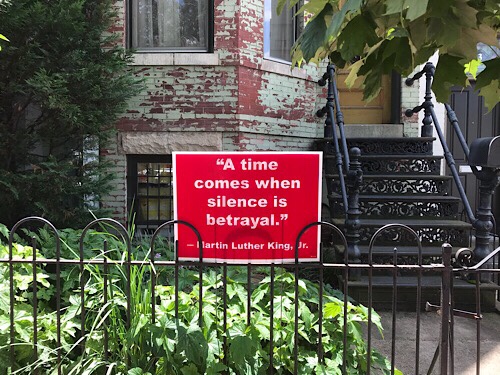
Signs Around Town

Peace and light, E — Posted with WordPress for BlackBerry.
Peace and light, E — Posted with WordPress for BlackBerry.
In the tantric yoga philosophy, two key concepts are that of prakasha and vimarsha–light and reflection. Prakasha is the fullness of the light of consciousness itself; vimarsha, the reflection of the light that is our own individual recognition of the light of consciousness in ourselves. The sweetly mysterious joy we get in seeing reflections in a puddle is the reminder we are given of the pulsing dance between the light and the reflection of the light, neither of which we can know without the other.
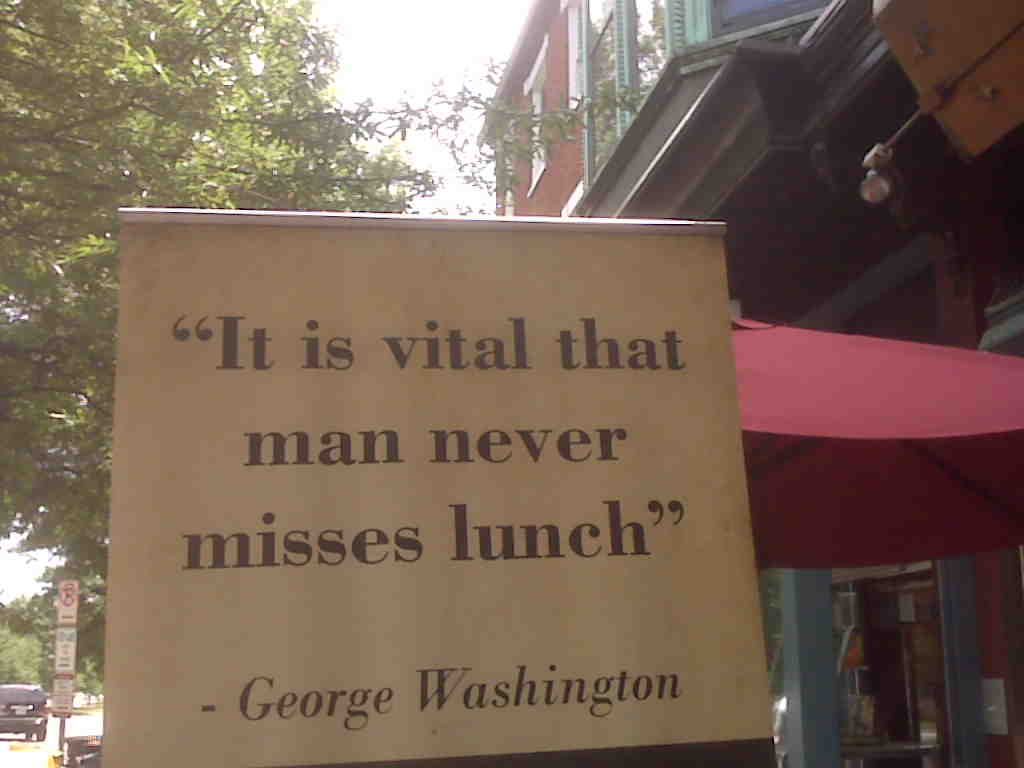
is part of a headline for an article in today’s BNA (Bureau of National Affairs) Pension and Benefits Daily. Not only is this sound advice in every realm of life, but a linchpin of yoga practice, which is designed to free ourselves from being constrained by the play of the pairs of opposites.
Imagine what our world would be like if we based our societal structures on the premise that every being should never have to miss lunch.
Peace and light, E — Posted with WordPress for BlackBerry.

That there were just three
Perfectly ripe strawberries
Gave rise to an exquisite
Opportunity to practice
Mindful eating.
To enjoy the sun on my back and the weight of the berries in my hand as I picked them.
To linger with their delicate, promising scent.
To enjoy their shape, the patterns of the seeds, the ripe redness.
To taste each one as if it were the only one.
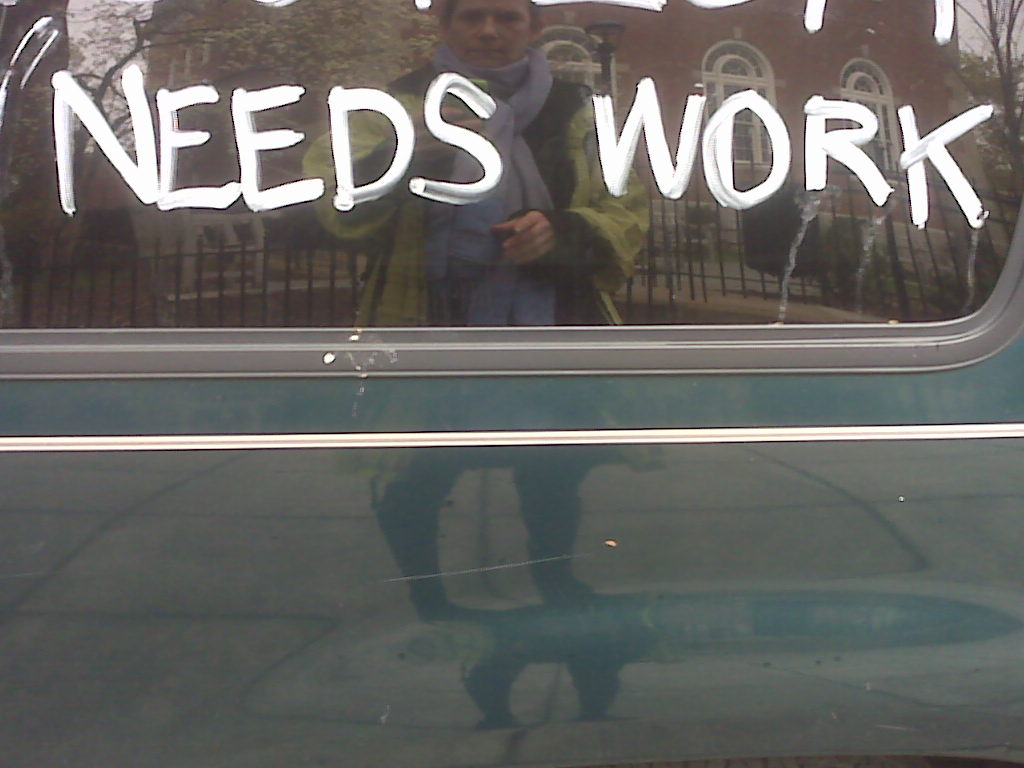
I haven’t photographed the t-shirt with the statement “it’s all good” to go with the sign below “needs work,” but I would need to if I wanted to show the apparent philosophical tangle of tantra.
The tantric texts do tell us that it is all good; more accurately, they tell us that all is divine and perfect, and that we are just an element of the “all.” It is hard to believe that when we can see suffering and bad behavior (including some of our own) all around us.
The tricky thing about the declaration that all is divine is that it does not mean that there is no work to be done. The work, though, is not to fix ourselves or what is wrong or bad. Rather, the work (sadhana) is to study so that with discrimination (viveka) we can determine what is out of alignment and causing our own suffering or contributing to suffering of other beings and move towards and unveil the perfection and fullness that we are.
It is sort of like finding a great treasure that has been neglected and misused out of ignorance or carelessness at a yard sale. It takes knowledge to recognize that the cheap, discarded thing is a treasure and skill and effort to restore its intrinsic worth.
Peace and light, E — Posted with WordPress for BlackBerry.