Offers Around Town


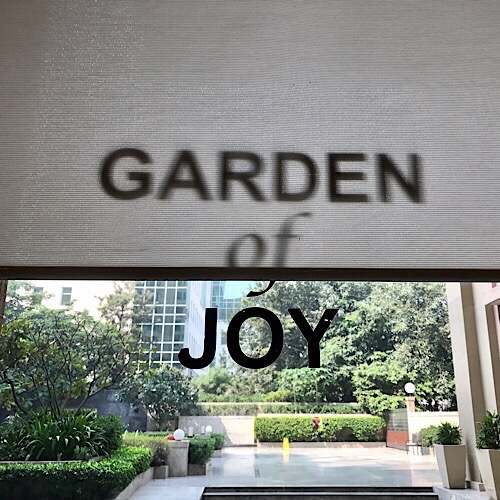
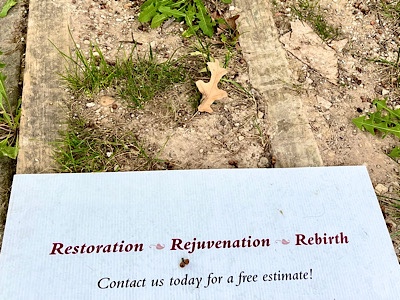
Although incorporation of practice (and the mindset of making everything a dedicated practice) ideally becomes routine, actually practicing should be a never routine, freshly curious, heartfelt engagement. In that regard, I try not to get inured to seeing the signs in the neighborhood.

How different the tone of these two photos just from the direction the camera was pointed, how much was included in the overall image, and the shift in the shape of my mouth. The clowns with their paint, the angle of the camera, the reflection all pointed out for me how little I sometimes understand, despite my best intentions and efforts, in going about my day and interrelating with others. Today I went to visit a friend who is in the intensive care unit. She has been struggling with severe illness for many years. Though she cannot really speak at present, I thought she was trying to reveal something of great moment. Not knowing how to react or what to say, I held her hand and told her I loved her. As I was leaving, I told her husband what I had observed (carefully not saying what I thought, which is hard for me). Later in the day, thinking of the limits and perils of common speech, I composed this found photograph, wishing for more insight, more clarity, and more power to help, but knowing that love was all I could offer.


Last night when we walked out of William Penn House from the Tuesday night yoga class onto East Capitol Street, we could see a convocation of police cars in front of the Capitol — presumably in preparation for the President’s speech. Karen asked, “where are the helicopters?” “Maybe, Obama doesn’t need them,” I replied, “maybe he is choosing not to live in fear.” There weren’t any army or police helicopters all night. This was the first Presidential speech in eight years where helicopters did not relentlessly drone overhead, calling people to be afraid and to act from a place of fear.
Patanjali’s yoga sutra II.3, says: avidyha asmita raga dvesa abhinivesah klesah. BKS Iyengar translates this sutra as follows: “The five afflictions which disturb the equilibrium of consciousness are: ignorance or lack of wisdom, ego, pride of the ego or the sense of ‘I’, attachment to pleasure, aversion to pain, fear of death and clinging to life.”
The world is far scarier now than it has been for most of the past eight years. In some ways, though, at least in my neighborhood, it feels less frightening because the signs of being afraid are not being emblazoned everywhere to call all to share in the fear.
We can practice choosing to turn to a place of strength rather than fear on our yoga mats. When we choose to do the difficult poses that are at our edge that bring up fear and aversion, we can notice the fear and aversion, but not become fully engaged in it. By using the Anusara principle of opening to grace, we can accept fear and aversion as part of human being, but then soften and open to the full range of being, and not just cling to the fear. Instead of avoiding the poses or beating ourselves up for being afraid, we can choose to use the yoga principles we know to invite a full experience of the moment and the possible poses. Remaining open to witnessing the full range of our being through the pose, we next engage muscular energy (strengthening by embracing the muscles to the bone, hugging into our center [midline], and drawing from the periphery into our core). Having found our strength, we expand more fully (expanding/inner spiral). We then have space to draw more deeply into our core power (contracting/outer spiral). With this balance of embrace and expansion of ourselves, we then can fully embody strength by reaching outward (organic energy) and making offering. This pulsation of principles in poses has led me to discover physical and energetic abilities in my middle age I had not dreamed possible.
Off the mat, the same principles can lead us to move from love and strength instead of fear and clinging. As I got into bed with the peace of the night uninterrupted, I pondered how these principles can manifest and gave a profound thanks to whomever decided the harbingers of fear — the helicopters — were unnecessary.
Last Monday I had the honor and delight to be invited to a multigenerational dinner of homemade dumplings at a neighbor’s house.
I was told it was customary for guests to shape a share of the dumplings; the hosts do everything else. As I have not grown up making dumplings as part of group family activity, that meant I needed first to be shown what to do with the already made dough and filling.
Skills used to make homemade noodles, tortillas, and pizza helped make dumpling shaping an accessible activity. It was tricky at first. Two people were showing me two different ways, which was somewhat confusing in an enjoyable way, and helped emphasize that for friendly dumpling making, ultimately, everyone needs to find their own method that works for them. Also, as with many hand skills, because it was the first first time I was being shown, I was simultaneously transposing it from right to left-handed.
It only took two tries to get a dumpling that wouldn’t explode in the pot and lose its filling. It took several more to make one that had nice pleats and blended in with the rest.
We had an interesting discussion about the difference between learning by eating several variations and then reading several recipes and then trying to replicate a version that resembled what I had eaten prepared by someone who learned from childhood as part of a multigenerational group process.
I have long contemplated, and continue to do so, how my comfort in learning anything from a book and then seeing if I can do it or something like it, has shaped my meditation and movement practices.
It’s pretty easy to see which dumplings I made. No difference in taste. I was also happy to contribute garlic chives from the garden.

I have noticed over the years that I sleep more deeply and peacefully if I have made the bed before getting into it again. Smoothing out the sheets and the covers and fluffing the pillows after waking, releases the energy of the dreams from the previous night. This helps make sure that each returning to sleep is a new experience, an opening to the possibility of entering a wonderful state.
The principle of sauca (cleanliness or purity) invites us to be clean and clear before and as part of our physical and meditative practice and all our living. Imagine trying to practice yoga on a dirty mat and going into savasana (corpse pose/final relaxation) on a tangled blanket. Would you think it possible to become deeply relaxed? Probably not. If we want our space smooth to lie down for a yoga pose, how could we not need the same for a good night’s sleep, for a planned visit to another state of consciousness?