Untitled
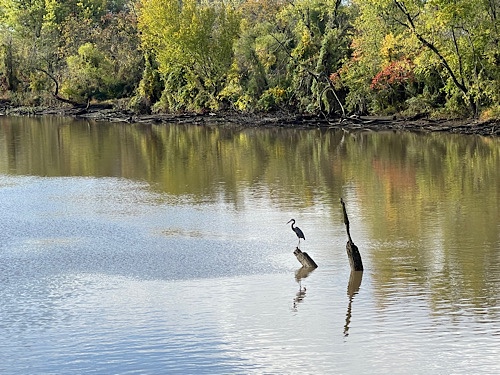
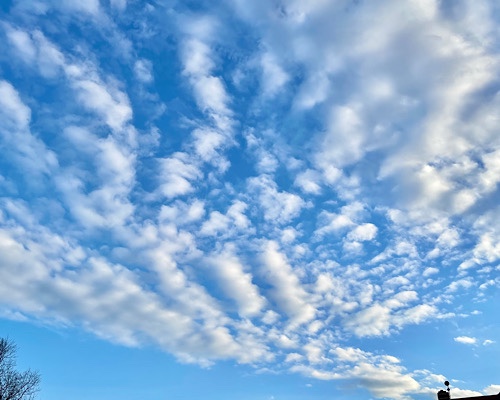
A moment of beauty.
A moment of receptiveness.
A moment with the breath and the sky.
A moment of beauty.
A moment of receptiveness.
A moment with the breath and the sky.

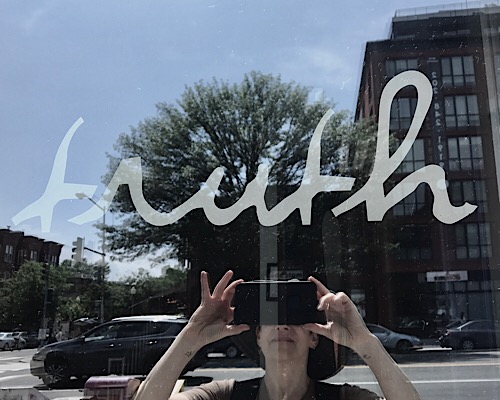
Does “black” here refer to the artist who stenciled the letters, to the brickmaker, to the bricklayer; was it painted by someone who is color-blind or who was showing that for one who is red-green color-blind the word “black” would not be visible; or is the painting intentionally asking us what we see when we see the word for a color painted using a different color than that pointed to by the word?
This is such a wonderful demonstration of how words can confuse our understanding of the world as much as they can communicate. I think much attempt to put into words spiritual and mystical thought and experience suffers from this multiple muddling of meaning.
Peace and light, E — Posted with WordPress for BlackBerry.
“They’re still here,” said the evidently conservative (by other things he said and his dress) and cynical young man sitting on the seat in front of me on the bus, as we drove past the “Occupy DC” group. The bus moved forward, and the running commentary on what was outside the window moved to derogatory statements about the homeless. I thought about the discussion a group of us had after meeting for worship this morning about seeking to live witnessing and honoring the sacred in every being. This includes, of course, recognizing the universal spirit worthy of love in those who proudly do not do so nor feel the need to try. Easier said than done, but that is true of most of the profoundly deep practices.
Peace and light, E — Posted with WordPress for BlackBerry.
Last night I had the singular pleasure of hearing Gary Snyder read his poetry at the Folger Shakespeare Library. At the end of the reading, Mr. Snyder answered a few questions. In response to one question about advice he gives to aspiring poets, he said: “Don’t be journalists. Do hard physical labor that leaves y0ur mind open.” This is not surprising advice, coming from one who has chosen a life requiring regular manual labor. “Meditate only for its own sake,” he added, in an apparent non sequitur and without elaboration.
Gary Snyder’s poetry is evidently influenced by his dedicated study and practice of Buddhism. The insight and clarity of his poetry surely reflects not only his intellectual study, but the deep wisdom of a dedicated, long-standing, and steady meditation practice. The advice to “meditate for its own sake” seemed almost the offering of a koan by the master (poet) to his pupils. Meditation, in my experience, definitely enhances clarity, insight, creativity, and health. Meditation is not meditation, though, unless when engaging in meditation that is all one is doing and without any goal (like the “actionless action” of the Bhagavad Gita). It is the deepest of practices to engage fully, but not be doing except for the sake of doing itself (and in alignment with the deepest truths).
I took a very enjoyable class this morning with Sue Elkind at Dig Yoga. It was a very full class, so the mats were several inches apart–far enough not to feel too crowded, but close enough to be able to do standing poses supporting each other.
We did tree pose holding or pressing into the arms/hands of the people on either side of us. Sue invited is to close our eyes and lean/hold more heavily on each other to stay balanced. (It is a lot harder to balance when we close our eyes; try it if it has been a while or you’ve never tried it.)
One of the people next to me got off balance and fell out of the pose. The instinct to keep from taking anyone else off balance was to withdraw from contact. But leaning farther into me would have increased the possibility of the other yogi regaining the pose and would have kept needed support in place for me.
A good lesson for these stressful times that continuing to lean in for support instead of withdrawing can enhance the whole support network.
Peace and light, E — Posted with WordPress for BlackBerry.