State of the Garden

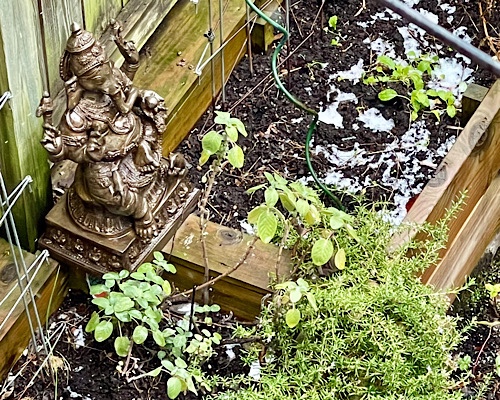
Mildly disappointed that there wasn’t really any snow, but happy there also wasn’t any ice that stuck.
Is a mark of privilege. I know that and give from there.
I brought sprouted lentil and cucumber salad to a potluck dinner at a neighbor’s house last night. The host had spent a fair amount of time in the kitchen. I commented that perhaps it wasn’t right that I’d brought a salad that only took about ten minutes to prepare. Then I thought about what went into my preparations. First, I grew the cucumber. Then – sprouted the lentils. One of my friends said in response to my saying I’d sprouted the lentils, “Elizabeth, you know there are the Whole Foods and The Harris Teeter. You don’t have to make your own sprouts.”
(Oh, you can just imagine, dear reader, my initial unspoken response in my head.)
“Yes, I do know that,” I responded, but there are so many reasons to do your own sprouting.”
1. Especially in winter, home sprouts are the freshest greens you will get.
2. No salmonella with home sprouts. (This got an enthusiastic back up from a fellow guest who was now thinking maybe she should start sprouting.)
3. Cuts way down on plastic waste. Consider how sprouts are packaged for supermarket sale.
4. Cost savings–a very inexpensive food instead of one marketed as a high-cost gourmet specialty food. (The conversation took on a life of its own; I no longer needed to be the advocate).
The Recipe:
Peel and seed a cucumber or two. Cut into 1/2″ or slightly larger dice. Mince about 1/6 cup sweet onion or white and pale green part scallion (or more or less to taste). Add a couple of generous handfuls of lentil sprouts. Use more sprouts than cucumbers if serving as the main feature of a cool summer light meal instead of as a side salad. Splash with olive oil and then toss to coat. Add a little balsamic, red wine, or sherry vinegar. Toss again. Add salt and pepper to taste. I also added minced cilantro and jalapeno because the main course was enchiladas. For an Italian version, try with fresh basil and a little green or red bell pepper. For a Spanish style salad, use parsley and replace the vinegar with lemon juice. Think of your own variations and don’t be shy about sharing.
Now is not the time for avoidance or passivity. What can you do or do more? Who are you going to support? These are the questions for an engaged yogi. Meditation, asana, and pranayama are life balance and support not ends in themselves for a householder yogi.