Rescue Plants (Quarantine Companions)
I found a couple of plants shivering on the sidewalk last week. They seem to be recovering nicely. I divided several plants over the holiday period, and repotted others. I find the plants help me stay inside.
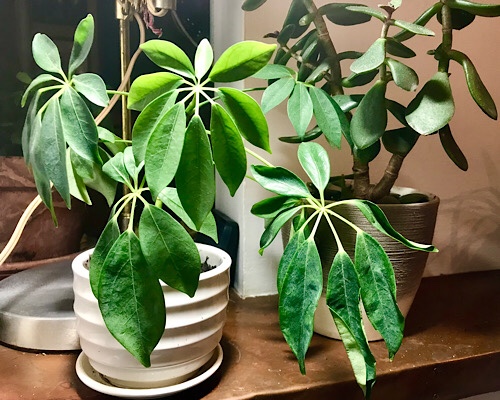
I found a couple of plants shivering on the sidewalk last week. They seem to be recovering nicely. I divided several plants over the holiday period, and repotted others. I find the plants help me stay inside.

If we are the first two, more of us will experience the last.

A co-worker of mine said today that he hated that everything we do gets criticized by someone. During part of the conversation, he also mentioned that once something written was made public and then questioned, an alternative meaning to the one meant (the alternative then necessitating clarification) often happens.
Writing, art, and other expressions do seem to have a life of their own. We need to do our best to be clear and then just go with the flow as what we say gets interpreted and passed on. An example, for me, was that until the change in administration, no one thought to ask me whether the name “rose garden” yoga had anything to do with Washington, DC. After the shift in January, a few people noticed how DC it could be and asked if my intent was to refer to the White House Rose Garden.
It was not my original intent to have that be one of the many things that came to mind when I chose the name, but I it works well enough if people think of the Rose Garden as one of the many possible referrents.
I saw this beautiful roll of chicken wire in the Enid Haupt garden when I was walking back to the office after a quick visit to see the Gods of Angkor exhibit at the Sackler Gallery (sorry about the absence of links; blogging from the BB).
I was first introduced to the idea of “found poetry” in junior high school and have developed a life-long habit of photographing words to change, enhance, and/or question their meaning and hidden beauty by the act of extracting them from their original place and presenting them as a photograph. Marcel Duchamp and others did what poets and photographers were doing with words with ordinary objects by presenting them as sculpture.
Here, where I have photographed the chicken wire roll, is the art a sculpture (because I could treat it as such) of which I have taken a photograph–the photograph being mere documentation? Is the art the photograph of what I have seen to the extent I am offering it as a vision and a dialogue generated by what I saw? Or is the photograph merely a snapshot taken with a hand-held computer device documenting an object that happened to be sitting there–not art at all? If it were not for artists such as Duchamp, could I or would I even be able to ask this question?
I think that analogous types of questions have been and can be asked about the variety of religious and mystical experience. Is there a particular way they must be experienced? Do such experiences have to fit within a prescribed framework to be valid? When are such experiences madness or delusion and when are they the voice of the spirit? Who gets to decide? Does it depend on the era and the culture in which the experiencer lives? Does the answer to any of these questions matter if the experiences lead one to a more loving, compassionate, and beauty-filled life?