Mars
The two books I read while I was traveling to California (San Francisco for the delight of it and Lucerne Valley to study with Paul Muller-Ortega): Home of the Dancing Sivan, India in Mind.
The first I picked to bring because it was one on the bibliography Paul has given us to read that I had not yet read and was also something that I wanted to read in anticipation for my planned trip to to Chidambaram in December. By coincidence, while we were on this intensive, Paul showed us a video of a ceremony at Chidambaram, so I was glad to have read the book on the way there. The second, I picked up recently at the Bryn Mawr Lantern Bookshop, where I do regular volunteer work. India in Mind is an interesting collection–well-known Western voices writing about India, but collected by Pankaj Mishra, an Indian author who lives part of the time in London. Much in the collection I have read before, but the editing gives a very interesting perspective on how we in the West have related to and imagined India. More reading in preparation for my upcoming trip and for my continuing exploration of what has drawn me to the yoga over these many decades.
The five books I bought while in San Francisco (the first three from my every year or three pilgrimage to City Lights Bookstore; the last two from a used bookshop in Hayes Valley near Yoga Tree’s Hayes studio):
The Essential Tagore (a large and beautiful collection), Great Tales of Jewish Fantasy and the Occult (fantasy and magic from my ethnic heritage–why just concentrate on other cultures such as India?), White Hand Society (more on Allen Ginsberg and Timothy Leary, which ties in at a deep level to my Westerner’s understanding of Eastern mysticism); Wintering (I was captivated by Sylvia Plath in my teens and 20s; it looked like a nice book), The Violent Foam (wonderful and profoundly important poetry).
Last night at house practice, we were led to think about humility (in Sanskrit vinaya). Yoga, similar to religion, tends to privilege the idea of humility.
From a one perspective, it is easy to think of the benefit that those in charge–the priests and the moneyed and privileged classes that support religious institutions to get help staying in power–get from preaching the virtues of humility. If the relatively powerless are led to believe that they will benefit spiritually from practicing humility before humans and institutions that hold sway over them, that certainly helps perpetuate a patently unfair status quo.
We can recognize our own skills and talents and relative worthiness and actively seek justice and fairness, though, and still be humble. However much intrinsic power we have and extrinsic fairness in distribution of power we seek, we can still recognize that we are not ultimately in charge of exactly how our life will play out in the vast and complex web of being. Feeling humility in the face of all that we do not and cannot know is just living in awe at the wonder of life. This, I think, is true and sustainable humility.

Peace and light, E — Posted with WordPress for BlackBerry.
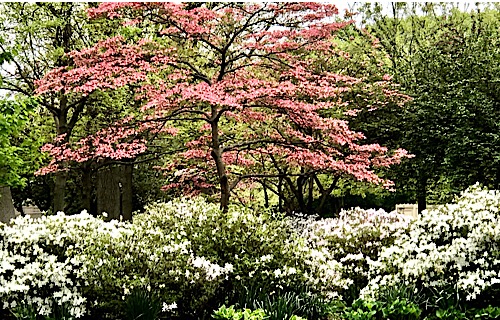
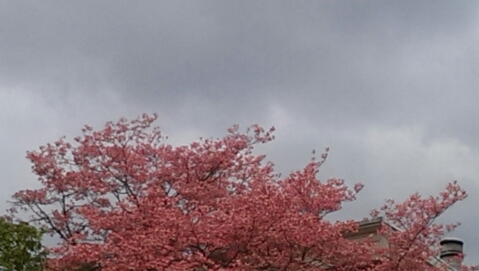
On my walk to work
Dogwoods and azaleas and
A soft welcome rain.