Found Exhortation


Peace and light, E — Posted with WordPress for BlackBerry.
On the column that supports this bas-relief and a larger than life standing portrait of Daniel Webster, is engraved: “liberty and union now and forever one and inseparable.” Kind of sounds like a description of the absolute consciousness, the one self, though that was probably, mostly not the intent.

In classical yoga, maya is the illusion that the tangible world is what is real. Only atman is real; the world we experience through our senses (and our senses them selves) as reality is an illusion. We renounce the world to escape the temptation of being drawn into it as reality. In so doing, though, we ineluctably must come to the conclusion that all that is ill with the world is as much an illusion as that which is tempting. In turning away from the world we would be also turning away from the pain of seeing inequity and suffering and the desire to seek change in the tangible, sense-experienced world.
As I was walking around New York City, ankle-deep in slush and being hyper-stimulated by the lights and the noise and the smells and the bustle and the choices, I found myself thinking about maya and that in its classical sense has two surface temptations for me. The first is the temptation to turn away from the stimulation, to reject consumption of more than needed to exist. In the face of such excessive stimulation, the idea of nothing, of utter simplicity, of quiet seems desirable. If the turning away is another form of seeking pleasure or escaping pain, though, it is still in the trap of maya — the worldly illusion that binds us in the pair of opposites–pleasure and pain. The second temptation, the temptation to withdraw from everything except seeking the light within, is more subtle. If we truly are to turn away from the world of the senses, we turn away from notions of justice and equality and freedom that are based how we live in the material world as much as we turn away from consumption.
The true path of renunciation, of pure meditation, is a rare and beautiful path, but to stay in the world and to withdraw ineffectually in such a way might earn the hackneyed epithet “navel gazing.” My path is not that of the renunciate yogin, nor do I have the fortitude to live a life of Christian poverty, which would reject riches and live for service. Where can we find the support in the yoga path to stay engaged and yet still live mindfully, fostering the expression and recognition of spirit in ourselves and others?
In tantric philosophy, maya is understood somewhat differently than in classical yoga. The maya is not the world itself. When we think that getting and having and avoiding is all that there is and that it is separate from spirit, then our lives are cloaked by maya, and we are ignorant (avidya) of the true bliss of spirit (satcitananda). To know spirit, we must see through maya. To do that requires discrimination (viveka) in what we take into our senses and ethically responsible action in the tangible world to align our lives in a way that expands the opportunity to recognize spirit, which in my mind includes having less material disparity in society, which disparity most assuredly makes the essential truth of blissful consciousness more opaque (due to the play of maya) for both the haves and the have nots. While we make our attempt to live with more discrimination and grace and with less cause of conflict or suffering (doing better some times than others), we still try to recognize and savor the exquisite divine in each sight and taste and sound and creation. How extraordinary always is New York in all its wild manifestation!
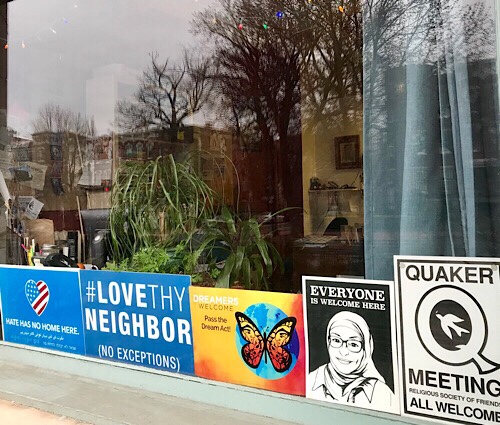
We did have practice at William Penn House, but I fell asleep before posting. Here’s the front window of William Penn House. We’re going to work on a sign for the yoga.

I have been pining for a great adventure that would crack open my heart and remind me of the exalted.
A look at the sky as I did errands in the middle of my work day reminded me that all we need to find that ecstatic sense of awe is to be open to it right where we are.
The sadhana is to stay filled with awe as we do our work and chores, no matter how prosaic or stressful. Easier said than done, but worth every bit of effort (tapas).
