State of the Garden
When I enter into a contact improv jam, I make a commitment. I commit to paying attention with all of my being, to myself, to my partner or partners of the moment, to all the others in the room, and to a spatial, energetic, and creative attention to the dance itself and for the dancers as community and co-creators of the dance (and sometimes for the observers, too).
I think this is not unlike the commitment of the tantric yoga practitioner who ideally engages all of life with a simultaneous attention to the inner and the outer, to the dance between the self and all that to which ones self comes into relationship and to the dance of relationship.

Peace and light, E — Posted with WordPress for BlackBerry.
Who goes past oblivious and uncaring? Who goes past preoccupied? Who takes a brief glance and continues on? Who stops to watch? Who discusses and invites? Who makes a special pilgrimage? Who is inspired to create by the creative offering?
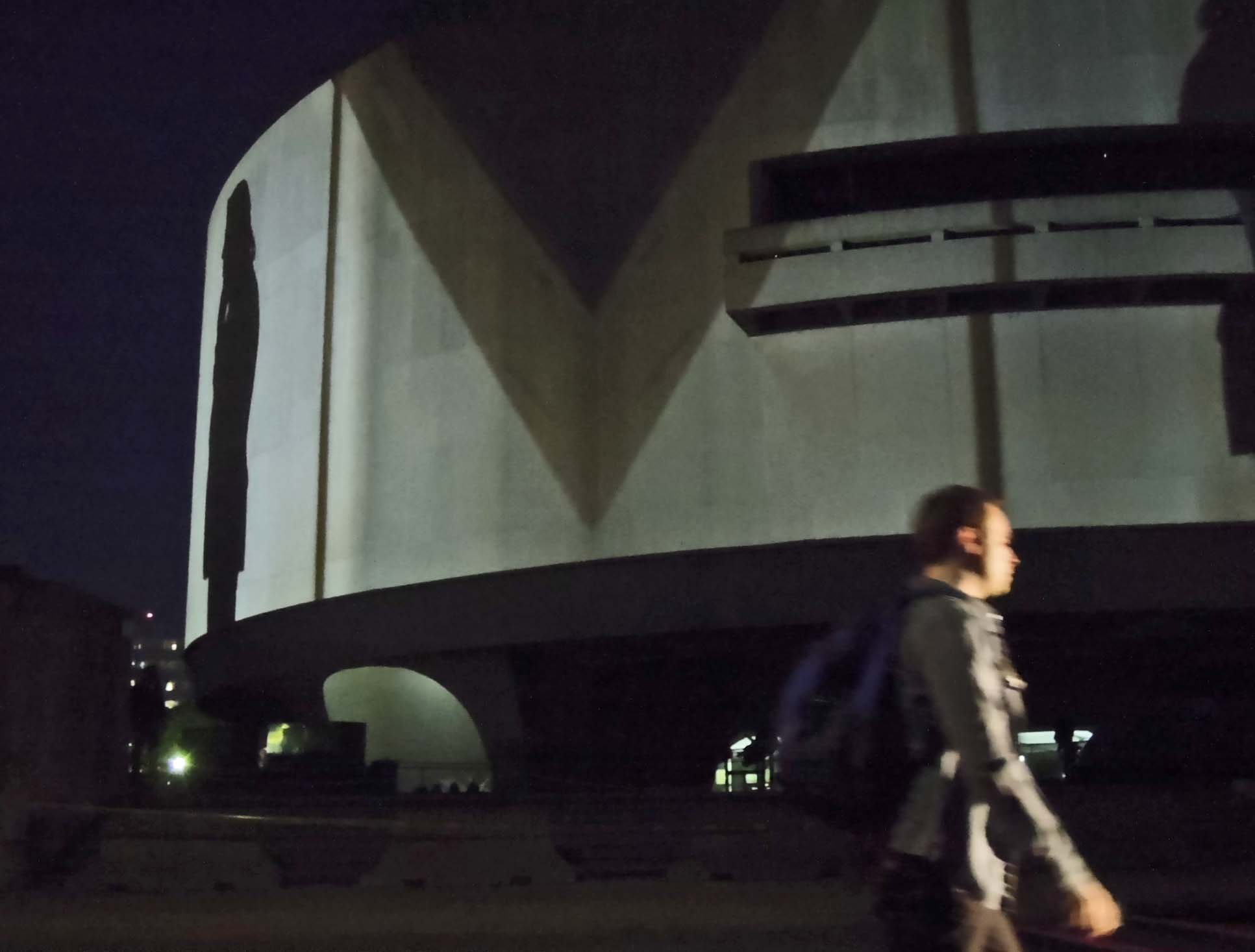
Photos from last week of Doug Aiken’s Song\1 at the Hirshhorn.
Dear Friends,
One of the yoga practices in Patanjali’s Yoga Sutras is sauca, which means cleanliness or purity. It does have a basic aspect of physical cleanliness, which has lead me this year to do an especially vigorous spring cleaning. I think following the principle of saucra also applies to the clarity of our intention for the practice of yoga: are we seeking to experience and act from a place of deep connection to spirit (or good or oneness or divine or whatever you name it)? In practicing sauca, I think the most basic question is whether we have dust on the mirror that reflects the good in ourselves obscuring our vision, whether there are blockages to the energy flowing to bring us to optimal physical and emotional health, or whether anything is getting in the way of our manifesting our intention?
When it has been too hot to go into the garden over the past month, I have been reorganizing and sorting through old papers. As a once every five or ten years spring cleaning, it is lasting longer than usual. I tend to be good about keeping on top of these things, but there are crevises of old records of my life that seem to just get stuck back into a folder to be decided on some other time. This afternoon I came across intimate letters from a friend who, not long after we went our separate what had become cross-continental ways with regret on both sides, discovered he had brain cancer. There were a few notes not in envelopes. I reread those, but did not open the envelopes. Back into the miscellaneous file until the next time. The same with the print-outs of emails to and from Peru right after 9/11. It wasn’t avoidance. Over time and distance, regret and grief have faded. I did not have the need or the time to read them now. They went back into the file because I am curious what will be my reaction to these documents when I am 87 should I be around in this body then. I find that when I see them after again more years have passed, I can see how much the yoga (asana and meditation) as a steady practice over time has shifted how I relate to my past, to all the decisions better or worse that brought me here today. I am more at peace with the various detours and convolutions for the teachings and the good at the time, even if they do not appear to have been squarely or most efficiently on the path.
Just as most of us have pieces of paper or things that for some reason get saved, but spend most of their time in a drawer or a file cabinet or a closet, we have thoughts and emotions around past experiences that can emerge into memory at what can seem to be the oddest of times. With a strong meditation practice, it can sometimes feel like we are cleaning out the closets of our mind. With a therapeutically focused asana practice, it can seem as though we have found old energetic entanglements, and it may feel that it would have been easier never to have practiced at all. If we stay steady and keep coming to class and our own practice, we witness how much change can be wrought. When we remember to bring our clear intention to the yoga mat, the meditation cushion, the garden and the kitchen, the laundry, work and commuting and everything we do, then we in an ever more refined and deepening way open to grace, the fundamental AnusaraR principle.
I am happy to let you know that I am now E-RYT 500. My spring cleaning on the physical level motivated me to do the paperwork with Yoga Alliance. My carrying the designation E-RYT 500 means that teachers taking my classes and workshops can get Yoga Alliance continuing education credits, in addition to Anusara study hours.
I am looking forward to studying with Christina Sell at Willow Street Yoga next weekend. Come join fellow yogis for what promises to be a joyously challenging weekend of classes. The following weekend, I head up to Vermont for the Anusara Grand Gathering. If you are going, let me know and we can try to connect.
Special June Location Information for William Penn House Classes: June 14 and 28, William Penn House will be completely taken over by conference groups. Class will be held at the house location. RSVP’s are required. For those who have been regulars, but who have been full up with other things in life than class, it is a sweet way to get back.
Hope to see you soon.
Peace and light,
Elizabeth
My favorite sutra in Patanjali’s Yoga Sutra’s is, II.16, “heyam dukham anagatam.” This translates roughly as “the pain that is yet to come can be avoided.” What does this have to do with a forecast of a hard freeze?
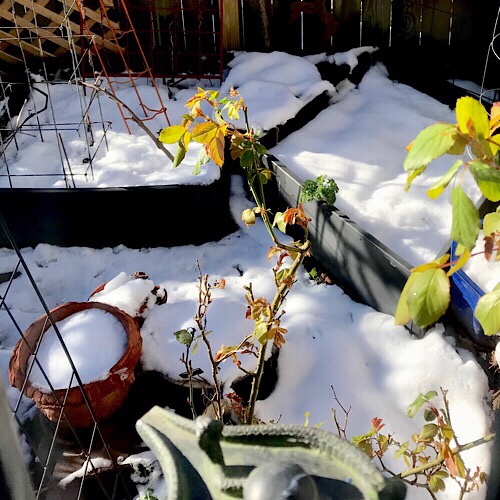
My chard, beets, and turnip greens are still flourishing. They can manage with a night or two in a row in the high 20sF, and that is all we have had so far. The forecast for later in the week, though, is for the first true cold snap since 1994 (you may remember that as the year when lots of people’s pipes froze). My winter garden (which does not have a cold frame due to lack of space — maybe I’ll get more creative next year, and I’ll try an experiement with plastic bags on Thursday night) cannot survive lows in the low teens highs in the twenties.
I could suffer today by bemoaning the coming cold, worrying about the garden, and remembering that I don’t like cold. That would be present suffering in anticipation of potential future suffering. I certainly can avoid that. I can also do what I did yesterday, which was harvest lots of the chard and most of the beets, put the beets into cold storage (vegetable bin in the refrigerator) and make pasta with sauteed garlic and chard. Between now and Wednesday night, I’ll harvest most of the remaining greens. I’ll make a big vegetable soup with the beets and the chard, maybe make chard pie or calzones (truly delicious), and eat the rest over the following days. I’ll feel grateful that in the bitter cold, I can be eating fresh garden greens. I’ll be even more grateful that I can just shop at the grocery store or the farmers’ market and don’t need to rely on my garden feeding me year round. I’ll also be happy for the hard frost. Part of the reason the aphids and the mosquitoes have been so bad is the absence of a hard frost in winter.
Some bitter cold in winter in a temperate zone is inevitable, as are sickness and death. We can avoid suffering by not just getting anxious and unhappy and suffering in the present, but not taking action to alleviate potential suffering. With preparation and practice, we can avoid some suffering. Just has preparing for winter in the garden can allow it to be productive for greater parts of the year, so too, with a steady practice of asana, pranayama, and meditation we can avoid some physical and emotional pain and suffering. Most important, with steady preparation (preparing for the potential for difficulties in the future is not the same as being anxious about it), when the inevitable comes, we will likely suffer less, at least in our hearts, if not in our bodies.