| |

Hard Freeze Forecast (Heyam Dukham Anagatam)

My favorite sutra in Patanjali’s Yoga Sutra’s is, II.16, “heyam dukham anagatam.”  This translates roughly as “the pain that is yet to come can be avoided.”  What does this have to do with a forecast of a hard freeze?

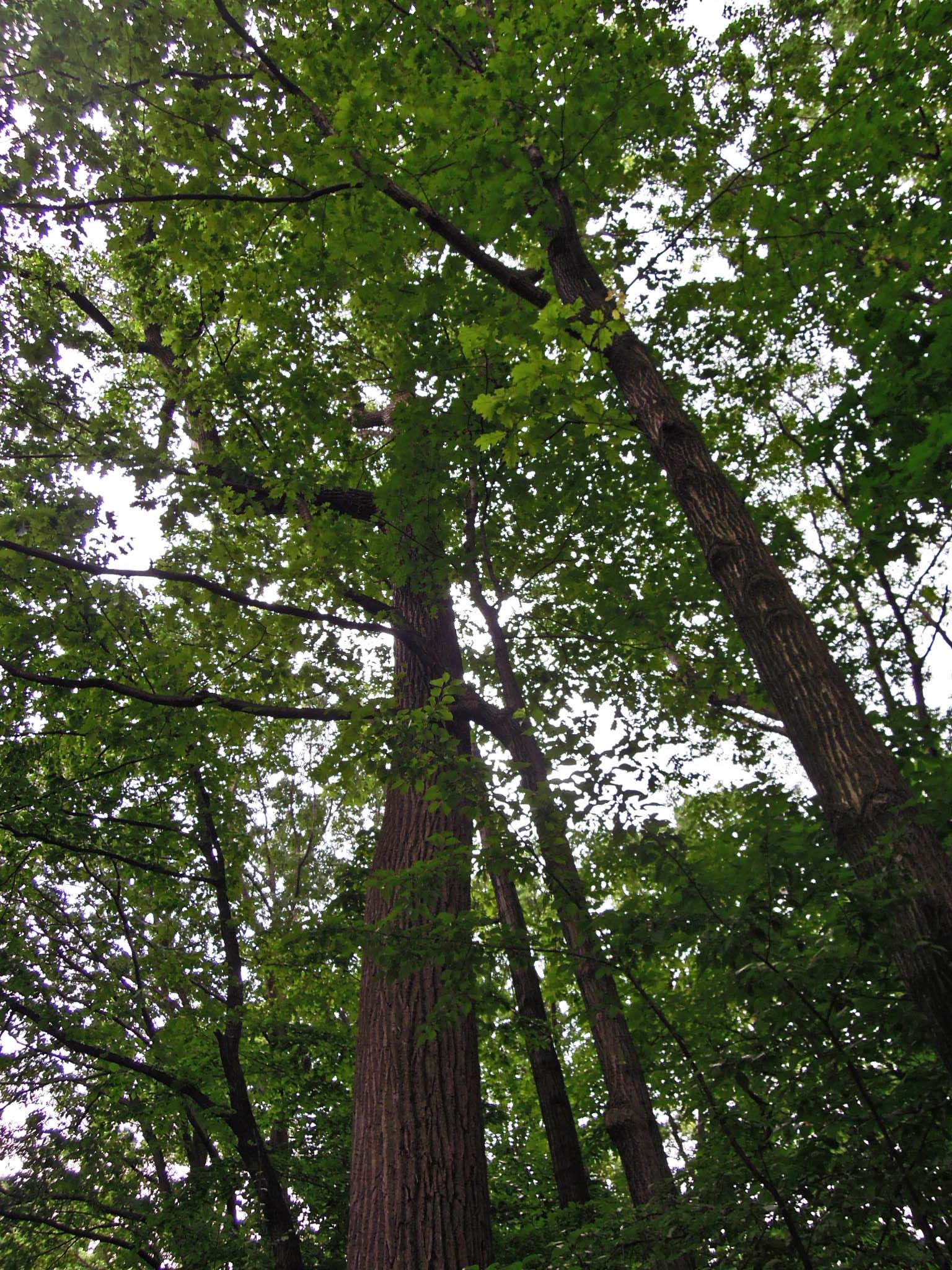
My chard, beets, and turnip greens are still flourishing.  They can manage with a night or two in a row in the high 20sF, and that is all we have had so far.  The forecast for later in the week, though, is for the first true cold snap since 1994 (you may remember that as the year when lots of people’s pipes froze).  My winter garden (which does not have a cold frame due to lack of space — maybe I’ll get more creative next year, and I’ll try an experiement with plastic bags on Thursday night) cannot survive lows in the low teens highs in the twenties.

I could suffer today by bemoaning the coming cold, worrying about the garden, and remembering that I don’t like cold.  That would be present suffering in anticipation of potential future suffering.  I certainly can avoid that.  I can also do what I did yesterday, which was harvest lots of the chard and most of the beets, put the beets into cold storage (vegetable bin in the refrigerator) and make pasta with sauteed garlic and chard.  Between now and Wednesday night, I’ll harvest most of the remaining greens.  I’ll make a big vegetable soup with the beets and the chard, maybe make chard pie or calzones (truly delicious), and eat the rest over the following days.  I’ll feel grateful that in the bitter cold, I can be eating fresh garden greens.  I’ll be even more grateful that I can just shop at the grocery store or the farmers’ market and don’t need to rely on my garden feeding me year round.  I’ll also be happy for the hard frost.  Part of the reason the aphids and the mosquitoes have been so bad is the absence of a hard frost in winter.

Some bitter cold in winter in a temperate zone is inevitable, as are sickness and death.  We can avoid suffering by not just getting anxious and unhappy and suffering in the present, but not taking action to alleviate potential suffering.  With preparation and practice, we can avoid some suffering.  Just has preparing for winter in the garden can allow it to be productive for greater parts of the year, so too, with a steady practice of asana, pranayama, and meditation we can avoid some physical and emotional pain and suffering.  Most important, with steady preparation (preparing for the potential for difficulties in the future is not the same as being anxious about it), when the inevitable comes, we will likely suffer less, at least in our hearts, if not in our bodies.
Similar Posts

  • | |

    The Fisherman and His Nets

    dorothy

    Earlier this week, I took a wonderful class with my friend J, who is an Anusara teacher based in NYC.  She started class telling a story of a fisherman.  The fisherman had worked hard and long during the spring, summer, and fall and was looking forward to a rest during the winter months.  He left his boat and went ashore, looking for shelter.  He came upon a brightly lit house and was invited in by a friendly host.  He was given a delicious meal and then brought to a beautiful bedroom with a fabulously made, soft bed with exquisitely scented linens.  He got into the bed, but tossed and turned and could not sleep.  Agitated by his inability to sleep, he left the house, went back to his boat, wrapped himself in his fishy-smelling nets and promptly fell sound asleep.

    J interpreted the story as saying that our familiar patterns bind us and keep us from discovering and receiving true beauty and bliss.  This interpretation resonated with the students; one called out in a conversation about the quantity of nets we have, that she could alphabetize hers, and we all laughed.  I heard something different in the story, though perhaps it was because I had seen part of The Wizard of Oz when channel-surfing in my hotel room the night before.  What I heard was that when we accept our work and our place, we find a place of true rest.  When the fisherman realized that his place was on his boat — at home with his work, instead of seeking ethereal bliss — then he found peace and true rest (“there’s no place like home, there’s no place like home…”)

    What is missing from the movie version of The Wizard of Oz, though, is that in later books, Dorothy goes back to the land of Oz, bringing her family and work (albeit that of a child) with her.  She, in effect, integrates the importance of prosaic home and work life with being in a land of enchantment.  In that, both interpretations of the story of the fisherman are partly true.  We need not to let our old habits bind us, but we also need not to cast off work, home, and community as things that interfere with our discovering bliss.  Instead, we need to find enchantment in our very being, as we live and work and relate in this world.

  • | | |

    My Own Personal Cloud (and the Malas)

    Last night another storm front passed us by with only a trace of rain, leaving us deeper in drought.  The wind picked up, the temperature dropped, and the clouds scattered, leaving the sky scrubbed bright blue and the air fresh.  Though this morning on my walk to work there was hardly a cloud in the sky, a rather menacing gray cloud hovered directly over the building where I work.  Observing this odd cloud led me to ponder about how I often feel that I have my own personal cloud–everyone else has purpose in their lives and is worthy of love, but not me (this is a bit of an exaggeration, but you get the idea).

    The reality is that all of us get such feelings to a greater or lesser degree some of the time.  It can be a helpful step in clearing away feelings of unworthiness to remember that it is part of the human condition.  The tantric yogis say that there are three cloaks or malas (anava mala, mayiya mala, and karma mala) that result from the manifestation of diversity from the pure universal out of its own play.  The sense of unworthiness we sometimes feel (anava mala) comes from forgetting that we are spirit, and anava mala– in whatever form it appears to manifest–is just because of the loneliness of not remembering our true self.  When we experience or create conflict or unhappiness out of the illusion (maya) that separateness and distinction are the only state of all that is real then we are in thrall to mayiya mala.  When we think we are completely in charge and responsible for everything we do and how it impacts the world, that is karma mala at work.

    We practice to pierce through the clouding of our individual consciousness by the malas.  By inviting ourselves to open to the luminous space of consciousness and to surrender to the very fullness of our being, we reduce the impact of the malas on how we conduct our lives.  Our practice helps us to remember our worthiness so that we can be happier and freer and do our work and engage in our relationships with more love and light.  It helps us remember the light in each being so we are naturally drawn to respond with more compassion and friendliness to everything on the planet.  The grace of dissolving  kriya mala is that when it is not obscuring our vision, we can engage fully on our path, but still accept that we are ultimately not in charge and do not know what the universe truly has in store.

  • |

    Addicted to Meditating?

    I am taking off most of the work day so that I can attend a special three-hour asana practice at Willow Street Yoga with Desiree Rumbaugh. In order to get done things that should not wait until Monday, I chose to start working at 6, so I could forget about work when I left for Silver Spring at 9 am for the workshop. I needed my usual practice time to get done what needed to be done in the time allotted.

    I noticed that I felt just a little edgier and less grounded this morning. Was it just feeling the pressure of needing to get things done or was it not having done my usual practice?

    As I contemplated this question, I invited into myself the feelings I get from practicing, which I could do precisely because it is the first morning in a couple hundred mornings I have not sat for meditation.

    What is important, though, is not to be addicted (with the side effects that come with any addiction when deprived), even as we are wholly committed to practice to have its benefits keep growing.

    Peace and light, E — Posted with WordPress for BlackBerry.

One Comment

Leave a Reply

Your email address will not be published. Required fields are marked *

This site uses Akismet to reduce spam. Learn how your comment data is processed.