| |

A Discussion About Pain

The other day in group practice, someone said they wanted to work on a particular pose; another teacher had people working on staying present with pain.

I questioned whether they should trust someone who suggested that they intentionally put themselves in a painful position and then stay there to learn to be with pain.

I questioned whether creating and staying with pain was in any way healing.

I questioned what they meant by pain. I think it is useful to stay with discomfort, for example staying safely with a strong posture that requires muscular and attention effort to maintain.

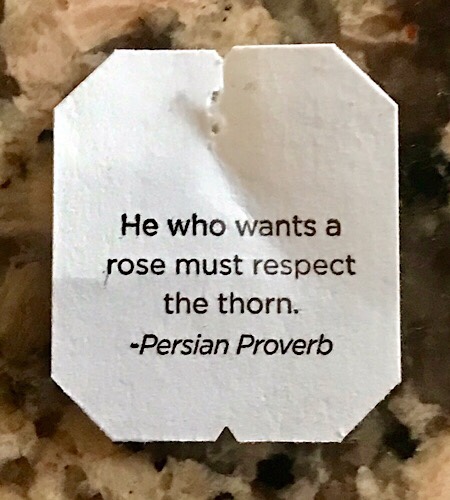
But pain is an effective warning system. If the pain is sharp or abrupt or sudden or is in tendon or ligament, etc, there will be no benefit to overriding your body’s message to stop.

Better to build strength of attention and focus and body and then apply the practices when life supplies pain that you have no choice but to remain until it heals.

Similar Posts

  • |

    Sukha (the why of sequencing and the foster cats)

    Last week, I used as a theme sukha — ease, comfort, happiness.  I was inspired by Lorin Roche’s discussion of translating in his “version” of the Vijnana Bhairava, which he entitles “The Radiance Sutras.”  In it he notes that “[e]ven more literally, sukha is (according to some etymologies) composed of su, good + kha, space.  A good space.”  At first blush, teaching about sukha might seem to be off-topic from my session theme of sequencing principles.  The whole purpose, though, of seeking to understand, practice, and optimize our sequencing in time and space on and off the mat is to find just that.  It is to be in a “good space,” to feel at ease, whether we are being challenged or delighted.

    I found myself contemplating sukha yet further this week (it is a recurring practice and contemplation theme for me — I love Patanjali’s sutra “sthiram sukham asanam”), as I have been observing and helping the foster cats make mine their new home.  When we are uprooted or out of alignment, we are not in a good space.  It is a struggle to feel happy or at ease.  When we find our rhythm again, then ease unfolds.

    There is a set of principles that generally works for taking uprooted animals (or people) and helping them feel at home.  Part of making them at home is their new person holding him/herself in a “good space” for the newcomers, which indeed helps them find their own, which is its own yoga.

    The blessing of yoga for us, and why we take ourselves to challenging difficult places on the mat, is so that we can, by use of intelligent sequencing of practices, techniques, and mindsets, discover how to feel connected to our own spirit wherever we are in time and space — the essence of ease in this body and mind.  The more we can do this for ourselves, the more we can do it for others.

  • | |

    What’s Blooming Inside Right Now for Me (is it “forcing” or inviting?)

    I’ve been living with blooms from bulbs since just before Christmas.  The amaryllis in the vase is the third bloom from a bulb I bought at the beginning of January; the third stem got too tall, so I put it in a vase, so it would not topple over.  The orchid I have had since it was about half this size and have been tending it by bringing inside and out with the seasons for over a decade.  It has bloomed every February without fail.  The paperwhites were a gift.  I enjoy a little of the scent, but find the usual presentation of several flowers simultaneously overwhelming.  I have brought them to flower one at a time.  As soon as the bulb flowers (and inevitably needs to be propped up somehow), I have cut the flowers to put in a vase and started the next bulb.  By the time the flowers in the vase have faded, the next bulb is budding.

    The cherry blossoms — this is why I dreamed of cherries blossoming; I had them in my bedroom.  In a previous post, I showed the nearly bare branches from a tree that had fallen in the blizzard.  Although gardeners would call bringing the branches inside “forcing,” I wonder whether I really “forced” these blooms.  What I did was take branches that would have gone to a landfill, brought them into an auspicious environment and invited them to bloom.  This seems to me, not unlike using props in yoga:  I might not be able to experience the full opening of a pose myself, but if I properly use props, I can expand what I can experience.  It is not the same as doing it on my own, but it still gives me a different sense of the beauty that can be experienced, just like bringing in branches that otherwise would have fallen or need to be pruned into the house to reveal their glory in advance of the spring blooming outside.

    The last photo is of dogwood and cherry that were on the side of the street two days ago (cherry tree down at the Japanese War Memorial); dogwood in a pile on the north side of the street in the 300 or 400 block of D Street, NE.  Start your own blooms, there is more winter in the forecast.  I am fairly certain from my previous experiment that the cherries will start blooming in a couple of weeks, but it remains to be seen whether the dogwood will want to open.


  • | | |

    Found Exhortation (and Tapas)

    image

    What does it mean to excel, to do well?  I think there is no excelling in yoga, at least not the way we conventionally think of excelling in school or career or sports.  But to practice in a way that is more than casual, there must be ardor–tapas. 

    Tapas is often translated as fire, and the texts are full of stories of outrageous physical exertions done to prove the tapas of the practitioners looking for boons from the gods.

    There is a fiery aspect to tapas, but I question whether it must necessarily be burning from physical exertion, though that is a path that calls out to many. 

    The fire of tapas could be thought of as doing what it takes to manifest the will to know something deeply enough to be able to experience the fluency and grace and delight of expertise.   It could be the ardor to show up in a disciplined and committed way for hours and days and years of practice, always still wanting deeper, fuller knowing.