| | | |

A Commitment

When I enter into a contact improv jam, I make a commitment. I commit to paying attention with all of my being, to myself, to my partner or partners of the moment, to all the others in the room, and to a spatial, energetic, and creative attention to the dance itself and for the dancers as community and co-creators of the dance (and sometimes for the observers, too).

I think this is not unlike the commitment of the tantric yoga practitioner who ideally engages all of life with a simultaneous attention to the inner and the outer, to the dance between the self and all that to which ones self comes into relationship and to the dance of relationship.

Peace and light, E — Posted with WordPress for BlackBerry.

Similar Posts

  • | |

    Gardening When It’s Not Quite Time (and Sauca)

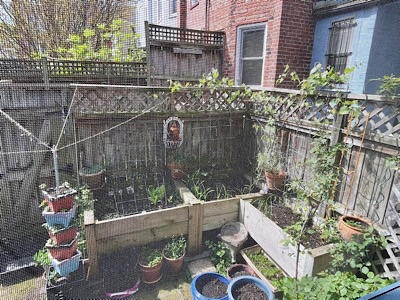
    The first of Patanjali’s niyamas (part of the ethical precepts that are precursors to the practice of asana, pranayama, and meditation) is sauca — purity or cleanliness.  The practice of sauca includes in it a literal exhortation to be physically clean.  I think it also carries with it a sense of order, a cleaning out of physical, mental, and emotional clutter, so that we have more clarity.  When we find more clarity, we can be more in the flow with the inexorable sequence of time and space.

    Experiencing how we fit into the pulsation of time and space is one of the exquisite joys of gardening.  This time of year, avid gardeners are eager to get int the garden, and it is tempting to get started to soon, to start new things without cleaning out the old.  When we are more experienced (and know better the optimal sequencing of starting the garden with the shifting of the seasons), we also know that we might have gotten a few days in the 50s F, but it is still winter.

    Emphasizing the practice of sauca now will serve the whole gardening season.  When it is still cold, but the heart yearns for the garden, is the time to be planning, reorganizing, and cleaning to get ready for the days when it will stay warm enough for growing outside a cold frame or protected area.  As I use a lot of containers, now is the time for me to see what containers need repairs, removal of perennials that did not make it through the winter, and new soil.  It is the time to prune what is better pruned now than in the fall.  This is not just trashing everything, but seeing what should be preserved, what should be repaired, what should be cleaned, and what should be discarded or given away.  It is cleaning out what gets in the way of an optimal flow of energy to experience the greatest effulgence of nature.  By practicing the cleaning and clearing out phase with intention and enthusiasm, I am present with the garden and also in sequence with the light and the temperature.  In this way, just as I am when I practice these principles on the mat, I get the bliss of yoga.

  • |

    Krishnamurti’s Daily Thought

    Three or four weeks ago, I came out of my morning meditation thinking about the teachings of Krishnamurti.  (I read a lot of Krishnamurti when I was in high school, so his teachings have influenced me with varying degrees of subtlety).  Two or three days later, I was “spammed” with Krishnamurti’s Daily Thought.  Someone, apparently somewhere in Europe, somehow got access to an email list to which I subscribe.  As I had just been thinking about Krishnamurti, though, instead of hitting “unsubscribe,” I read the thought for the day.  I’ve been reading it since, and I am exploring how much my readings in high school have been part of my foundational thinking.

    When I was volunteering at the Lantern yesterday, one of the other volunteers called and reminded me that there were books put aside for me.  It is not my habit to put books aside, and I had no recollection of so doing, so I was curious to discover the books were there.  One of the two books was a slightly water damaged paperback of Krishnamurti On Right Livelihood.  The universal energies are obviously suggesting I examine this early influence.  I am contemplating what the following question means for me in today’s current context of multiple wars, a deep recession, and burgeoning environmental degradation:

    Is it not necessary for each one to know for himself what is the right means of livelihood?  If we are avaricious, envious, seeking power, then our means of livelihood will correspond to our inward demands and so produce a world of competition, ruthlessness, oppression, ultimately ending in war. Krishnamurti, Ojai, July 1944

Leave a Reply

Your email address will not be published. Required fields are marked *

This site uses Akismet to reduce spam. Learn how your comment data is processed.