Asana, Pranayama, and Yoga Practice | Community and Family | Food for the Mind (Yoga Philosophy, etc) | Meditation
Found Exhortation

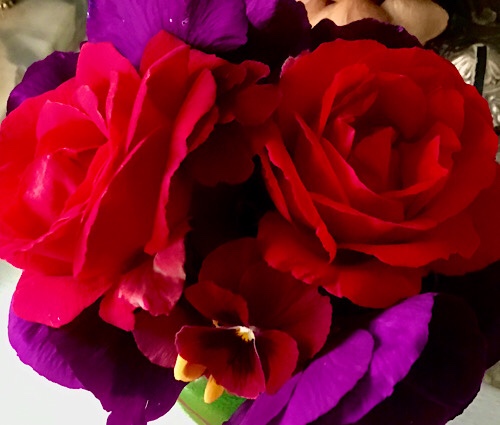
The rose is just starting to bloom, the pansies are thriving with the cool, wet weather. These would not have made it through the coming rains, and it is sweet to have some inside blossoms in these times (and I am grateful for such privilege).
This morning I found myself on a bus instead of the train to New York because of the horrible accident on Tuesday.
While waiting for the bus, I was interviewed by local TV. They were interested in reactions of people whose travel plans were impacted by the accident.
This is roughly what I said:
This was a horrible tragedy that need not have happened. (I suppose it was for the best that I had not seen the news that a certain candidate for President was quoted as saying that we shouldn’t use a tragedy as an excuse to spend more money on things like safety lest I explain why we need better safety, more spending on mental health care, better treatment of employees, and more investment in infrastructure instead of lowering taxes for the wealthy, etc.) I said that the inconvenience meant nothing to me when I think of those who were on the train. I said that I wouldn’t stop taking the train. One accident would not change my commitment to using public transportation instead of the greater environmental impact of driving.
And I said I’d had a good experience with Amtrak customer service. I didn’t say it to the camera, but I expect part of my positive experience was my recognizing when I spoke with an agent that the customer service employees must be having an incredibly stressful time of it.

View from the bus, approaching Manhattan.
Live Green has put together a short and simple list of suggestions for a greener holiday party. Not throwing the party yourself and know your hosts will be using disposable cutlery, napkins, and cups? I’ve been bringing my own napkin and carry cup to parties for years, just as I bring them on trips and around town. Some people think it’s weird, but a surprising number comment that they think it is a great idea. And people are always grateful when I bring a healthy, vegan or vegetarian food item as my offering for a potluck.