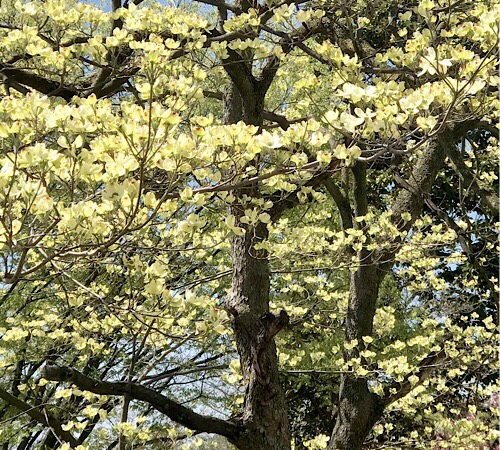
Signs Around Town
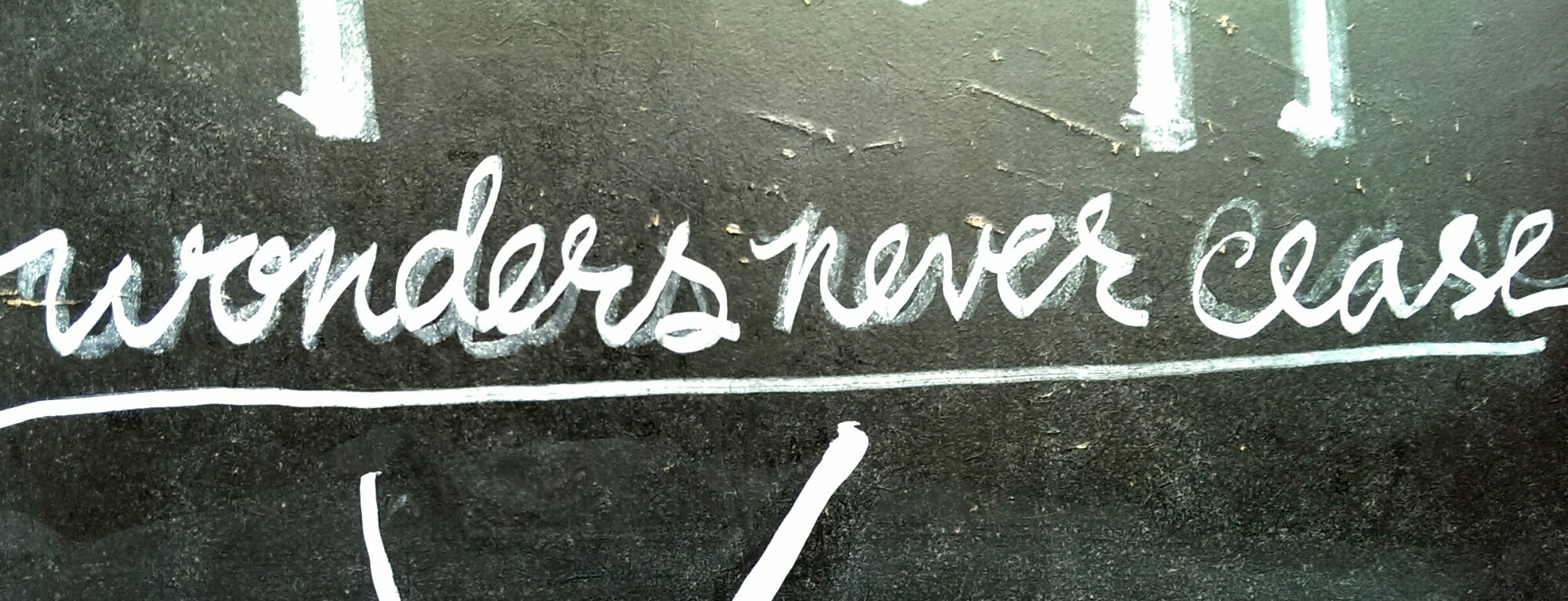
I confess that I needed to turn over to find the answer. I do not feel any call to learn the Bible for my salvation, but given the influence of religions that claim to be informed/derived from this text in this democratic form of government, it seems to be something I need to know better to be an educated citizen.

Peace and light, E — Posted with WordPress for BlackBerry.
For those of us living fully in our modern material world, as I am, it is important to think not so much about denying ourselves things or giving them up, but rather, seeing how we can make shifts to living more lightly. One of my heavy impacts on the environment is computer usage. Right now, I have on my work computer, my home laptop, and my Blackberry.
All of you who are reading this blog are doing so via computer or by a personal device with web access that requires battery charging. I’d hazard a guess that most of these portable computers are not being powered by sun and wind. I am still waiting for Pepco to come and change the meter to hook up my newly installed rooftop solar panels to the grid, and I don’t have a solar charger for the Blackberry.
One thing I thought I could do to help make enjoying this way of connecting have less impact on the environment would be to go carbon-neutral. In the world of plastic, the ideal is don’t use, reuse, repurpose, recycle. In the world of electricity, it is don’t use, use from better sources, off-set. With respect to my blog, I am choosing to use the necessary electricity, but go solar with my house, buy electricity from a source that uses offsets (Clean Currents) for that electricity that is in excess of what the solar panels will provide, and I’m choosing to offset this blog’s impact based on readership through the Carbon Fund.
 Last week, when I said to a colleague, “see you Tuesday,” she replied, “where are you going?” It was as if simply to enjoy where I live or rest or quietly take care of house and garden was not within the range of possibility. Is it that I am somehow not worthy if I have not planned to do something I could talk about when I returned to the office? Or is it that pervasive societal sense that happiness lies only in finding new and more experience?
I think that it is important to have episodic time away from doing. I used to get sick when I’d been running around non-stop with work and errands and exploration, etc. Now I try to take some quiet time at decent intervals. It does not need to be a full day. Just a couple of solid hours without engaging in a planned activity every couple of weeks makes all the difference in my mood, my health, and the quality of my work.
The phone pictures do not begin to show how magical the sliver of oversized crescent moon in line with the approaching conjunction.
PS Details to post soon for Zoom practice Thanksgiving morning. I hope you will join me wherever you will be (10-11:30am EST).