Questions Around Town (and Lila)

As I was preparing my week’s classes, I was led to contemplate the off-the-mat import of the words — “in, back, and apart” — used to describe the actions that activate the Anusara alignment principle “inner spiral,” which is also referred to as “expanding spiral.”
The meaning and point of “yoga,” we are told is union. In the Anusara system, inner or expanding spiral is a critical element of the “universal principles of alignment,” which are designed to get us physically and energetically into our optimal blue-print.
How can going in, back, and apart be what would create an expansion that would enable us to better experience our whole selves and all beings as spirit and in unity? Doesn’t that sound entirely backwards?
Going “in” is one of the key aspects of yoga practice. If we only look out, we can get caught up is grasping and longing, which causes great suffering. Although we need also to appreciate the outside, going in, especially by means of meditation. Going in is what enables us to discover our only true freedom, which is the freedom to choose how we react internally to whatever is going on outside of ourselves.
Moving back in yoga is not the same as backing off or away or turning one’s back on things, which would move us away from connection. Rather, when we move our awareness to the back body or open to what is all around us and not just what is forward-looking, we can soften and open to the unknown and to the unseen, allowing the subtle energies to move and guide us to deeper insight as to what connects and unifies.
Moving apart in inner spiral literally is the expansive component of the action. Moving apart is not becoming more separate, but making space (spaciousness) where there was binding, allowing for more freedom to experience all that is possible. It is also about breaking apart from our preconceived notions of being limited and different.
Moving in, back, and apart does not just realign the legs so that we can heal our pelvis and low backs and radically expand our flexibility even as our bodies age (as if that weren’t good enough). Energetically, it can revolve our whole way of connecting to ourselves and the world.

Peace and light, E — Posted with WordPress for BlackBerry.
I am reading Philip Goldberg’s American Veda–From Emerson and the Beatles to Yoga and Meditation; How Indian Spirituality Changed the West. It is another of the recently published works on the interplay and inter-influence of east and west. What distinguishes American Veda is that it is more about how Indian spirituality influenced western/American society overall, than an analysis of the yoga that we practice in the west. Much that one might expect to be in the book is there: Emerson, Thoreau, Swami Vivekananda (and the Parliament of the World’s Religions), Ramakrishna, Paramahamsa Yogananda, Osho, Muktananda, the Beatles, Maharishi Mahesh Yogi, but there are other connections that are less well-known.
As one generally familiar with the history of Indian philosophy and yoga practices coming to the West, it reads more like a survey or overview than an analysis to the extent that it tries not to leave out any one who could have been an influence and goes into little depth regarding any particular influence. (Note: the author himself says that the book is limited to Vedic/Hindu influences; he refers the reader to other sources, in particular, How the Swans Came to the Lake, for the transmission of Buddhism to the west).
What is most interesting to me about reading American Veda is that it reads like old home week. I recognize the names and the philosophies and the way people speak about spirituality and religion, and the author lovingly and thoroughly shows how profound and widespread is the influence of Vedic thought in America, even where no attribution is given. I recognized even when I first discovered Indian philosophy texts in high school the interplay between how me and my fellow unprogrammed. liberal Quaker friends were talking about mystical experience and understanding of God/Spirit and the Indian philosophy, and it is lovely to have a book where someone went out and did all the research and gathered the sources. By the time I was thinking about anything at all really, Indian philosophy was already something in my consciousness thanks to the Beatles and the Beats. The Beatles discovered Maharishi Mahesh Yogi when I was six, which was the year that Sgt Pepper’s Lonely Hearts Club Band and Magical Mystery Tour came out and my parents for some now unfathomable reason gave them to me for my Christmas present. My older sister and I played those albums over and over again on our portable record player, whirling ourselves into states of dizzy ecstasy with the sitar grooving in the background on our favorite songs.
I was moved to read the Bhagavad Gita by reading J.D. Salinger’s Franny and Zooey. I do not remember whether this was in 9th or 10th grade, but I read Salinger because was what cool, smart kids read. What I remember is that I read both Franny and Zooey and Catcher in the Rye (probably read the latter first) before Catcher in the Rye was assigned reading in 10th or 11th grade and that while I was not particularly impressed with Holden Caulfield, I really wanted to be as brilliant and educated and extraordinary and talented and philosophical as the children in the Glass family, and so I tried to read what they read (though alas, I read it in translation, where they were able to read the Greek and Latin and Sanskrit, etc.) By 11th grade, a teacher had given me J. Krishnamurti to read, and his anti-guru guruness appealed to my Quaker sensibilities.
One of my stay at home projects was to expand the garden to the sleeping porch, making for a lovely practice area off the room that serves as the yoga studio. Strawberries, cherry tomatoes, and green beans are arriving.


Peace and light, E — Posted with WordPress for BlackBerry.
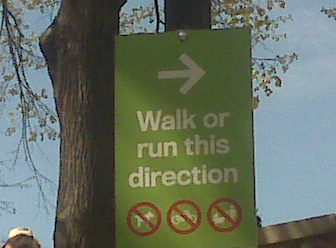
Peace and light, E — Posted with WordPress for BlackBerry.

At the National Zoo