Art and Culture | Asana, Pranayama, and Yoga Practice | Food for the Mind (Yoga Philosophy, etc) | Meditation | Photos | Poetry
What leads you to practice?



I am pleased and excited to announce my first public, in person practice since the inception of the pandemic. Is it any surprise that this yoga offering is an invitation to the garden, which is a place dedicated to creating and sharing joy, learning, and nourishment throughout the community for over 50 years?
Come get out into beauty and into your own body and into the dirt on Tuesday, June 6th, from 9 am to 12 pm: at the Washington Youth Garden, on the grounds of the National Arboretum. After the welcoming yoga practice, we will all join the staff and the regular volunteers (I’m one of them), in the garden. Throughout the time, I will be available to respond to individual questions about yoga and about optimizing physical alignment/orientation to make it more sustainable to work in the garden, especially for older bodies. Here’s the link to get more details and to register: Yoga and Volunteering at the Washington Youth Garden
Think this sounds great, but you’re hoping for a different time or location, please feel free to reach out.
I have had a more stressful than usual couple of weeks at the office. While I was walking into the office, I was thinking about how the more deadlines I needed to meet and the more difficult interchanges I had to bring to the most optimal resolution, the harder it was also to have energy to give to those who are in far greater need, though I seek ways to be of service.
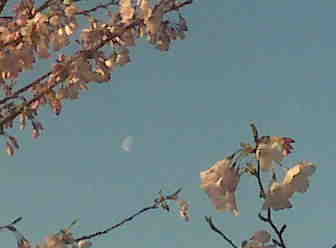
When I saw the oversized half moon dwarfed by the cherry blossoms, it helped put things in perspective. Nothing I do immediately impacts life or death. A hard week does not mean much in my life as a whole, my tribulations are only so much play in the midst of the outrageous ground of all human being, human being is only one small part of life on this planet in this galaxy in this universe, and who knows how vast is the realm of consciousness. I smiled at the moon and the blossoms and thought of their beauty throughout the day.
Peace and light, E — Posted with WordPress for BlackBerry.

Peace and light, E — Posted with WordPress for BlackBerry.
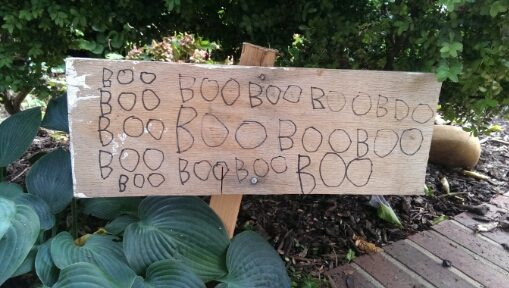
The intention of mantra and japa is to help us refocus the mind. Anything we repeat or allow to repeat in our awareness will groove itself into our being.
Be ware of what you repeat to yourself or otherwise.