| | |

Dakshinamurti

Sometimes we call out the names; sometimes they call out to us.  I’ve been too tired and stressed to yearn for more adventures in the near term, but this week, I have found myself wanting to be in India, to be surrounded by the colors and the sights and the outrageous display of creative imagery.

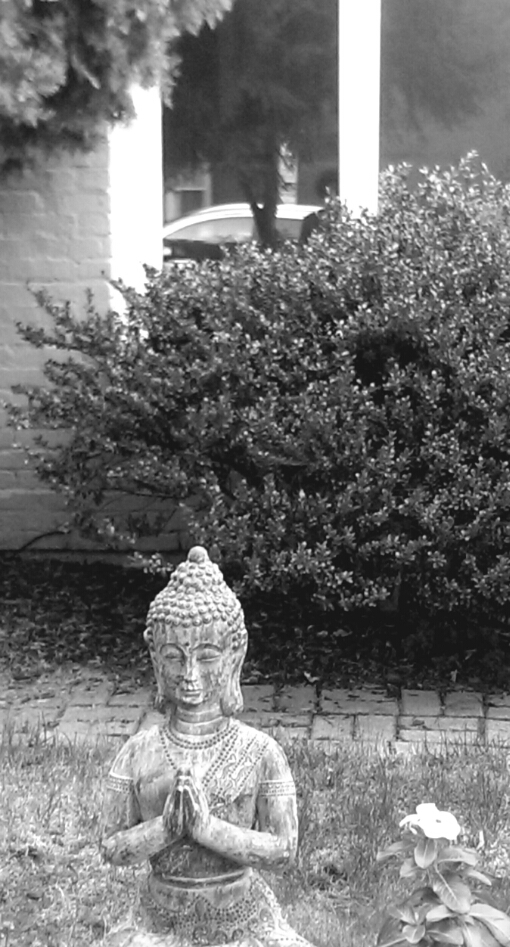
The photo is of a roadside temple, with Siva in the aspect of Dakshinamurti–guru of all knowledges (jnana).  I have been told that is good to chant to Dakshinamurti when one is looking for support and guidance in teaching.

In my work as a civil servant, I spend much time informally teaching colleagues and the regulated community the details of the complex area that is my specialty.  I set my intention to be able not only to be clear, but to convey a bigger purpose even in that which does not readily come to mind as being something of spirit.

Dakshinamurti

Similar Posts

  • |

    Yoga Citta Vritti Nirodaha

    I slept restlessly last night and woke early with concern for those who were in the metro crash.  Being already a bit agitated, worries about getting things done at work also were arising.  Despite my restlessness, I made sure to sit for meditation.  Thoughts kept arising, but by the time I was into my sit, I was able to find a space, where I was not tangled or unsteadied by the thoughts.  I felt more peaceful and able to meet the challenges of the day.

    In times of agitation, I often find myself drawn to contemplate again Patanjali’s sutra 1.2:  Yoga citta vrtti nirodaha. In classical yoga, it means to still the thought waves.  This is meant to be the ultimate purpose of yoga:  to still thought so that what is beyond mind and body can be revealed.

    Practicing and studying from a tantric perspective, I think not so much of stilling my thoughts when I practice and meditate, but rather, finding a sense of alignment, an allowing of and making allowance within my being for the rhythm of the thoughts like a sailor getting sea legs on a boat, so that I can be steady (sthira) and have a greater sense of peace (shantaya) and light (tejase), no matter how wild are the thoughts arising and sensations entering in the field of my consciousness.

  • | |

    Simulcast, Drama, and Perception

    Last night I went to see the National Theater UK’s  simulcast (tape-delayed) of Helen Mirren performing in Ted Hughes’ translation of Racine’s Phedre at the Shakespeare Theater.  The tragedy of Phedre is misinformation, misguided helpers, and passion that has gone beyond sweet engagement to maddened attachment.

    A stage production is intimate and designed for the small audience of those present in the theater.  When it is merely filmed (instead of being turned into a movie), it sometimes feels forced because it is watching a film of a stage production, instead of being invited in as one is when one is either at the stage production or the filming is done as a movie, which is designed to include the viewer in a manner for the film.

    What was hard about watching the filming of the stage production, was being forced to have the camera’s and director’s perspective; there was no ability to turn my head and shift which part of the stage to give my attention.  At the same time, I felt appreciative of the miraculous offerings of technology:  the filming made something that is usually limited to those who can afford theater of that extraordinary quality and who are able to be in a certain place at a certain time available to tens of thousands around the globe, including me and my friend.  In that way, the filming both took away the intimacy of being physically present, but simultaneously created a unifying experience for a much bigger group of people.

    I was inspired to think about the limitations and differences among the perceptions of the characters, of the critics (talking about the play and the film), of the smaller, elite audience (the actual theater goers’ — I’ve been at that theater in London), of the technologically broadened audience, and of mine in response to the essence of the tragedy, the story and substance of the play, the delivery of the play, and my own life as informed by the play.

    It seems an interesting lesson on many levels on how we can choose to live with our passions, how we can react to limits and changes in our ability to perceive our own selves and the world around us, and on how and what we invite in through the doors of our perception.

  • | | |

    The Walk From My House to House of Hands (and the start of Standard Time)

    It felt good to sleep in and still wake up at my usual 6am.  I did my morning practice, went to meeting for worship, joined in at a fundraising lunch for Pakistan flood relief, looked at the Truth Beauty exhibit at the Phillips, took a walk in the neighborhood, and then took a short nap.  Then I took one of my favorite walks in the neighborhood — from my house to House of Hands, the home of my neighbor, friend, and wonderful massage therapist Patrick.  As you can see, the sun was setting as I walked to a 5pm appointment.  In honor of the change of seasons, the heat was on the massage table.  Nice.  It was dark when my massage was finished, but I had hot soup for dinner and am looking forward to my evening meditation and practice.  I do not have many days that are this luxurious and free of commitments.  I enjoy them to the fullest when they come.

Leave a Reply

Your email address will not be published. Required fields are marked *

This site uses Akismet to reduce spam. Learn how your comment data is processed.