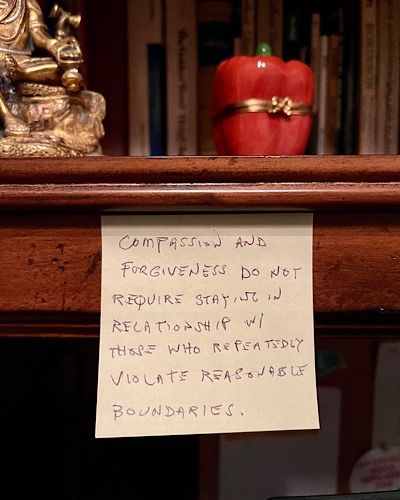
Signs Around Town

They’re everywhere. Just be careful how and when and why you invoke them.
They’re everywhere. Just be careful how and when and why you invoke them.
Today I walked a circuit of the mineral water springs of Saratoga.

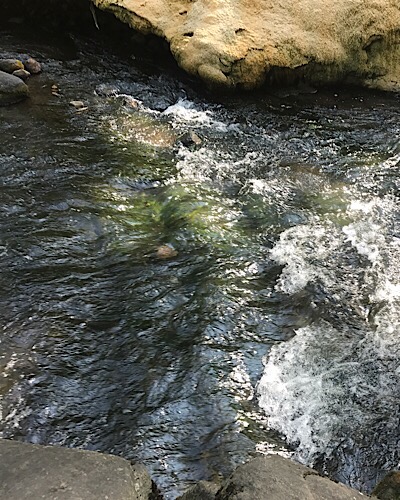


I cannot tell from looking at the image on my Blackberry whether the words “faith” and “hope” that appear on this statue can be discerned in the photo, but they are there when standing and seeing the statue in person.
This morning, when I was reading through the news, I came across a curious headline that averred that the killing of Osama Bin Laden had brought us a “rare moment of unity.” This saddened me, as did the reportage of spontaneous celebrations.
I am calling on my reserves of practice so that my sense of faith and hope for humanity, for peace, and for social priorities is not as faint as the way the words appear in the photograph.
Peace and light, E — Posted with WordPress for BlackBerry.
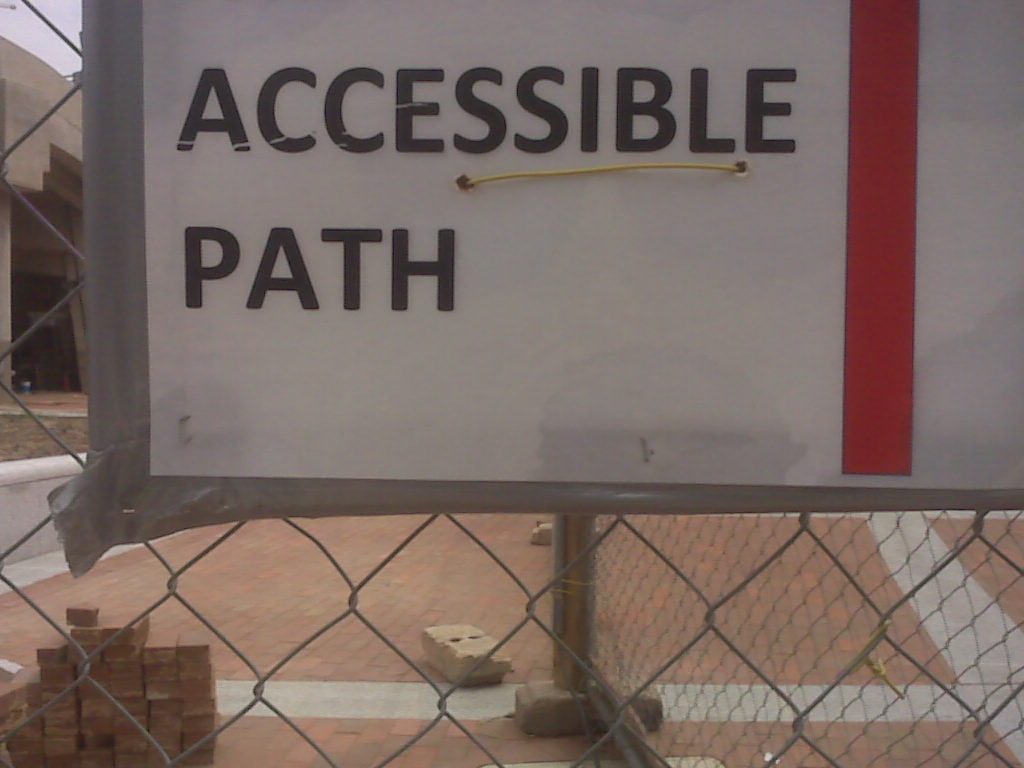
The yoga texts speak of a number of paths to enlightenment–the instant one (for those who have spent many previous lives on the path), the path of action, the path of knowledge, and the path of devotion. They are not completely separate. They intertwine and support each other. Individual practitioners do, though, tend to find themselves drawn more to the methods of one path than another. We have the greatest likelihood of staying and progressing on the path, if we do not fight with the practices, but go with what suits our nature.
That being said, it good also to challenge ourselves by trying practices that push our buttons. Those are the practices that truly give the opportunity to learn to be grounded, at peace, and centered in the face of frustration and discomfort.
Peace and light, E — Posted with WordPress for BlackBerry.

Peace and light, E — Posted with WordPress for BlackBerry.
I have been indulging in reading the thriller Angelology (complete with stories of angels and the war between good and evil), which I picked up at the Books for America shop in Dupont Circle a couple of weeks ago for the kind of night of reading that is the equivalent of a night of watching television if I had a television. Relatively early in the book, a professor says to one of the brilliant students who is a central character to the plot: “I have found that our texts will speak deeply to someone or they will say nothing whatsoever. It depends upon your sensitivity toward the subject. The mind and spirit become ripe in their own fashion and at their own pace. Beautiful music plays, but not everyone with ears can hear it.”
This statement encapsulated the ongoing thinking I do about my attraction to yoga and the tantric philosophy. I was contemplating especially deeply this week on my return from California, with no particular insight arising, what has drawn me in to this world of meditation and yoga. What am I doing, having been born in New York City and working as a civil servant in DC, coming from atheist Jewish grandparents and converted to Quakerism parents, finding such joy in learning Sankrit chants and working with energetic principles described in these ancient and medieval Indian texts? I do not doubt that the practices resonate and the texts speak to me and that the attraction is energetic, just as we are drawn to certain tastes and colors and entertainment and people and no interest arises from others. I just wonder why these practices and texts and not something else and why they hold me to such a degree that I am moved to teach them.