Asana, Pranayama, and Yoga Practice | Community and Family | Food for the Mind (Yoga Philosophy, etc) | Quaker
Note to Self
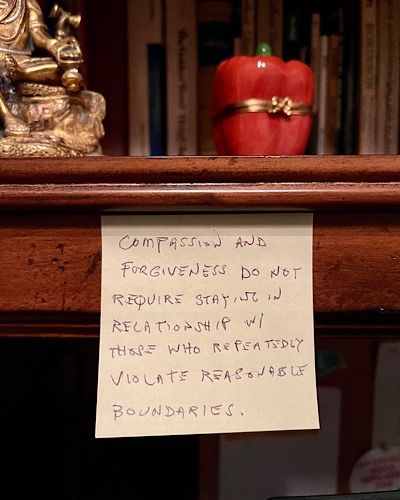
Having just returned from Arizona (yes, Sedona is in Arizona, as hard as that may be to believe from any perspective other than cartographically) from a meditation retreat, and having two more scheduled with my teacher at the same location during the year, I have pondered with my usual degree of self-questioning about the potential impact of my choices the suggestions to boycott Arizona.
I had decided — perhaps because continuing to study with my teacher, including on retreat is so important to me now — that as I pretty much go straight from the airport to the meditation retreat and back without shopping, I am probably supporting people who did not support the immigration law. On previous trips, in addition to paying for the food and lodging at the retreat (my teacher lives in California, so the tuition goes to California), we ate at a Mexican family-owned restaurant and a raw foods restaurant and bought some supplies at the natural foods store (eschewing the Whole Foods in favor of the local natural foods store). I’ve decided it is OK — perhaps even a good thing — to support those who clearly were not in favor of the immigration law.
What does it mean to engage in a boycott? Who does it hurt and help? What impact could the Arizona boycott have? Have you thought about whether to boycott Arizona?
Lavender in the balcony garden and Lenny’s crepe myrtle

50th birthday week in California dancing, playing, exploring, thinking, relating, connecting, witnessing, creating.

Wanted to share with all of you the text (plus link) of an email I received today from FCNL:
Here in Washington, everyone agrees that the current level of federal budget deficits is unsustainable. Our FCNL policy is that – with a few exceptions – government should take in sufficient revenue to cover the nation’s needs. But as our lawmakers debate how to cut the deficit, we need to insist on truth telling; a serious consideration of all federal spending, including the Pentagon’s budget; and open discussion about priorities. Contact your representative today.
The plan that the House leadership offers for a vote on Friday fails that test. The plan proposed by Rep. Paul Ryan (WI) reduces the $15 trillion federal budget debt by about $155 billion over 10 years – that’s a drop in the ocean. This plan “saves money” by transferring resources from programs that assist people with low and moderate incomes to wealthy individuals and corporations.
Rep. Ryan’s plan, according to an analysis by the Center on Budget and Policy Priorities, would cut $4.3 billion in federal spending – two-thirds of that directed at programs for people of low and moderate incomes. The plan would then give $4.2 billion of that sum away in tax cuts that benefit primarily wealthy individuals and corporations.
We at FCNL want Congress to be serious about federal government spending, which means looking at ALL expenditures and balancing priorities. Cutting waste, fraud and abuse makes good sense. The place to start is with Pentagon spending. Fair and adequate taxes and other government programs should also be examined.
Urge your representative to reject the Ryan budget and to support efforts to make at least $100 billion a year in cuts to the Pentagon budget, as recommended by the Sustainable Defense Task Force.
Ask 5 friends to contact their representative too.
Who says we can and should cut Pentagon spending? The answer may surprise you.
The Sustainable Defense Task Force outlined how nearly $1 trillion could be cut from the Pentagon budget over the next 10 years. Read the summary and share it with others in your community.
Read the analysis of Rep. Ryan’s budget that was done by the Center on Budget and Policy Priorities.
Find out more about the Our Nation’s Checkbook campaign to shift money from the military budget to advance other priorities.