| | | | | |

Prasad (and Opening to Grace)

During one of the sessions at the workshop last weekend in New Jersey, John Friend made a passing reference to the difference between receiving and taking.  He did not go into any detail because it was not central to the theme of the class, but it led me to contemplate on my own about the difference between taking and giving in the context of yoga practice.  In so doing, I thought about the concept of prasad — which is food that has been blessed and is offered to those who have participated in worship (puja).

When offered prasad, one does not take it.  Instead, the cupped palm is turned up to receive the prasad.  The recipient does not get to pick through the basket and choose which sweet looks the biggest or the tastiest, but simply receives with gratitude the sweet or fruit that is infused with the intention of spirit.  The active part is the showing up with openness and receptivity to the offering, the blessing, the nourishment being offered.

Coming to yoga class or doing our own practice (asana or meditation) should be, I think, like preparing to receive prasad.  What is primary in the practice of Anusara yoga is being open to grace, but we can no more force openings or enlightenment (grace and insight always elude grasping),  than forcing any particular physical posture or goal really yoga practice.  The point of effort in yoga to improve and expand alignment and knowledge is to enable the practitioner to receive more fully all the potential gifts and grace of practice, and then in turn make fuller and more complete offerings to others.

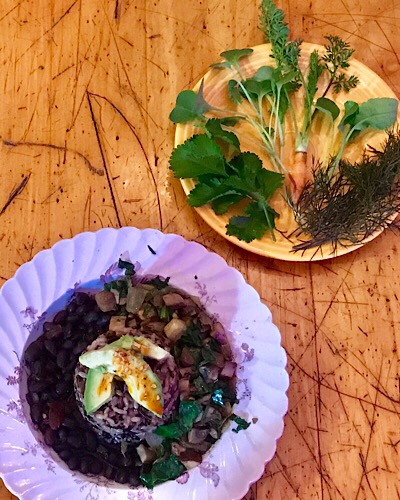
Below:  offerings at the Chelsea Farmers’ Market
Similar Posts

  • | | | |

    Reminder–No Class Tuesday July 2nd (and Svatantriya)–Web Version of E-Mailing

    Dear  Friends,

    Just a friendly reminder that there’s no practice at William Penn House or the house next week.  I’ll be off exercising the civil liberties currently available by traveling with my beloved to upstate New York to participate in tantric yoga philosophy camp (I know that’s not everyone’s idea of fun, but for those of us who love philosophy, it is quite wonderful to have found a group of people mostly outside of academia who truly relish such a conversation).  An afternoon and dinner in the City and a visit with my sister and brother-in-law who are only an hour out of the way will further emphasize just how much freedom I have to come and go and to gather in groups and talk and write.  For me to be going on such a vacation was partly good fortune and partly a lot of hard work and partly my balancing many conflicting desires, needs, aims, and possible outcomes, shaped by both the freedoms and strictures of this society.

    With regard to the strictures, I’ve seen and experienced just enough work-place harassment and discrimination and scholarship student financial struggle and their impact on my well-being to know that, as many challenges as I have faced, life can be far more burdened and limited by hardship and challenge.  I know from what was given to me and what was denied or only came after much hard work, how important it is that we make the safety nets of education, health care, housing, nourishing and tasty food, and a healthy ecology for all in our society.  I go on these trips to study philosophy or to practice yoga or to surround myself with beauty and flavor not ignorant of how much I have and how much it depended on scholarships and a decent public education and student loans and millions of women (and many men) before and with me seeking autonomy and meaningful choice as to how to live their lives and care for their bodies.

    I head out on vacation because I need both rest and inspiration, but I go knowing how much there is to be done at this, as Marge Piercy called it, “cruxtime.”  I go to study and talk, not just for anticipated pleasure, but also with the intention to open up new insight on how, since participation is unavoidable, to navigate more skillfully this volotile time in human history.

    I wish you a holiday week in which you are able recognize and experience your truest freedom–even if it is just the freedom of how to respond in the face of outrage or crisis or tragedy–and invite you to come join us for yoga some Tuesday night at William Penn House (click here for info) or the house practice on my return to nurture your body and join in community and conversation.

    Peace and light,

    Elizabeth


  • |

    Sukha (the why of sequencing and the foster cats)

    Last week, I used as a theme sukha — ease, comfort, happiness.  I was inspired by Lorin Roche’s discussion of translating in his “version” of the Vijnana Bhairava, which he entitles “The Radiance Sutras.”  In it he notes that “[e]ven more literally, sukha is (according to some etymologies) composed of su, good + kha, space.  A good space.”  At first blush, teaching about sukha might seem to be off-topic from my session theme of sequencing principles.  The whole purpose, though, of seeking to understand, practice, and optimize our sequencing in time and space on and off the mat is to find just that.  It is to be in a “good space,” to feel at ease, whether we are being challenged or delighted.

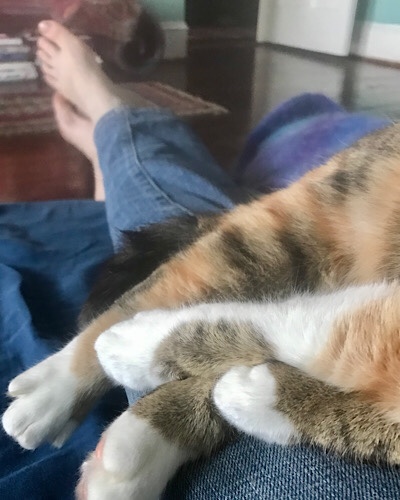
    I found myself contemplating sukha yet further this week (it is a recurring practice and contemplation theme for me — I love Patanjali’s sutra “sthiram sukham asanam”), as I have been observing and helping the foster cats make mine their new home.  When we are uprooted or out of alignment, we are not in a good space.  It is a struggle to feel happy or at ease.  When we find our rhythm again, then ease unfolds.

    There is a set of principles that generally works for taking uprooted animals (or people) and helping them feel at home.  Part of making them at home is their new person holding him/herself in a “good space” for the newcomers, which indeed helps them find their own, which is its own yoga.

    The blessing of yoga for us, and why we take ourselves to challenging difficult places on the mat, is so that we can, by use of intelligent sequencing of practices, techniques, and mindsets, discover how to feel connected to our own spirit wherever we are in time and space — the essence of ease in this body and mind.  The more we can do this for ourselves, the more we can do it for others.

  • |

    Signs Around Town (Excerpt)

    Being free from worry is not the same as being free from challenges of embodiment–internal and external.

    A key point, for me, of living with attention (mindfully), is learning how better to prepare to address challenges or to avoid them, as appropriate, and become more serene in responding when there’s no more preparation that would change what is coming.

Leave a Reply

Your email address will not be published. Required fields are marked *

This site uses Akismet to reduce spam. Learn how your comment data is processed.