NY-NJ-DC Light Show
Splendor is where you find it:
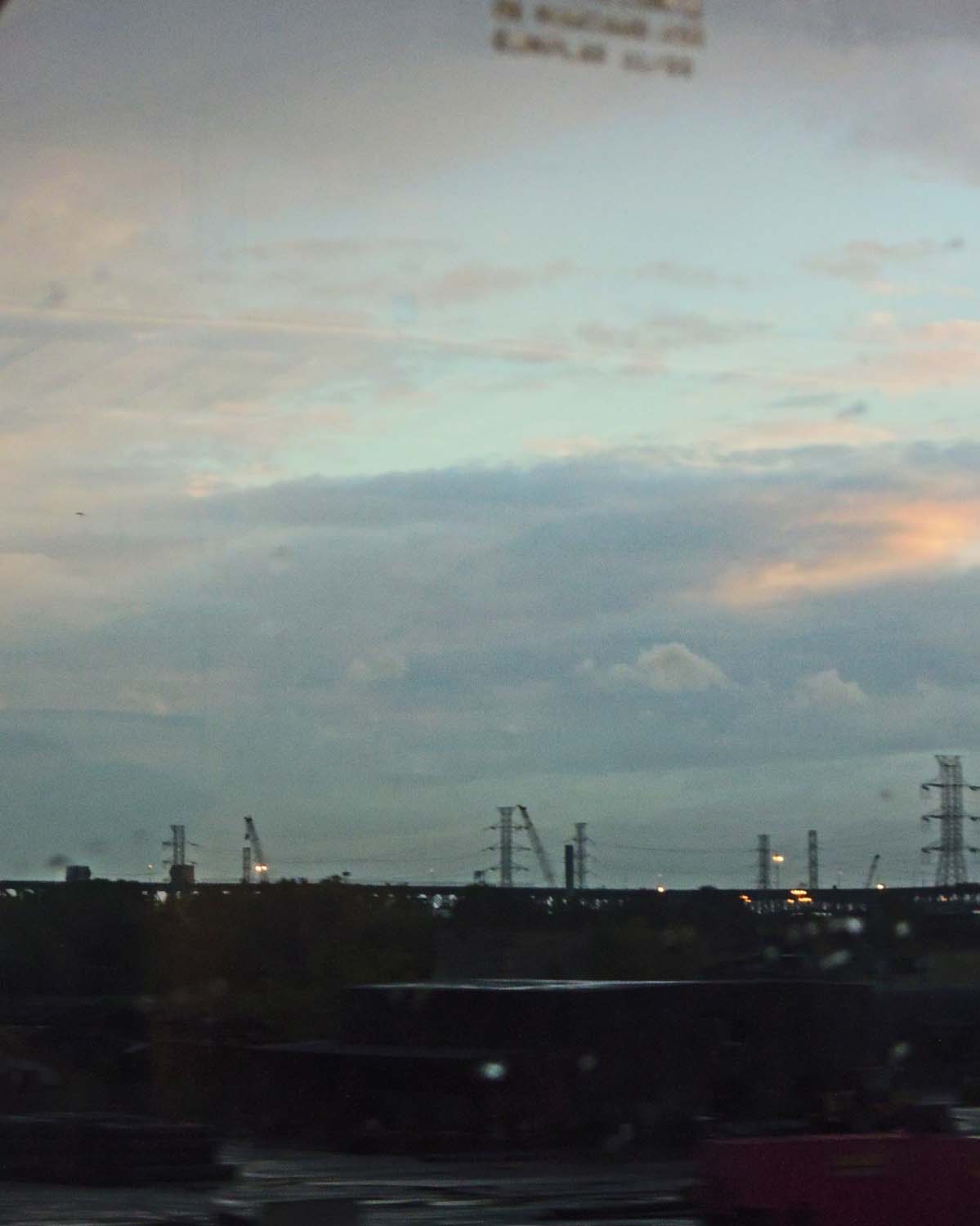


Splendor is where you find it:
All the tomatoes were picked green. Those that are red changed color, but did not otherwise ripen. Still, cooked for a long time in the slow cooker with lots of red wine, they will make a fine sauce.
I am reminded by the tomatoes, I was reminded at a yoga workshop with Elena Brower that I attended this weekend, a really good question is what are you going to do with the resources you have?

The problem with trying to run away to make things better is that we still bring ourselves with us. We don’t have the luxury of hitting the “reset” button after we’ve done things that we wish we had not done.
Yoga and meditation practice can help give us a sense, though, of being reset by giving us more and radical acceptance and compassion and the ability to simply marvel at the very intricacies of the dance. From there, we can release what binds from our history and continue on, knowing that it is a choice to respond in the same way as we have in the past when the old patterns confront us again (which they inevitably will).

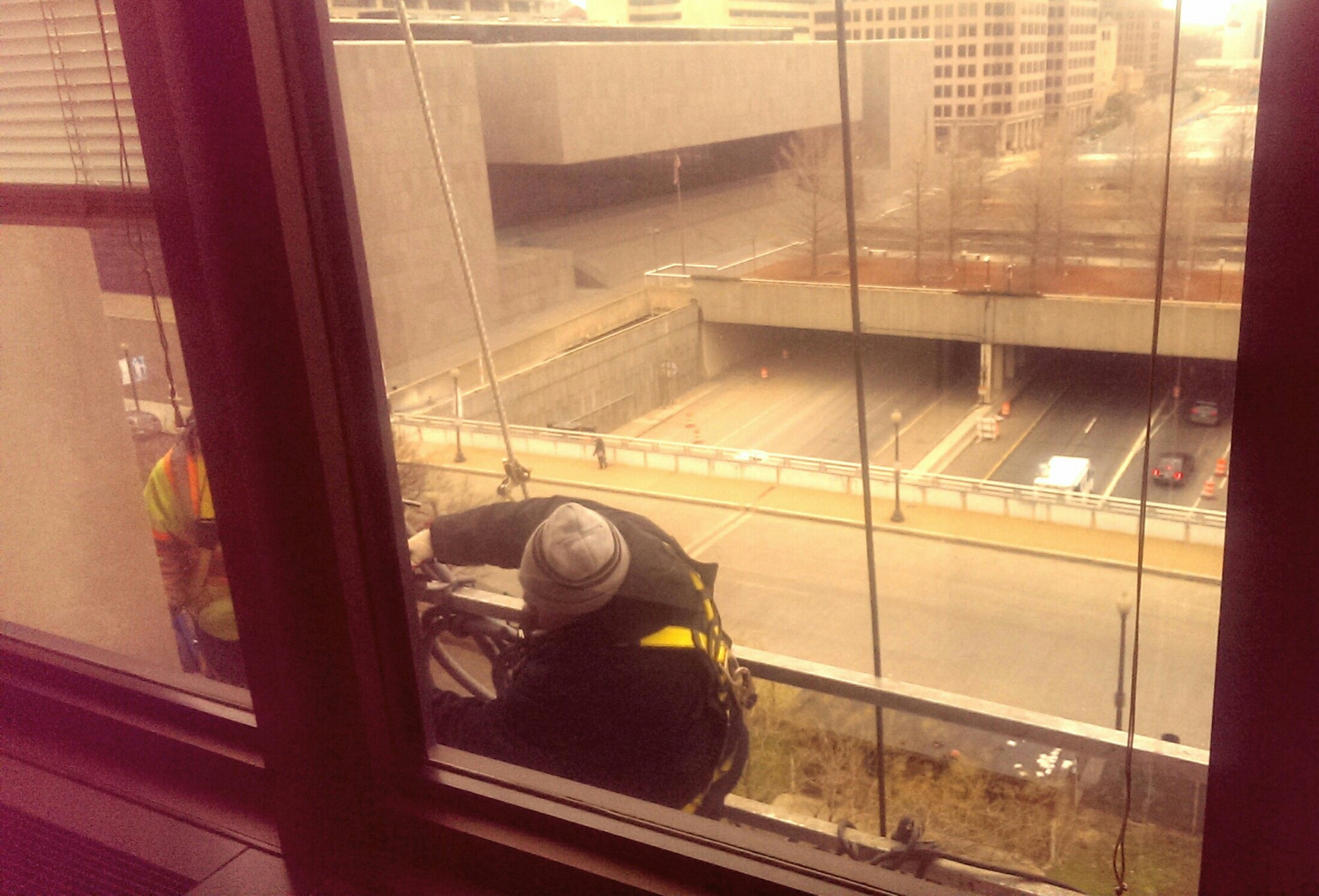
These workers were caulking the fifth floor windows of my building today. It was snowing. (the flakes were too fine to show up in the photograph.) I wish them (and will donate money and sign petitions, write letters, etc to back up my wishes for all workers) health care, child care, retirement benefits, and a safe (as it can be) job free from discrimination, harassment, and wage theft.
For the first few years I was teaching, one season a year, I would have as my overall session theme the Anusara invocation (for the words written out, click on “invocation” in the menu bar above). In so doing, I invited myself and others to contemplate at the heart level the meaning of each word, of why we were making the invocation, of how the invocation might inform not only our practice, but how we bring our practice off the mat and into our daily lives. Each time I chant the invocation–and it has been hundreds of times now over the years I have been studying, practicing, and teaching Anusara yoga–I seek to invoke into my practice the deepest qualities of the heart that it represents.
Over the winter break, when I was preparing for this session, the invocation called to me. I decided it was time to make it as a specific offering again. Last week and this week, including in the restorative workshop offered at Willow Street Yoga last Saturday, I have been exploring namah shivayah from the first line. Namah–which has the same verbal origins at the English word “name”–means to bow, to honor, to name. It forms the basis of the greeting namaste–with the light in me, I bow to the light in you. Sivayah here is our siva nature. It is variously the light within, auspiciousness, spirit, divine nature, elemental goodness.
When I was practicing in preparation for teaching the week’s classes and the restorative workshop and contemplating (practicing bhavana on) namah shivayah, I thought about a question I often get when I teach restoratives: “should I be maintaining the alignment principles or should I be relaxing completely?” When I get the question phrased this way, I look the student straight in the eye and respond, “yes.” I get a quizzical look; how could the answer be “yes” to an “either or” question? The answer is “yes” because in each pose, we are seeking to embody the fullest expression of namah shivayah. Taking the time to make sure to be in alignment when setting up for a pose, moving into a pose, reaching the pinnacle of a pose, and then moving out of or dissolving a pose, is out of loving respect for your body and the energy that courses through your body. We seek to be fully in alignment in all stages of each pose, not only to minimize the likelihood of being in pain or getting or aggravating an injury and to increase the likelihood of healing any existing injuries and expanding our capacity to feel free in our bodies, but also out of a profound respect and honor for the self, the teachings, and the practice.
Sometimes people think that focusing on getting the alignment just right is fussy or rigid and the antithesis of relaxation. In the case of restoratives especially, everyone coming to the practice wants to be at peace and feel free of effort. In the hunger to get to a place of relaxation, some hurry into the pose without honoring the alignment. Oftentimes, it is the hurry to relax and the loss of attention to the details of alignment (of both the mind-body and the props) that leads to pain or discomfort in a pose that is meant to be held for a long time, as are restoratives. When a student tells me that they are in pain in a particular posture, I invite the student to back off, set up the pose again, and far more often than not, all discomfort disappears, and the student is able to move into a blissful place. The student then experiences for herself how much the alignment enables the surrender to the exquisite opening to siva and the blissful attributes of siva (satcitananda).
One of the reasons I find restoratives to be such a powerful practice is because they require such focused attention on alignment to enable full relaxation. As such, they are a great way to understand the need for the perfect and simultaneous balance of effort (tapas) and surrender (ishvara pranadhana). So the answer is “yes;” the answer is “nama shivayah.” In everything we do, in every aspect of our practice on and off the mat, we want to be consciously in alignment. We want to use all the knowledge that has been imparted by our teachers and experienced in our own practice as a way of honoring and naming and helping to enable an unceasing, simultaneous, and full surrender to our own siva nature.
I have been meditating more in recent weeks than I had been for quite some time. It is providing a balance to all the intensity.


Peace and light, E — Posted with WordPress for BlackBerry.