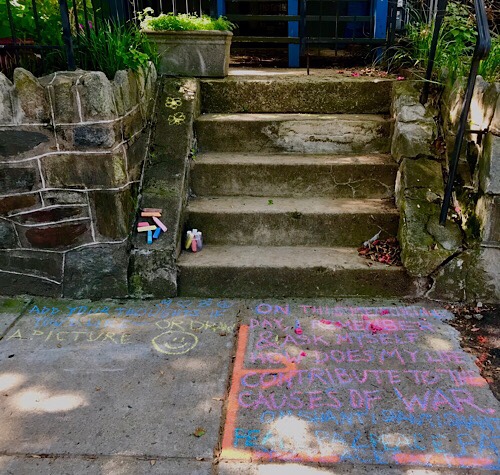
Good News on Proposition 8
But what should we think about doing next?
But what should we think about doing next?
A friend once said that when he heard sirens while he was meditating, he used it as a reminder to share the light of meditation. It is easy to think of roads blocked by emergency vehicles and blaring sirens as disruptions, inconveniences, and annoyances when they are coming for someone other than ourselves. I had a moment of thankfulness this morning that the minor problems are the kind of problems that I have. I was thankful, too, to live where if something bad happens, strangers come to the rescue. I offered healing light to the emergency workers and the person or persons to whom these workers were rushing.

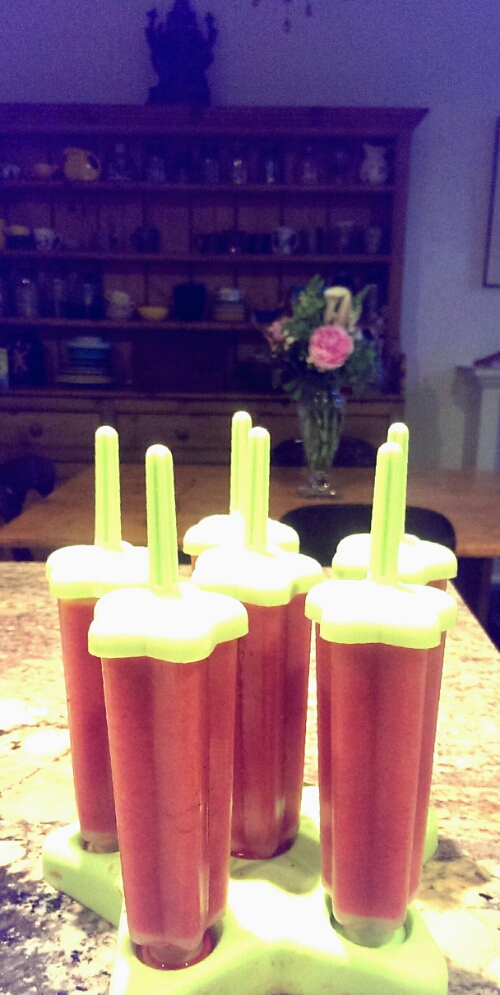
The strawberries were very nearly mashed into juice by the hot walk from the Penn Quarter Fresh Farm Market Home, but no matter. I had intended to make them into popsicles. I couldn’t resist the bouquet from one of the farmers.
I am using my lunch hour to renew my driver’s license. I have been waiting less than 30 minutes so far, and there are only 10 people ahead of me. Moving right along in this mix of young and old, well-heeled and evidently struggling, all races, and apparent levels of education. We all wait in the same line.
Is it moving smoothly (knock on wood) because I wore a necklace with an image of the elephant deity Ganesha (remover of obstacles)? Or was it because I read the website and planned my visit for a day and time that was less likely to be crowded? Perhaps it is a combination of the two.
What I do know is that coming with a good attitude and a meditational (yes, I know this is not a real word) level of patience and acceptance for the process makes it feel a whole lot easier.
Peace and light, E — Posted with WordPress for BlackBerry.