|

Upheaval (and Nilakantha)

Last night when I arrived to teach, I found that the room where I teach had been booked with something else (mistakes happen) and the alternative offered by the space just was not viable.  I was peeved, but just canceling class did not feel right for the space (which has treated me well), my students, or myself.

Instead, I waited until class time, gathering the students together and giving the options.  Fortunately, class was small because it is summer.  Two  students agreed to drive us to my house, which is usually a walk, but one already had her car with her on her way home from work; and the other had hers just a couple of blocks away at her house.  All the students, including two brand new students who came along for the adventure, arrived at my house less than 10 minutes after the usual class start time.  To honor everyone for being so flexible, I turned the class into a donation class, with the proceeds going towards July’s cause:  the ACLU.

This turn of events seemed to me to fit well with the message of the Shiva archetype Nilakantha, which just happened to be the name of Shiva that I have been contemplating this week as I have been preparing my classes.

Shiva drank the poison that was stirred up when others were searching for the nectar of immortality.  In the quest for the unrealistic, these beings brought to the surface a poison that would have killed all humans.  Shiva drank this poison and trapped it in his throat, which turned it blue.  This gave him the name blue-throated, or nila-kantha.

The challenge I encountered yesterday was certainly one of the well-off middle class.  If it were not for our lifestyle, the abrupt change of plans and disruption could not have even felt poisonous, but we are creatures of our place and time.   We took the potential chaos from having been stirred up and instead of letting it ruin our evening, we made it into a celebration and an offering.

And I am working with the space not to have it happen again.  Many thanks to the students who came and were so gracious.

Similar Posts

  • | |

    When was the last time you noticed a “Hare Krishna?”

    Yesterday morning, before I read the article in the Washington Post I discussed in yesterday’s post, a memory of an acquaintance from Quaker youth camp entered my seated meditation.  I had not thought about C in at least 30 years.  He was a couple of years older than me, and all the parents were a buzz with talk and worry when C decided that instead of going to college, he wanted to give away his possessions, live in a community devoted to simple living, a vegetarian diet, daily worship, a like-minded community, and spreading what they believe is the word of God.   Nowadays, many of the people who are in my broad social network would have nothing but admiration for someone who lived by and practiced such tenets, including the daily chanting of the name of Krishna (or some other deity).  In the late 70s, the parents were deeply concerned:  “He is in a cult, he is brainwashed, we need to get him back.”  “Back to what?” I remember thinking at the time.

    I have not seen a member of ISKON (International Society for Krishna Consciousness) in years.  Why not?  Not because the “cult” has disbanded.  Rather, it has grown substantially and become part of the fabric of our global religious society.   Now, by virtue of its longstanding existence,  its members blend in with accepted norms of social and religious behavior.

    What makes a cult?  What makes a religion?  How do cults and religions foster, spread, or interfere with our own relationship to spirit and our recognition of spirit in others.  What is the difference between ritual and religion?  Ritual and spiritual belief and practice?

    ps Craig made a good point yesterday about being sensitive to the practicing Hindus when we take part in some of their practices, but not in the context of the Hindu religion.  He also noted a number of rituals that have morphed and shifted with changing religious groupings in society.  ISKON “took” something that was part of the Hindu religious practice and opened it to the masses (proselytizing with enthusiasm).  Is that not analogous to the development of any religious sect?  Think about the meaning of the word “protestant.”  When is an off-shoot of a religion a cult, a “legitimate” religious group, or an offense to the group from which it parted in terms of stated belief or practice?  Does it matter that some take offense?  What if offense is taking because of a disturbance of a status quo that diminishes and constrains large elements of society (such as women or people of certain classes)?  What about practicing a ritual to honor members of another religion — I am thinking, in this regard, of the recent example of the White House seder?

    pps. How is this relevant to our yoga practice in the United States?  Many of us listen to and practice our asana to the music of “chant.”  Krishna Das has a CD called “All One” that has nothing on it but variations of the maha mantra “Hare Krishna” that became so notorious when ISKON was just being known here.  What does it mean when we listen to such music, buy such music, share such music, chant these words?

  • | | | |

    Bare Bones of the Trees (and Pratyahara)

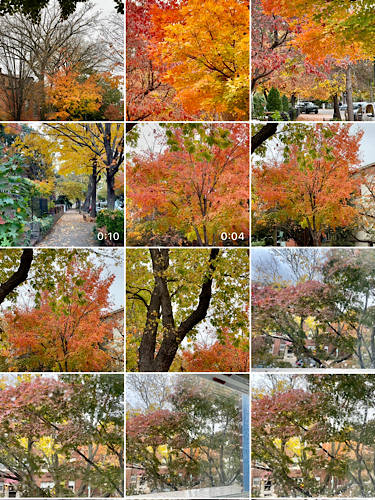
    One of the things that I appreciate most about winter is being able to see the bare articulation of the shape of the tree in the absence of its leaves. A dormant tree looks very different from a leafless, lifeless tree. The dormant tree still has a vibrancy to it.

    As I enjoyed the beauty of the trees in Stanton Park this morning on my walk to work, I thought about pratyahara (withdrawal of or from the senses), which is the fifth step of Patanjali”s eight-limbed path of yoga and the bridge between life and physical practice (the first four limbs consist of ethical observances and restraints, asana, and breathing practices) and meditation. I have been led to contemplate the practice and meaning of pratyahara since the last meditation retreat I attended.

    From a renunciate perspective, pratyahara entails withdrawing from that which stimulates our senses. A renunciate would simplify and restrict what he or she takes into his or her system to free the mind from stimulation and make it easier to go into a space of meditation.

    Being careful to eat lightly, avoiding the stimulation of electronic entertainment, finding a quiet place to sit, and shutting our eyes before we begin meditating is part of the practice of pratyahara that all of us who practice meditation do as a matter of course.

    From a tantric perspective, I think pratyahara fits into our practice a little differently than for someone seeking to be on a reunciate path. We may definitely choose to minimize undue or excessive stimulation because certain types or amounts of stimulation feel out of alignment with our practices. For me, more than a certain amount of sense stimulation and certain types of stimulation can numb my celebration of and experience the spirit. Refining what I take into my system so I feel better able to live fully and celebrate and see the play of consciousness is different than renouncing objects that stimulate the senses or sense impressions themselves, as being less real than spirit. It is not renouncing things as unreal; it is picking and refining what to experience to better recognize and remember spirit. For the great siddhas, withdrawal from stimulation would not be necessary because they do not lose sight of spirit by either the cravings of the senses or being overwhelmed by reactions to stimulation of the senses.

    The trees seemed to me this morning to help elucidate this principle. The trees aren’t acting out of ego or greed or yearning to find happiness from the outside because of an emptiness on the inside. They are always open to the light and the rain. In winter, when they are dormant, they are not reaching for the light and rain or hungering for spring. They are there in all of their beauty open to receive nourishment when it comes. In spring, when the leaves start to bud and open, it is because of the light and the rain, but the essence of being a tree does not change or get distorted by going inward and resting or by opening to burgeoning growth.

    When we can simply open to all that is around us as spirit (beyond my capacities except at the rarest of times), then we can be open to the fullness of what stimulates the senses and still be practicing pratyahara. As long as we are swayed from the recognition and delight of spirit by stimulation of the senses, then we need to practice withdrawing on a grosser level to help us find the space of still being where we can be in the world of the senses without being tangled up and bound by it as such.

  • | | |

    OK—Two Views

    I am ok and grateful for my well-being. I am also, among other things, grieving the death of two different friends in the last month and the remaining dregs of democracy. I could be more ok than the ok that I am. Some people aren’t ok at all. How are you?

    Metro tracks over Benning Road bridge, “OK” graffiti, and a glimpse of the river.

Leave a Reply

Your email address will not be published. Required fields are marked *

This site uses Akismet to reduce spam. Learn how your comment data is processed.