Art and Culture

  • | | |

    “Who Goes On A Diet to Lose Three Pounds?” (and the Carbon Footprint of Orange Juice)

    The other night after yoga class, a group of us went out to celebrate a friend’s 39th birthday.  During the ambling course of the conversation, I said that I was turning 50 later this year.  I added that I would grow my hair another couple of inches longer and lose three pounds, and 50 would be just fine (let’s leave aside for now all the societal conditioning that goes along with feeling that such an age marker wouldn’t feel too old as long as my hair was long and my body at a youthful weight).

    “Who goes on a diet to lose three pounds?” asked one of my friends.  I find that people sometimes look at me and are shocked that I pay attention to my weight.  They have an idea that someone who stays slim is just lucky rather than consistently mindful.  My grandmother who was 4’11” in her high-heeled slippers was the one who taught me to be mindful in this way.  Once or twice a year, she would moderate her diet to lose the two pounds that crept on after one too many desserts over the course of a few months without any other change in her modest, healthful for those days diet.

    Going on a diet to lose three pounds means never having to lose 10 or 20 pounds or more.  It means returning to mindfully eating a little extra less for a couple of weeks after a couple of months of having eaten a little more than what is perfectly sustaining rather than having to go through a major lifestyle change.  In my middle age, I pay attention to my diet not as much for how I look in my clothes and feel about my body, but more for whether what I am eating is healthy for me and the planet.  One of the best and easiest ways to be at an optimal weight, feel healthier, and have less impact on the planet is simply to eat less (though this is a new announcement by the government, any one with even an ounce of common sense knew that, no matter how much exotic, novel, or challenging diets seemed more appealing).

    Part of eating the right amount for your ideal fit with your body and its relationship to the planet and society is having food that is not necessary for a healthy body only on special occasions (which is different than rigidly forbidding it to yourself).  In reviewing what is sustaining for me and the planet while still enjoying a delicious diet, I periodically take a look at what I am eating and think about what is really fulfilling.  One of the things I enjoy, but have known really should be a treat is orange juice (which I stopped drinking on other than an occasional basis several months ago and truly have not missed).

    If you are eating multiple servings of vegetables and a piece or two of fruit a day, orange juice processed, packaged, and shipped outside of a grower state provides little more benefit to your diet than does a can of soda.  If you kept everything else in your diet consistent and aren’t already eating enough to be gaining weight, eliminating the unnecessary glass of juice would not only diminish your carbon footprint (and if it is not organic, your chemicals into the drinking water footprint as well as your carbon footprint), but you also would be eliminating the number of calories it takes to gain a pound over the course of a month.  And if you live in one of those states covered in snow and ice and are yearning to eat something from the land of sunshine, eat an orange or some other tropical fruit–organic if you can get it — and skip the processing, the cooking (pasteurizing), and some of the packaging that goes into it being shipped to your grocery store as juice.

  • | |

    Responsible Shopping

    If you are already thinking twice about when and what to acquire (and generally acting on your thinking), this information about “responsible shopping” provides helpful information when you are challenged by those who think it doesn’t matter what one person does.  It also provides some useful information that is new or we might not have thought about before.

    Given that I do not have an elected representative in Congress (a non-voting one does not really count), it is especially important to me to vote with the dollars that I have.

    ps Yes, I know that in terms of being green, the best choice is to live with much less than I do–say, for example, live in just a room instead of a house, but I am not ready to go there.

  • | |

    Mysterious Workings of Kali (Goddess of Sequencing)

    The other morning, in the middle of meditation, the thought arose of how different my life would have been if my older sister and my birth orders (keeping our congenital make up the same) had been reversed.

    Imagine, too, if it had not been for the Russian Revolution, we might not have all grown up having read Nabokov’s Lolita.

  • | | |

    “American Veda” (and some recollections)

    I am reading Philip Goldberg’s American Veda–From Emerson and the Beatles to Yoga and Meditation; How Indian Spirituality Changed the West.  It is another of the recently published works on the interplay and inter-influence of east and west.  What distinguishes American Veda is that it is more about how Indian spirituality influenced western/American society overall, than an analysis of the yoga that we practice in the west.  Much that one might expect to be in the book is there:  Emerson, Thoreau, Swami Vivekananda (and the Parliament of the World’s Religions), Ramakrishna, Paramahamsa Yogananda, Osho, Muktananda, the Beatles, Maharishi Mahesh Yogi, but there are other connections that are less well-known.

    As one generally familiar with the history of Indian philosophy and yoga practices coming to the West, it reads more like a survey or overview than an analysis to the extent that it tries not to leave out any one who could have been an influence and goes into little depth regarding any particular influence.  (Note:  the author himself says that the book is limited to Vedic/Hindu influences; he refers the reader to other sources, in particular, How the Swans Came to the Lake, for the transmission of Buddhism to the west).

    What is most interesting to me about reading American Veda is that it reads like old home week.  I recognize the names and the philosophies and the way people speak about spirituality and religion, and the author lovingly and thoroughly shows how profound and widespread is the influence of Vedic thought in America, even where no attribution is given.  I recognized even when I first discovered Indian philosophy texts in high school the interplay between how me and my fellow unprogrammed. liberal Quaker friends were talking about mystical experience and understanding of God/Spirit and the Indian philosophy, and it is lovely to have a book where someone went out and did all the research and gathered the sources.  By the time I was thinking about anything at all really, Indian philosophy was already something in my consciousness thanks to the Beatles and the Beats.  The Beatles discovered Maharishi Mahesh Yogi when I was six, which was the year that Sgt Pepper’s Lonely Hearts Club Band and Magical Mystery Tour came out and my parents for some now unfathomable reason gave them to me for my Christmas present.  My older sister and I played those albums over and over again on our portable record player, whirling ourselves into states of dizzy ecstasy with the sitar grooving in the background on our favorite songs.

    I was moved to read the Bhagavad Gita by reading J.D. Salinger’s Franny and Zooey. I do not remember whether this was in 9th or 10th grade, but I read Salinger because was what cool, smart kids read.  What I remember is that I read both Franny and Zooey and Catcher in the Rye (probably read the latter first) before Catcher in the Rye was assigned reading in 10th or 11th grade and that while I was not particularly impressed with Holden Caulfield, I really wanted to be as brilliant and educated and extraordinary and talented and philosophical as the children in the Glass family, and so I tried to read what they read (though alas, I read it in translation, where they were able to read the Greek and Latin and Sanskrit, etc.)   By 11th grade, a teacher had given me J. Krishnamurti to read, and his anti-guru guruness appealed to my Quaker sensibilities.

  • | |

    Shiva, Brahma, Vishnu (and the health care act)

    In Hindu philosophy, the powers of creation (Brahma), sustaining or preserving (Vishnu), and destruction (Shiva) are all given equal weight in the balance of the universe.  Without destruction, there is no place for new creation.  Each aspect of this triad is an essential part of the elemental unity of being.

    I think that a repeal of the health care act, if it only were to open the path to a single payor system that actually provided health care for most, would be a good human level demonstration of the need for destruction to allow for creative flowering.  Alas, I don’t think that is what the would-be destroyers have in mind.

    I remember at these times that I am not in charge, and I cannot see the biggest of the big pictures, but somehow, that is not always of much comfort.

  • | |

    What Does It Mean to Study War?

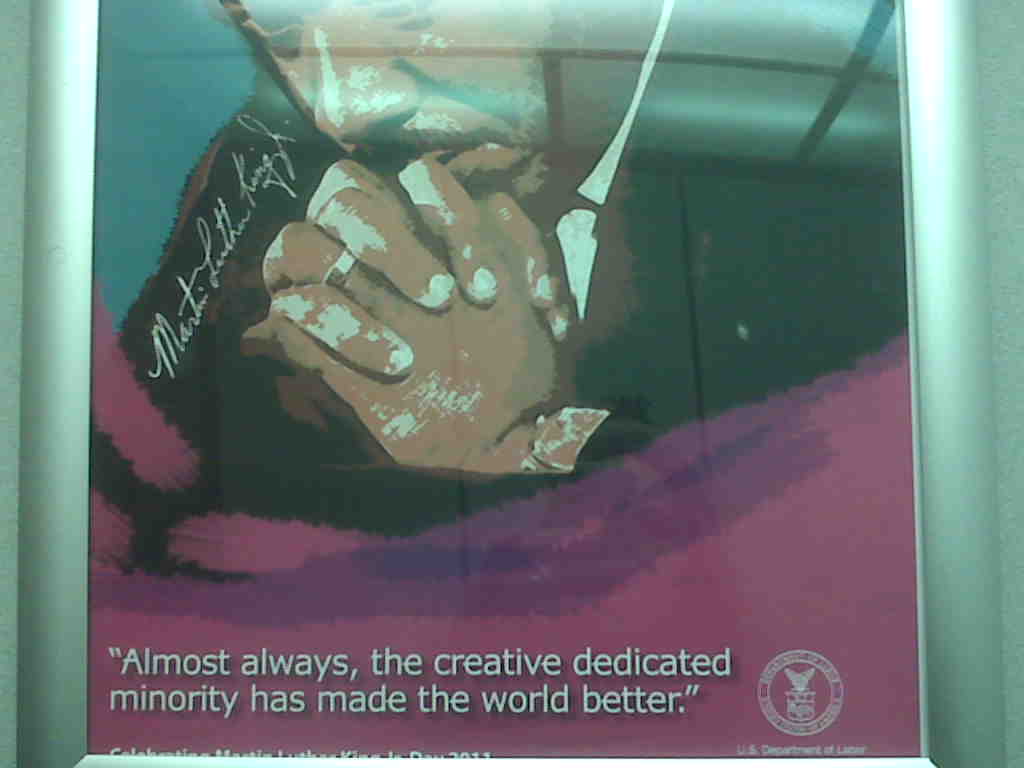
    Martin Luther King, Jr. said:   “A true revolution of values will lay hand on the world order and say of war, “This way of settling differences is not just. …A nation that continues year after year to spend more money on military defense than on programs of social uplift is approaching spiritual death.” Still, the Pentagon suggests that Martin Luther King “might” have supported the war in Afghanistan.  Not sure on what basis.

    Last night at the Willow Street Book Club, where we were reading Ram Dass’s Paths to God–Living the Bhagavad Gita, one of my fellows raised the question of how we could read as a spiritual guide a book whose context is war.  Another asked a similar question from the perspective of a feminist.  It was a fabulous, engaged, lively discussion, and I hope to see more next month.

    It would be an injustice to the text and the historical context to read entirely out of the Bhagavad Gita the duty of a warrior to kill, a wife to practice suttee, and persons born into each caste to accept their lot in life in a society structured on the caste system.   There is much richness in the text, though, that can provide guidance for a feminist, pacifist, who believes that “all men are created equal.”

    We have reread “men” in the Declaration of Independence to include women and those of all races (though we cannot manage to rewrite the Constitution to explicitly state that women are equal, but that’s a thought for another day).  Similarly, without doing injustice to the text, we can see that the ultimate teachings about living in accordance with duty (svadharma), love, devotion, and sacrifice in the Gita, like the concepts of “life, liberty, and the pursuit of happiness,” provide guidance and force for social action and spiritual devotion beyond a historical context that oppressed and bound on the worldly plane the very persons who are now seeking the deeper meanings in the text.  In fact, I believe that we can use the essential intent of the text to teach and transform the oppressors, to use the very text to show why the violence and oppression of the historical context is injust and needs to be changed so that the spiritual intent can be expanded and spread beyond the privileged.

  • | | |

    Daniel Webster Statue (and Siva tattva)

    On the column that supports this bas-relief and a larger than life standing portrait of Daniel Webster, is engraved: “liberty and union now and forever one and inseparable.” Kind of sounds like a description of the absolute consciousness, the one self, though that was probably, mostly not the intent.

  • |

    Because I am a Jnana Yogi at Heart

    I feel compelled to learn more about ways to live differently and in better alignment with nature (in addition to studying the yoga texts).  I then ponder, study more, and try to act when I can.  Here is a good article from our friends at the Union of Concerned Scientists on biomass, about which anyone who is interested in sustainable energy should know at least a little.

    ps.  CS, please feel free to add your two cents if DH tells you about this blog entry or if you happen to read it on your own.