Gardening

Growing vegetables, herbs, etc. in a small urban space

  • | | | | | |

    The “Highest First” and Knowing What Is a Weed

    Webster’s On-Line Dictionary defines a “weed” as”any plant growing in cultivated ground to the injury of the crop or desired vegetation, or to the disfigurement of the place; an unsightly, useless, or injurious plant.”  At first blush, this might seem like an easy concept, but if we start breaking down the definition, we can see how much our education, assumptions, and prejudices come into play in deciding what is a weed and what is not.  We need to recognize individual plants (when they first come out of the earth and when they are in full leaf or flower) and what they offer.  We need to know how to foster growth of what we choose to plant, including knowing what will thrive in our location and bring more health and beauty to ourselves and the planet, and we need to have a sense of aesthetics that will cultivate not only our connection to spirit, but optimize the shining through of spirit in all that surrounds us.

    Several years ago, I bought a sprig of epazote in a two inch grower’s pot.  It went to seed and came back all over my little garden.  It grows wild beside highways where it is a native plant.  I really like the taste, and it is hard to find here, so I give seedlings away to friends who want it for their own gardens (locals just ask, and I’ll give you some).  It is one plant I know I do not have to replace; it will come back every year if I let it go to seed.  If I had not controlled it by taking it out of prime planting spaces and either using it right away or replanting it someplace nothing else will grow, though, it would be crowding out other plants in a way that is less than optimal.  It is thus both a desired plant and a potentially invasive weed depending on how it fits in with the whole.

    I have seen neighbors using Roundup to kill purslane and dandelions that have grown up between the bricks on the sidewalk in front of their houses.  Although I think both purslane and dandelions are pretty plants and perfect for spots where nothing else will grow, I can appreciate wanting the front of the house to look tidy.  Why not pick the free edible plants instead of spraying toxic chemicals?  I let edible wild plants come up between the crevices and then either relocate them or treat weeding as harvesting, getting incredible flavor and nutrition from something that most are taught to try and eradicate.

    There are other plants that are sufficiently invasive or poisonous, though, that I do my best to eliminate them from my space (though I do not use pesticides).  The other day, I was walking down East Capitol Street after teaching the William Penn House class and saw some English Ivy climbing up a beautiful tree in one of the sidewalk tree boxes.  I stopped to pull it all off because English Ivy left unchecked will kill a tree.  While engaged in this activity an older couple who lived in the house next to the tree walked up to me and my fellow yogi who was helping me with the ivy removal.  The woman thanked me, saying that she had been meaning to pull the ivy.  Ivy is an example of a plant people think is pretty and appropriate to plant, but it does not belong in our climate and is incredibly destructive.  By my lights, it is a weed, even though I can buy it in most nurseries in the area.  I am blessed not to have poison ivy where I live, but it should be removed.  It is too hard to live with it.

    What does determining whether a plant is truly a weed, whether it causes injury or interferes with what is desired or is unsightly, useless or injurious have to do with the “first principle” in Anusara yoga of “opening to grace?”  The first principle invites us to be ready in the first instance to recognize the auspiciousness of both what we seek out and what we encounter.  In teaching meditation and related practices of Blue Throat Yoga, Paul Muller-Ortega speaks of this as “the highest first.”  As we study and practice (jnana/vijnana), we approach the same and new things with ever more refined technique, knowledge and understanding.  The progressive refinement from our efforts helps us then to open up to a deeper perception of the best of our nature.  We keep repeating the cycle of studying and practicing, always remembering the first principle, and we, despite and because of ourselves, shift our relationship with the world around and inside us.  To be open is a softness, a spaciousness, a willingness to see that is without effort.  We temper what gets in the way of effortless opening with the fire to study and to practice with the intention learn how to be more effortless in understanding how things are part of the whole.

    How do we apply first principle in knowing what to weed from our garden (or, for that matter, how to address in ourselves a physical, mental or emotional characteristic or pattern of behavior that may or may not serve us or both–our individual “weeds”)?

    Is the “desired” vegetation a desire that would help align the gardener and the garden with nature or is it something that was taught that comes from an unsustainable aesthetic and social paradigm (for example, a perfectly green lawn with no plants other than grass)?  If the crop is one that truly nourishes (so worth preserving from injury or interference), does it just mean that the “weed” needs to be relocated so that both the crop and the “weed” can flourish simultaneously?  In other words, is the “weed” beneficial in its own way, but just needs to be shifted so that its inherent good can truly be appreciated and honored?

    Is a determination of injuriousness, uselessness, or unsightliness based on ignorance or true discriminative wisdom?  We cannnot know unless we both sweetly open to recognize the potential for discovering the good in what seems most harmful (perhaps one day scientists will find an extraordinary benefit from poison ivy, just as the deadly poisonous plant digitalis is also a powerful heart medicine) and continue to study and practice with an intention to open ever more deeply.


    From left to right: volunteer epazote, lemon balm, purslane and dill.  Dinner:  black beans flavored with epazote; greens, including purslane.  Lemon balm (aka melissa) makes a delicious and quieting evening tea.

  • | | | |

    Watching the Figs Grow

    I have a small tree in a pot; it will never grow large enough to fruit with exuberant superabundance. I will have a few precious opportunities to taste a sun-warmed fig right from the tree. My tree will also serve as a personal barometer, telling me whether this year’s weather is optimal for figs or not so much.

    Peace and light, E — Posted with WordPress for BlackBerry.

  • | | |

    What’s For Breakfast?

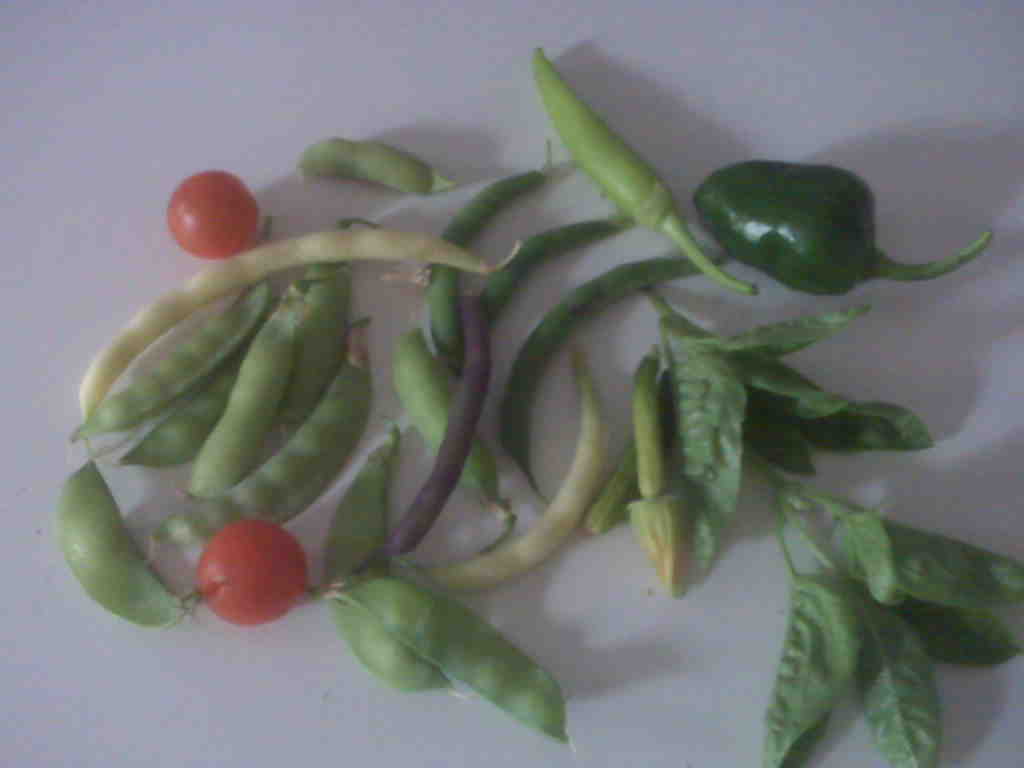
    Snowpeas, tri-color beans. Peppers. Cherry tomatoes, basil (blueberries and strawberries did not make it out of the garden).

    A student asked me the other day why I garden–was it to save money, he asked, was it for better tasting food?

    It does save money to grow food and food eaten straight out of the garden is a foodie’s exquisite pleasure, but those are not my primary motivations.

    I garden for the delight it brings through all of my senses and for the joy of knowing that the garden never questions nurturing. The more I give the garden, the more it gives back, without question or judgment.

    I garden for the sense of relationship with the deeper seasonal patterns. To experience at an intimate level the impact on health and thriving of variations in seasons, light, heat, and rain.

    With the drought and extreme heat in our area, the garden is struggling. Peppers are fruiting before having gotten tall and full. Cucumbers are yellowing and drying, though a couple have grown large enough to eat. There is a surfeit of kale, but the snow peas, which prefer cool weather, barely had time enough to grow enough to flower before it was too hot to thrive.

    Part of the reasons some recipes have many ingredients is because they are premised on there not being enough of any one thing to make a meal. I am getting a few servings of vegetables every day, but the blasting heat is preventing the kind of abundance for some things I might have in another year. The grapes, though, may be outrageous; they like this crazy heat.

    I want to be conscious of these challenges and serendipities. I want to know how I might need to change and adjust to thrive in a world that is ever more out of balance. I garden because it helps me be aware of crisis and challenge, but always and first providing extraordinary pleasure and beauty.

    Peace and light, E — Posted with WordPress for BlackBerry.

  • | | | | |

    It Does Not Get Much Better (and Satcitananda)

    The key concept of yoga–satcitananda can be elusive, like all abstract concepts in the yoga philosophy and in other philosophies or areas of study. We are given metaphors and analogies in the texts to help us recognize when, through our practice, we experience in our self the manifestation of what had just been theory (book knowledge).

    It is hard to describe, for example, what it truly means to be fully present and aware in the moment and thus suffused with bliss
    (satcitananda).

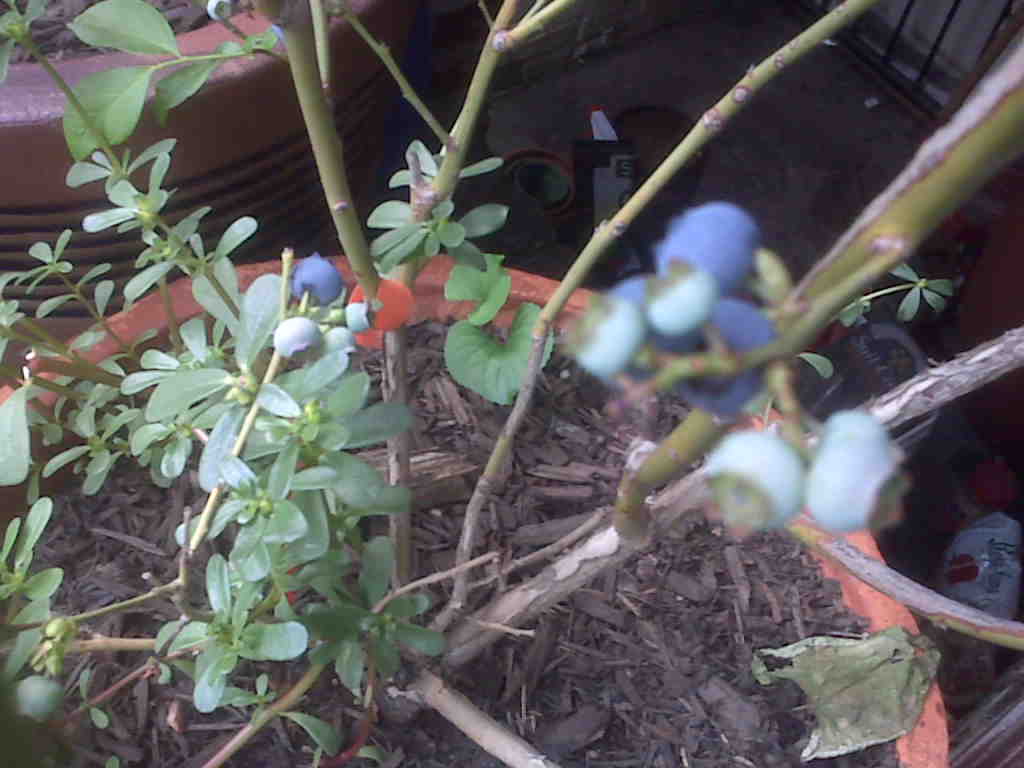
    There was a moment, standing in the hot sun, when I tasted a sun-warmed, perfectly ripe blueberry that I thought, this is a moment many of my students might imagine to be able to extrapolate the abstract concept of satcitananda.

    Notice also the volunteer purslane at the base of the blueberry bush. Weeding and harvesting greens for salad and stir fry can be coextensive. Don’t poison or discard your purslane (or your dandelions). Pick it and eat it; purslane is a great plant source of omega fatty acids.

    Peace and light, E — Posted with WordPress for BlackBerry.

  • | | | | | |

    June Greetings (Web Version of June E-Newsletter)

    Dear Friends,

    One of the yoga practices in Patanjali’s Yoga Sutras is sauca, which means cleanliness or purity.  It does have a basic aspect of physical cleanliness, which has lead me this year to do an especially vigorous spring cleaning.  I think following the principle of saucra also applies to the clarity of our intention for the practice of yoga:  are we seeking to experience and act from a place of deep connection to spirit (or good or oneness or divine or whatever you name it)?  In practicing sauca, I think the most basic question is whether we have dust on the mirror that reflects the good in ourselves obscuring our vision, whether there are blockages to the energy flowing to bring us to optimal physical and emotional health, or whether anything is getting in the way of our manifesting our intention?

    When it has been too hot to go into the garden over the past month, I have been reorganizing and sorting through old papers.  As a once every five or ten years spring cleaning, it is lasting longer than usual.  I tend to be good about keeping on top of these things, but there are crevises of old records of my life that seem to just get stuck back into a folder to be decided on some other time.  This afternoon I came across intimate letters from a friend who, not long after we went our separate what had become cross-continental ways with regret on both sides, discovered he had brain cancer.  There were a few notes not in envelopes.  I reread those, but did not open the envelopes.  Back into the miscellaneous file until the next time.  The same with the print-outs of emails to and from Peru right after 9/11.  It wasn’t avoidance.  Over time and distance, regret and grief have faded.  I did not have the need or the time to read them now.  They went back into the file because I am curious what will be my reaction to these documents when I am 87 should I be around in this body then.  I find that when I see them after again more years have passed, I can see how much the yoga (asana and meditation) as a steady practice over time has shifted how I relate to my past, to all the decisions better or worse that brought me here today.  I am more at peace with the various detours and convolutions for the teachings and the good at the time, even if they do not appear to have been squarely or most efficiently on the path.

    Just as most of us have pieces of paper or things that for some reason get saved, but spend most of their time in a drawer or a file cabinet or a closet, we have thoughts and emotions around past experiences that can emerge into memory at what can seem to be the oddest of times.  With a strong meditation practice, it can sometimes feel like we are cleaning out the closets of our mind.  With a therapeutically focused asana practice, it can seem as though we have found old energetic entanglements, and it may feel that it would have been easier never to have practiced at all.  If we stay steady and keep coming to class and our own practice, we witness how much change can be wrought.  When we remember to bring our clear intention to the yoga mat, the meditation cushion, the garden and the kitchen, the laundry, work and commuting and everything we do, then we in an ever more refined and deepening way open to grace, the fundamental AnusaraR principle.

    I am happy to let you know that I am now E-RYT 500.  My spring cleaning on the physical level motivated me to do the paperwork with Yoga Alliance.  My carrying the designation E-RYT 500 means that teachers taking my classes and workshops can get Yoga Alliance continuing education credits, in addition to Anusara study hours.

    I am looking forward to studying with Christina Sell at Willow Street Yoga next weekend.  Come join fellow yogis for what promises to be a joyously challenging weekend of classes.  The following weekend, I head up to Vermont for the Anusara Grand Gathering.  If you are going, let me know and we can try to connect.

    Special June Location Information for William Penn House Classes:  June 14 and 28, William Penn House will be completely taken over by conference groups.  Class will be held at the house location.  RSVP’s are required.  For those who have been regulars, but who have been full up with other things in life than class, it is a sweet way to get back.

    Hope to see you soon.

    Peace and light,

    Elizabeth

  • | | |

    Arugula and Green Garlic Pesto

    There’s lots of arugula in the garden.  Some still new enough to save for salad, some that has bolted in the heat.  The cilantro is just about gone with the dry heat.  The basil and parsley have gone to flower.  As I thought about how best to enjoy all of what was there while simultaneously best tending the garden for optimal growth (much like yoga practice), I remembered that I had seen a farmer with arugula pesto at the Dupont Circle Fresh Farm Market last week.  I bought something else from the farmer to honor the idea, fully conscious of my own garden full of arugula calling out to me.

    Making pesto was a great way to optimize the bitter tang of the flowers on the older plants.  (I left a few of each type of plant to go to seed for a second crop starting in late summer on a volunteer basis).  I added enough of the young arugula and some tender parsley and basil leaves, along with the basil flowers, to bring out the arugula taste that would have been hidden by the bitterness in the plants that had flowered if not been combined with other foods.  I pureed the chopped greens with olive oil, walnuts, and green garlic.  Salt and pepper to taste.

  • | |

    Firefly Tattoo?

    I was looking at an age spot on my forearm the other day and wondered whether I should get a tattoo to cover or incorporate it.  “Something small and modest, but with meaning,” I thought.  “Something that would not admit to the original reason.  Perhaps a realistic version of the smallest of butterflies.”  Then I thought without any apparent trigger, “what about a firefly?”  When they are not lit up, they look like the kind of bug we would swat at or try to avoid, but at night, when the firefly glows, it is magic.

    How many things are there that seem ordinary or even distasteful until we open our eyes, our minds, and our hearts to see their full and true essence?

    I do not know whether I will get the tattoo.  But I hope that those that can (those with backyards) will take a few simple steps to make a home for some fireflies.

  • | | | | |

    The Photographer’s Dilemma (and “Morning Sprout Sandwich”)

    At which point I put down the camera and ate.  Uma turned her back and looked out the garden.

    Morning Spout Sandwich–whole grain toast, tahini, avocado, assorted homegrown sprouts, fresh herbs picked the moment before garnishing (dill shown here), a sprinkle of sea salt (optional)

  • | | | |

    Aerial Views of the Garden

    In response to requests, here are some photos of the garden in its current state.

    The vine on the left is grapes–there are many dozens of bunches forming.  The vine on the right is a kiwi.  I planted it four years ago, and finally there are some fruits–at most a couple dozen, but it’s a start.  There aren’t enough strawberries to bring inside, but there are always a couple to eat when I am out working.

    Current herbs:  cilantro, basil (thai and genovese), Mexican and Greek oregano, parsley, sorrel, tarragon, lemon balm, spearmint, kentucky colonel mint, garlic chives, savory, sage, thyme, rosemary, lavender, stevia, and dill.  Greens include mesclun, arugula, kale, chard, and are ready to eat now.

    Snowpeas are on there way (and I ate snow pea greens with garlic scapes and herbs for dinner tonight).  Beans are blossoming; cherry tomatoes and cucumbers have formed, as have a couple of zucchini and a variety of peppers.  Blueberries are ripening and figs are just starting to bud on the new growth.  Carrots and turnips are mostly just a promise, but I expect at least a few.  Leeks and spring onions are poking through, but don’t seem to be getting along with this year’s weather patterns.

    What’s growing in your garden?  (Even when I lived in an efficiency apartment in school, I had herbs growing in pots.  And sprouting is its own kind of gardening and only requires a kitchen counter.)  A garden can be made wherever you are, if you want one enough.