Food for the Body

Thoughts about eating well to feed your body and spirit.

  • | |

    Green America’s List of Toxins to Avoid in Personal Care Products

    Green America has prepared a helpful list of ingredients to avoid in personal care products, which I offer to you if you are not already familiar with these ingredients and where they are likely to be found.  Which of these can you easily avoid, which will take some doing to avoid, but living mindfully with care for yourself and the planet leads you to the doing, and which do you want the product and what it does sufficiently that you do not care about the toxic risk?  These questions apply for all sorts of things and not just personal care products.

  • | | | | |

    Eating Local, Annamaya Kosha, and “Human Landscape Dance”

    When my friend Mac asked if I would let my readers know that his dance group Human Landscape Dance will be performing at Dance Place on Saturday and Sunday, July 9th and 10th, I agreed without hesitation.  As I was contemplating what to write, I found myself thinking about the koshas–the energetic sheaths of the body.  The yogis claim that the individual has five koshas.  The outermost, the annamaya kosha, is the “food body.”  “Food” in this context encompasses everything that comes into our body through all of our senses–touch, taste, sight, hearing, smell.  I thought about what it might mean to “eat local” if eating meant everything that we encounter with our senses.

    I am not a locavore (I too thoroughly enjoy avocado, coconut and, in winter, citrus), but I do try to emphasize local food as the mainstay of my diet.  I do it mostly for energetic reasons.  I want fresh food to have been picked as recently as possible and not to have grown weary from travel.  I want as few hands as possible to have touched the food I buy, and those hands to be those of a person who is happy with farming and is paid a living wage by the sale of the produce.  When your food growers, transporters, and preparers live nearby you are getting to know your neighbors and community, and not just getting food from a faceless corporate entity.  Over the years, you get to know each other a bit and learn what friends you have in common.  More threads are woven into the fabric of your community.

    Just as knowing the person who grows and sells you food means you can be more certain that it was raised and offered for sale with nourishment intended at every stage, so too having the art and entertainment we bring into our senses be created within our community creates a network of connection and support that we do not get when we only consume commercially prepared entertainment (though I cheerfully buy music from my favorite “stars,” go to the movies, and enjoy trips to Lincoln Center,and London’s West End, etc., just as I get avocados and citrus along with the greens from my garden and the fruits from the local farmers’ market).

    I feel blessed to be able to connect with Mac as a neighbor (Mac, his wife Jennifer Mueller, who is a student of mine and fellow yoga teacher on the Hill, and their delightful daughter live several blocks from me) and others who are performing next Saturday as fellow dancers at the Sunday Contact Improv Jam.  My dancing and personal explorations are raised up by the company of the wonderful dancers and friends who share that space, including those who will be performing next weekend.

    Why wouldn’t I want to both support my friends and learn more about them by going to Dance Place to receive the dance offering they are so lovingly preparing for all of us?  Such is the nature of feeding mindfully the annamaya kosha to help lead us to the opening and nurturing of our innermost spirit, finding and creating more bliss in ourselves and in the very essence of our community.

    FYI.  I’m looking for company to carpool or walk together to and from the Brookland Metro (for safety on the way home).  Perhaps Sunday CI Jam, dinner on the Hill, and the Sunday night show?

    Photo courtesy of Human Landscape Dance.

  • | | | | | | |

    Loops and Spirals and the Still Point at the Center (NYC, Vt, Long Island, DC)

    My trip to the Anusara Grand Gathering was some loop of a trip, spiraling and pulsing between urban and rural, quiet time and enthusiastic gathering, old places and new scenery.  Last Saturday, I took a morning train to Manhattan, where I went to the Rubin Museum–one of my favorite spaces in the City, walked to see the Ai Weiwei sculptures in front of the Plaza, and ate good food.  On Sunday morning, I got back on the train, this time heading north to Saratoga Springs.  Just north of Croton-on-Hudson, I saw soaring over the river a raptor with an enormous wing span, white head, and brown body and wings — most likely a bald eagle.

    My friend Suzanne picked me up at the Amtrak Station in Saratoga Springs.  We went back to her house for lunch.  Before driving to Stratton Mountain for the Anusara Grand Gathering, she showed me her studio, which is a wonderful space; I look forward to visiting again.  And then we were in Vermont with John Friend, the scholars, the certified teachers leading the break out sessions and assisting, the musicians, the outdoor art, and a few hundred committed yogis.  (See previous four posts for my thoughts o the Grand Gathering).

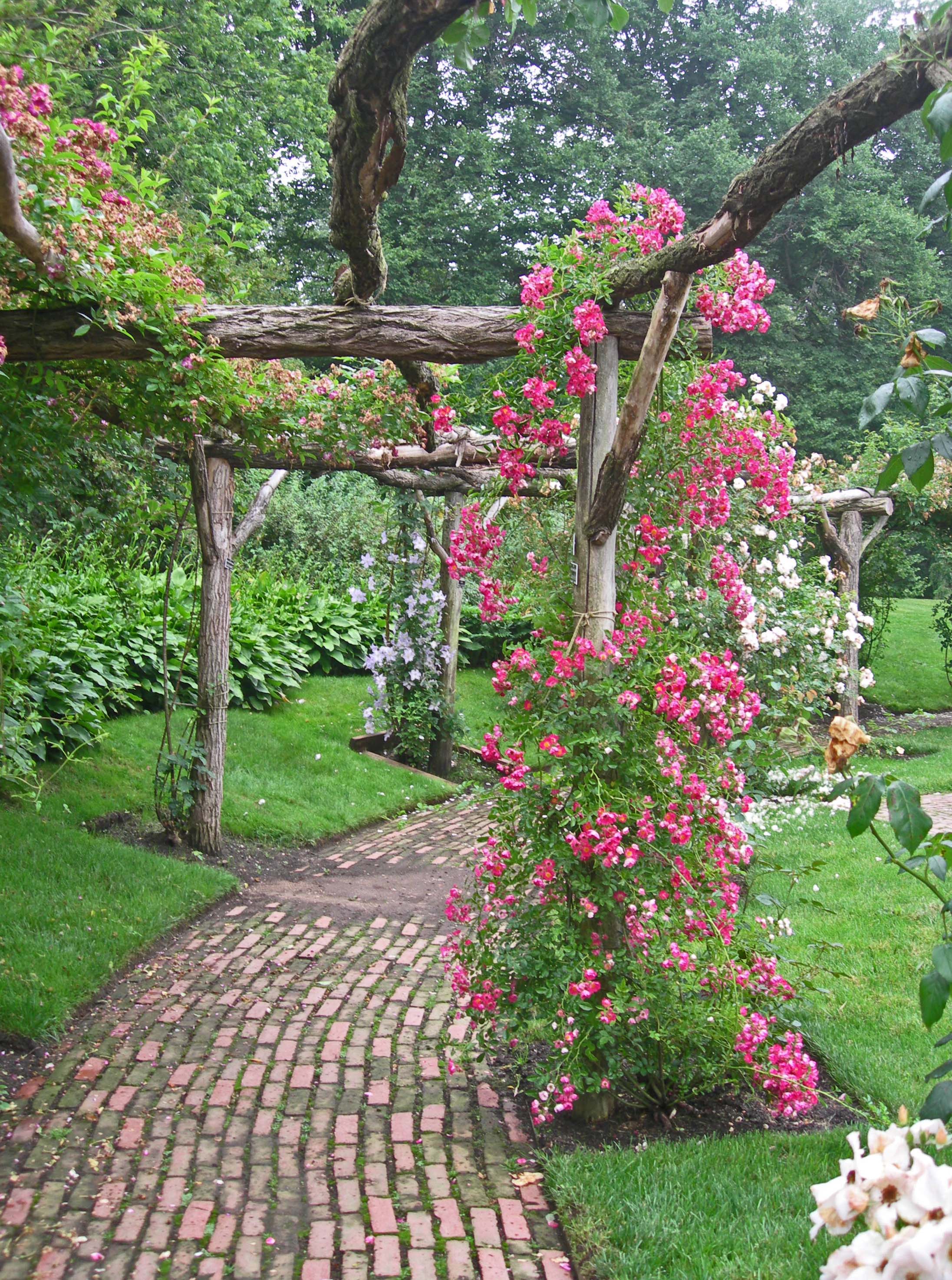
    On Wednesday afternoon, I rode back to New York with a fellow yogi and teacher I have long admired.  I decided on pure impulse, since we were getting to the City a couple of hours early, to visit my parents.  We were able to spend the evening and morning talking, and then my mother and I went to Old Westbury Gardens (check out the new Facebook profile picture my mother took in the rose garden on my personal page and please “like” my public page, if you haven’t already).

    I caught the Long Island Railroad to Penn Station and then Amtrak back to DC.  The next morning (Friday), I worked a full day, returning to quite a slew of emails.  In the evening I had a massage and went into the garden to reground myself.  Went up to Takoma on Saturday to teach, circling immediately back into the rhythm of home.

    The photo montage below gives an idea of the wide variety and quantity of input into mind and senses.  There was actually much quiet time in this whirlwind.  I spent all the time on the train listening to teleseminars, studying, writing in my journal, watching the scenery, contemplating, and napping.  More important than the quiet space of the train rides, every day of the trip, I sat, as I do each day wherever I am, for meditation morning and evening.  While on the road, my meditation gave me a space that was home; when I came home, it helped get me settled and able to carry forward the openings and shifts from going on vacation into my at home routine.

    A steady practice gives us a still point, a space that stays steady and nourishing.  The more consistent we are, the easier it is to access this space (hridaya), no matter how much life seems to whirl and spiral around us.


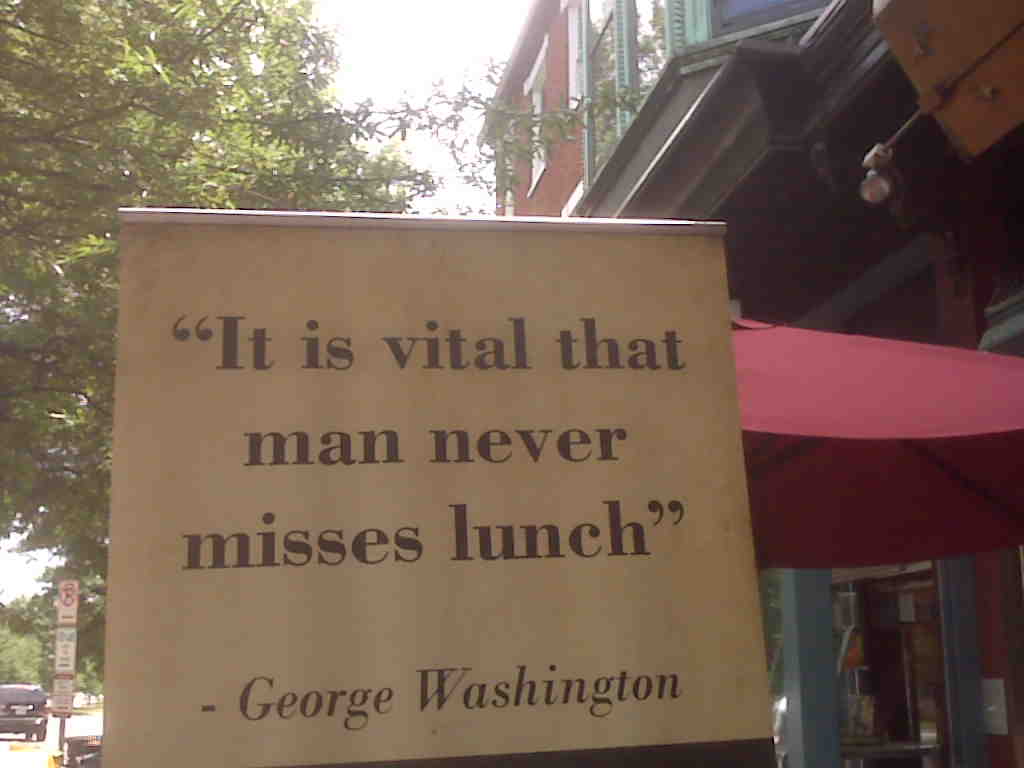
    Photos are in order of travel:  Manhattan, Upstate New York, Vermont, Anusara Grand Gathering, Old Westbury Gardens, points on route, and back home with offerings from the garden on my kitchen counter (welcome home).

  • | | | | | |

    The “Highest First” and Knowing What Is a Weed

    Webster’s On-Line Dictionary defines a “weed” as”any plant growing in cultivated ground to the injury of the crop or desired vegetation, or to the disfigurement of the place; an unsightly, useless, or injurious plant.”  At first blush, this might seem like an easy concept, but if we start breaking down the definition, we can see how much our education, assumptions, and prejudices come into play in deciding what is a weed and what is not.  We need to recognize individual plants (when they first come out of the earth and when they are in full leaf or flower) and what they offer.  We need to know how to foster growth of what we choose to plant, including knowing what will thrive in our location and bring more health and beauty to ourselves and the planet, and we need to have a sense of aesthetics that will cultivate not only our connection to spirit, but optimize the shining through of spirit in all that surrounds us.

    Several years ago, I bought a sprig of epazote in a two inch grower’s pot.  It went to seed and came back all over my little garden.  It grows wild beside highways where it is a native plant.  I really like the taste, and it is hard to find here, so I give seedlings away to friends who want it for their own gardens (locals just ask, and I’ll give you some).  It is one plant I know I do not have to replace; it will come back every year if I let it go to seed.  If I had not controlled it by taking it out of prime planting spaces and either using it right away or replanting it someplace nothing else will grow, though, it would be crowding out other plants in a way that is less than optimal.  It is thus both a desired plant and a potentially invasive weed depending on how it fits in with the whole.

    I have seen neighbors using Roundup to kill purslane and dandelions that have grown up between the bricks on the sidewalk in front of their houses.  Although I think both purslane and dandelions are pretty plants and perfect for spots where nothing else will grow, I can appreciate wanting the front of the house to look tidy.  Why not pick the free edible plants instead of spraying toxic chemicals?  I let edible wild plants come up between the crevices and then either relocate them or treat weeding as harvesting, getting incredible flavor and nutrition from something that most are taught to try and eradicate.

    There are other plants that are sufficiently invasive or poisonous, though, that I do my best to eliminate them from my space (though I do not use pesticides).  The other day, I was walking down East Capitol Street after teaching the William Penn House class and saw some English Ivy climbing up a beautiful tree in one of the sidewalk tree boxes.  I stopped to pull it all off because English Ivy left unchecked will kill a tree.  While engaged in this activity an older couple who lived in the house next to the tree walked up to me and my fellow yogi who was helping me with the ivy removal.  The woman thanked me, saying that she had been meaning to pull the ivy.  Ivy is an example of a plant people think is pretty and appropriate to plant, but it does not belong in our climate and is incredibly destructive.  By my lights, it is a weed, even though I can buy it in most nurseries in the area.  I am blessed not to have poison ivy where I live, but it should be removed.  It is too hard to live with it.

    What does determining whether a plant is truly a weed, whether it causes injury or interferes with what is desired or is unsightly, useless or injurious have to do with the “first principle” in Anusara yoga of “opening to grace?”  The first principle invites us to be ready in the first instance to recognize the auspiciousness of both what we seek out and what we encounter.  In teaching meditation and related practices of Blue Throat Yoga, Paul Muller-Ortega speaks of this as “the highest first.”  As we study and practice (jnana/vijnana), we approach the same and new things with ever more refined technique, knowledge and understanding.  The progressive refinement from our efforts helps us then to open up to a deeper perception of the best of our nature.  We keep repeating the cycle of studying and practicing, always remembering the first principle, and we, despite and because of ourselves, shift our relationship with the world around and inside us.  To be open is a softness, a spaciousness, a willingness to see that is without effort.  We temper what gets in the way of effortless opening with the fire to study and to practice with the intention learn how to be more effortless in understanding how things are part of the whole.

    How do we apply first principle in knowing what to weed from our garden (or, for that matter, how to address in ourselves a physical, mental or emotional characteristic or pattern of behavior that may or may not serve us or both–our individual “weeds”)?

    Is the “desired” vegetation a desire that would help align the gardener and the garden with nature or is it something that was taught that comes from an unsustainable aesthetic and social paradigm (for example, a perfectly green lawn with no plants other than grass)?  If the crop is one that truly nourishes (so worth preserving from injury or interference), does it just mean that the “weed” needs to be relocated so that both the crop and the “weed” can flourish simultaneously?  In other words, is the “weed” beneficial in its own way, but just needs to be shifted so that its inherent good can truly be appreciated and honored?

    Is a determination of injuriousness, uselessness, or unsightliness based on ignorance or true discriminative wisdom?  We cannnot know unless we both sweetly open to recognize the potential for discovering the good in what seems most harmful (perhaps one day scientists will find an extraordinary benefit from poison ivy, just as the deadly poisonous plant digitalis is also a powerful heart medicine) and continue to study and practice with an intention to open ever more deeply.


    From left to right: volunteer epazote, lemon balm, purslane and dill.  Dinner:  black beans flavored with epazote; greens, including purslane.  Lemon balm (aka melissa) makes a delicious and quieting evening tea.

  • | | | |

    Watching the Figs Grow

    I have a small tree in a pot; it will never grow large enough to fruit with exuberant superabundance. I will have a few precious opportunities to taste a sun-warmed fig right from the tree. My tree will also serve as a personal barometer, telling me whether this year’s weather is optimal for figs or not so much.

    Peace and light, E — Posted with WordPress for BlackBerry.

  • | | |

    What’s For Breakfast?

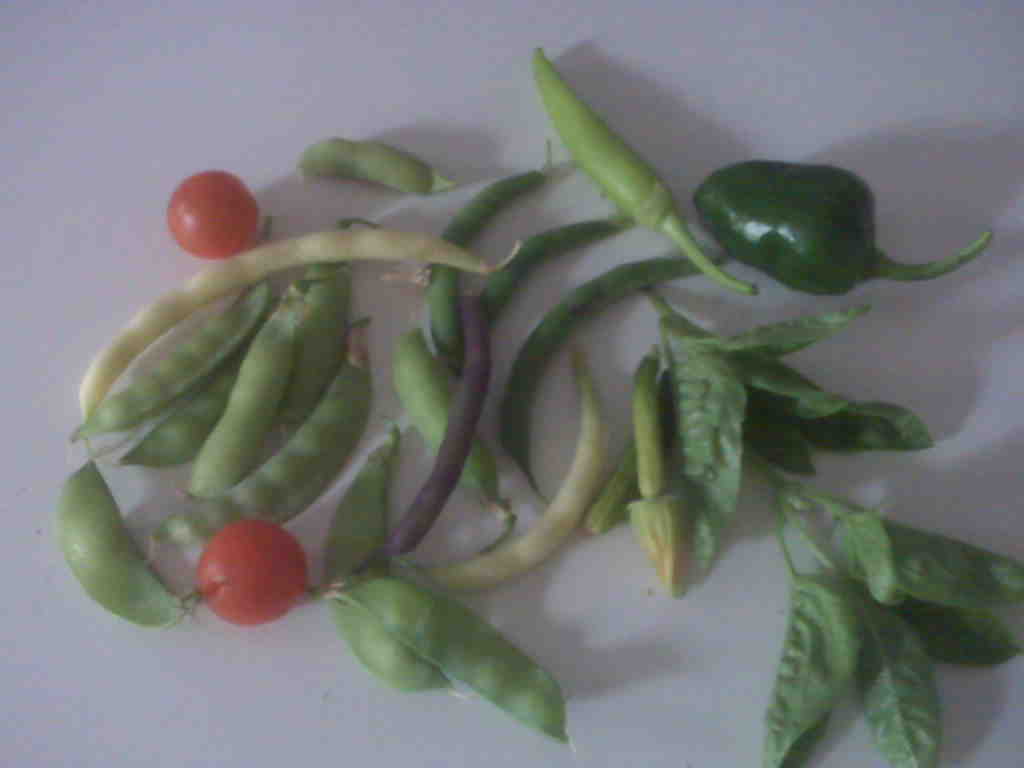
    Snowpeas, tri-color beans. Peppers. Cherry tomatoes, basil (blueberries and strawberries did not make it out of the garden).

    A student asked me the other day why I garden–was it to save money, he asked, was it for better tasting food?

    It does save money to grow food and food eaten straight out of the garden is a foodie’s exquisite pleasure, but those are not my primary motivations.

    I garden for the delight it brings through all of my senses and for the joy of knowing that the garden never questions nurturing. The more I give the garden, the more it gives back, without question or judgment.

    I garden for the sense of relationship with the deeper seasonal patterns. To experience at an intimate level the impact on health and thriving of variations in seasons, light, heat, and rain.

    With the drought and extreme heat in our area, the garden is struggling. Peppers are fruiting before having gotten tall and full. Cucumbers are yellowing and drying, though a couple have grown large enough to eat. There is a surfeit of kale, but the snow peas, which prefer cool weather, barely had time enough to grow enough to flower before it was too hot to thrive.

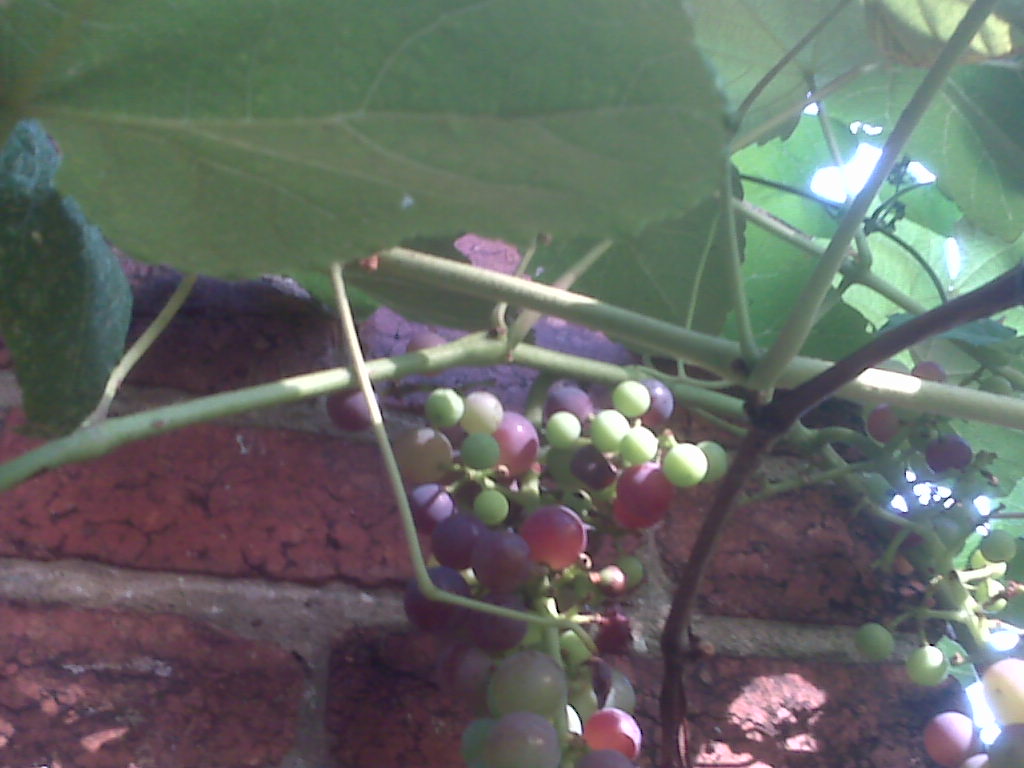
    Part of the reasons some recipes have many ingredients is because they are premised on there not being enough of any one thing to make a meal. I am getting a few servings of vegetables every day, but the blasting heat is preventing the kind of abundance for some things I might have in another year. The grapes, though, may be outrageous; they like this crazy heat.

    I want to be conscious of these challenges and serendipities. I want to know how I might need to change and adjust to thrive in a world that is ever more out of balance. I garden because it helps me be aware of crisis and challenge, but always and first providing extraordinary pleasure and beauty.

    Peace and light, E — Posted with WordPress for BlackBerry.

  • | | | | |

    It Does Not Get Much Better (and Satcitananda)

    The key concept of yoga–satcitananda can be elusive, like all abstract concepts in the yoga philosophy and in other philosophies or areas of study. We are given metaphors and analogies in the texts to help us recognize when, through our practice, we experience in our self the manifestation of what had just been theory (book knowledge).

    It is hard to describe, for example, what it truly means to be fully present and aware in the moment and thus suffused with bliss
    (satcitananda).

    There was a moment, standing in the hot sun, when I tasted a sun-warmed, perfectly ripe blueberry that I thought, this is a moment many of my students might imagine to be able to extrapolate the abstract concept of satcitananda.

    Notice also the volunteer purslane at the base of the blueberry bush. Weeding and harvesting greens for salad and stir fry can be coextensive. Don’t poison or discard your purslane (or your dandelions). Pick it and eat it; purslane is a great plant source of omega fatty acids.

    Peace and light, E — Posted with WordPress for BlackBerry.