Here Come the Grapes
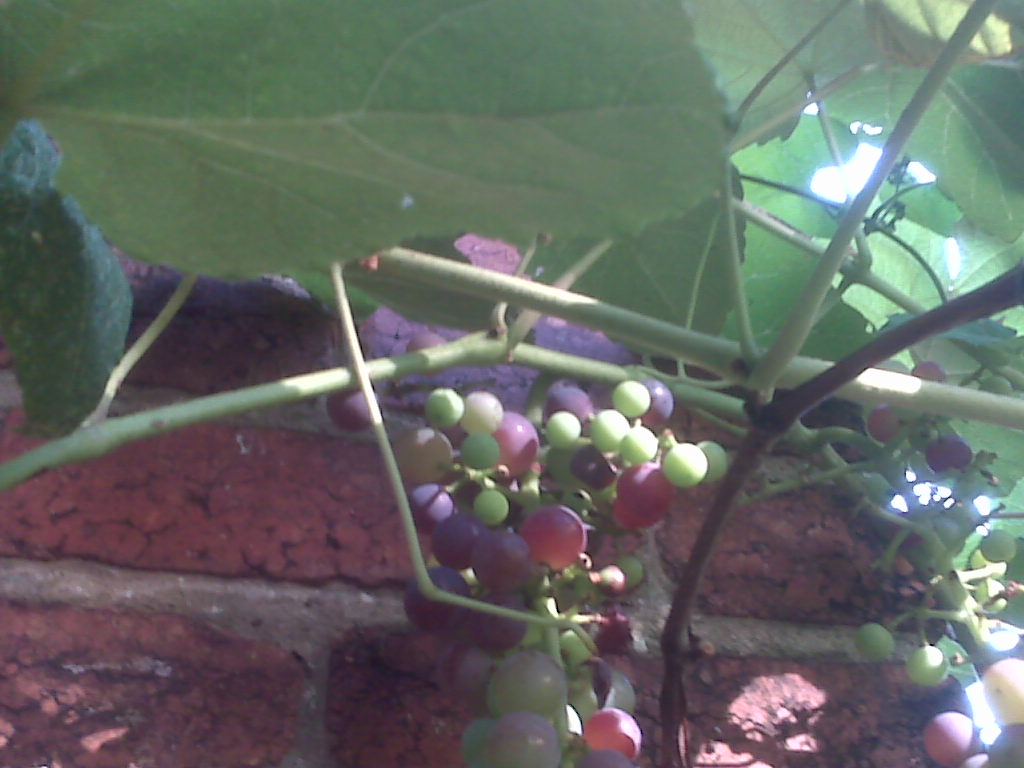
This morning I ate the last of the blueberries from the garden, but the grapes are starting to ripen. Here come the grapes.
Peace and light, E — Posted with WordPress for BlackBerry.
This morning I ate the last of the blueberries from the garden, but the grapes are starting to ripen. Here come the grapes.
Peace and light, E — Posted with WordPress for BlackBerry.
On my way to and from work, I watched the buds and blooms–some brown, some bravely hanging on, some withering around the edges and starting to wilt; the cherries–mostly in bud or just starting to open–that haven’t fully blasted yet, will do so by the end of the cold period following the storm.
I’ve seen years when the cherry blossoms were torn from the trees at their lushest by a violent storm coming through with a cold front and and years when a spring snow added to the blossoms and years when the blossoms were well before or after the parade. I haven’t seen a year in my over 30 years here, where the blossoms just died from a weirdly early false spring followed by a winter storm with bitter cold. I am sure it is just coincidence and not correlation that this sorry withering of the loveliest part of Washington spring happened this at this particular time.
In the meantime, I am certain that I will need to go out first thing in the morning to shovel and then will need to turn on my computer and go to work. I’m sure I will find the snow (when I am not thinking about the impact on flowering and fruiting perennials), even the shoveling, invigorating and somewhat enjoyable. To provide nourishment that takes into account the extra exercise and how the shoveling time will impact my usual morning routine, tonight after washing up, I put up overnight apple oatmeal. Into the slow cooker went a couple of diced apples, a handful of raisins, steel cut oats, cinnamon, a bit of butter, and a dash of salt. When I wake up, It will smell something like apple crisp, and it will be just the thing to fuel snow shoveling. With the extra, I will make muffins for later in the week.


Earlier this week, I took a wonderful class with my friend J, who is an Anusara teacher based in NYC. She started class telling a story of a fisherman. The fisherman had worked hard and long during the spring, summer, and fall and was looking forward to a rest during the winter months. He left his boat and went ashore, looking for shelter. He came upon a brightly lit house and was invited in by a friendly host. He was given a delicious meal and then brought to a beautiful bedroom with a fabulously made, soft bed with exquisitely scented linens. He got into the bed, but tossed and turned and could not sleep. Agitated by his inability to sleep, he left the house, went back to his boat, wrapped himself in his fishy-smelling nets and promptly fell sound asleep.
J interpreted the story as saying that our familiar patterns bind us and keep us from discovering and receiving true beauty and bliss. This interpretation resonated with the students; one called out in a conversation about the quantity of nets we have, that she could alphabetize hers, and we all laughed. I heard something different in the story, though perhaps it was because I had seen part of The Wizard of Oz when channel-surfing in my hotel room the night before. What I heard was that when we accept our work and our place, we find a place of true rest. When the fisherman realized that his place was on his boat — at home with his work, instead of seeking ethereal bliss — then he found peace and true rest (“there’s no place like home, there’s no place like home…”)
What is missing from the movie version of The Wizard of Oz, though, is that in later books, Dorothy goes back to the land of Oz, bringing her family and work (albeit that of a child) with her. She, in effect, integrates the importance of prosaic home and work life with being in a land of enchantment. In that, both interpretations of the story of the fisherman are partly true. We need not to let our old habits bind us, but we also need not to cast off work, home, and community as things that interfere with our discovering bliss. Instead, we need to find enchantment in our very being, as we live and work and relate in this world.

I’ve always wondered what’s really meant by saying that you’ve got the whole world inside of you.
The tantric yoga philosophy ascribes the characteristic of svatantriya or ultimate freedom to the energy that infuses all of us. We all want to be free, but when we get stuck in our embodiment, forgetting that we ourselves are manifestations of spirit, then we lose sight of our true freedom. To find our own freedom of spirit, we need to be disciplined, to practice, to study, to live in a way that brings us into better alignment with ourselves and world with which we are inextricably interconnected.
In this country, one of our principle ideals and buzz words in dialogue about how we should live is freedom. What can so often be forgotten in this dialogue, though, is that freedom is a contract. To be in a society where all have the opportunity to experience freedom, we need to agree, with discrimination (viveka) to certain limitations (for example, we agree to stop for red lights so that we can be free to drive and walk without a constant risk of being hit in crowded city).
Granted, I am grossly oversimplifying here, but part of the great losses of freedom we are currently experiencing is the abdication by individuals of the responsibility to shape the agreement to maximize our collective freedoms. Like the agreement with ourselves to practice steadily to experience inner freedom, we need to stay engaged, even when it seems impossible or deeply frustrating, in order not to lose sight of the ideal entirely. Here’s some information from FCNL on why it is important to lobby despite how fruitless an act it may appear to be.