Found Exhortation (Por Favor)

Discussion of physical aspects of yoga (on and off the mat)
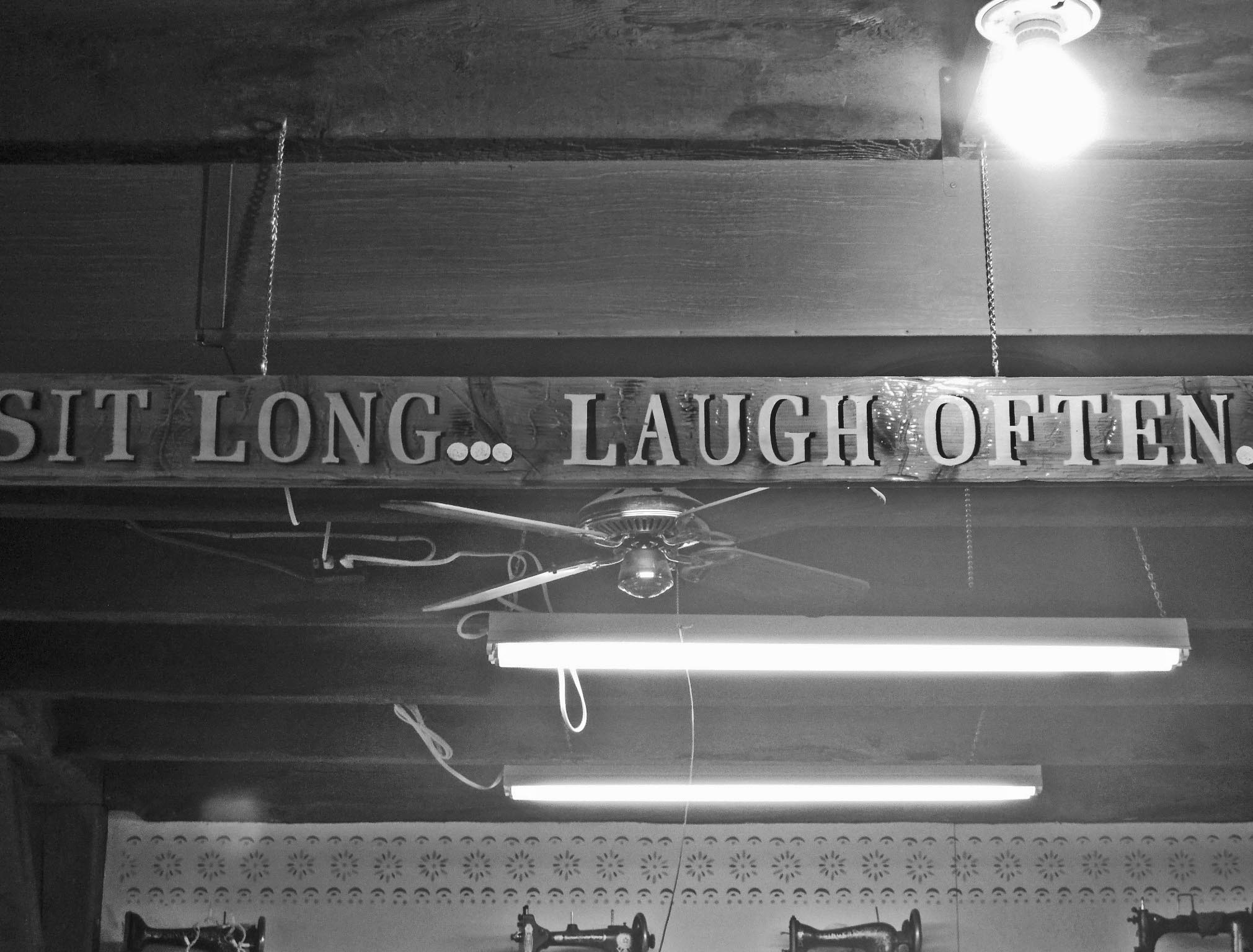
If we are stuck sitting for long hours for work, I’m pretty sure we need to try and laugh more often.
I wonder, though; are we likely to laugh more often if we steadily sit long for meditation?
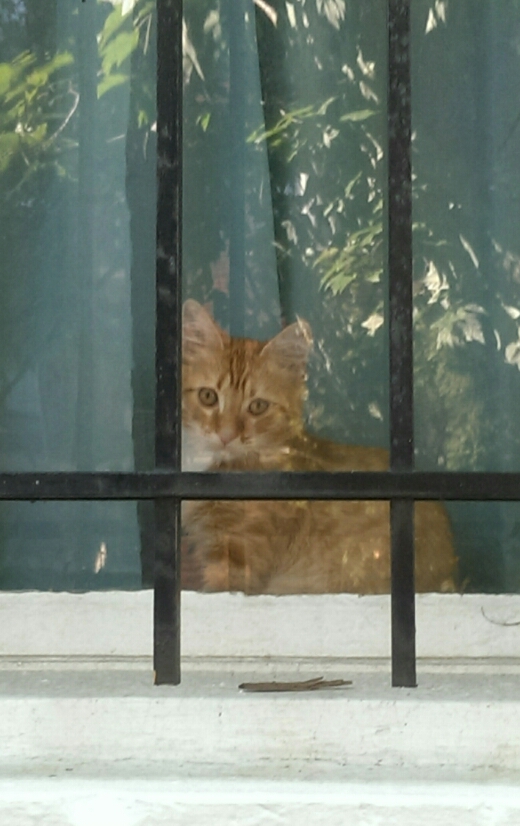
My adorable new neighbor appears in the photo to be outside looking in with me taking a picture from inside looking out. From the perspective of who was in the house and who was standing on the sidewalk, it was of course the was the opposite.
The paradoxical illusion in the photo led me to think about moksha — the yoga concept of liberation.
What I get from the various teachings for my own living practice is that to experience freedom in this embodiment we need to be able simultaneously to be on the inside looking out–from our individual embodiment appreciating a sense of universal connection–and also be on the outside looking in–bringing back to particularized embodied action what spaciousness we learn from practice and study.
I have been told more than once that one cannot technically be a true practitioner/believer in the tenets of Kashmir Shaivism without believing in some form of Godhead. As a nontheist who still finds the teachings and practices informative and useful for how best to live, I ask consistently whether that is really true.
I’m sure a purist (religious or academic) would say there’s no anything to the philosophy without being a full believer. But what I think one gets from practices designed to heighten awareness of a divinely connecting universality in the wild diversity of life without a belief that what is universal a priori points to “God” is a recognition that with all that is troubling and difficult and hurtful and evil in this world, the very complexity and outrageousness of being is yet wonderful and inspiring in itself.
In a word, when all else fails, laugh (and create and live) with an ecstatic fatalism.
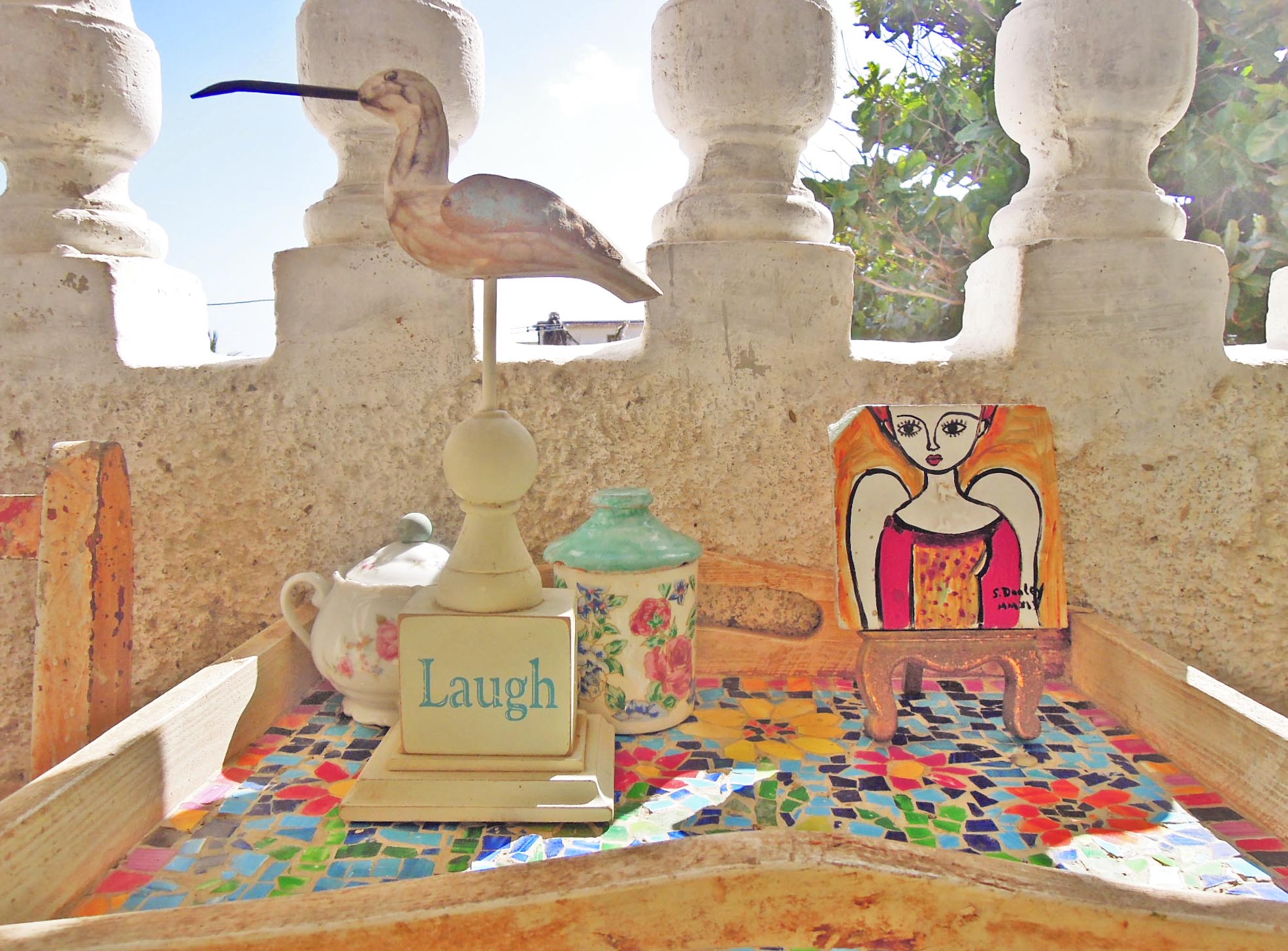
Painting by Sandra Dooley. Cuba 2014
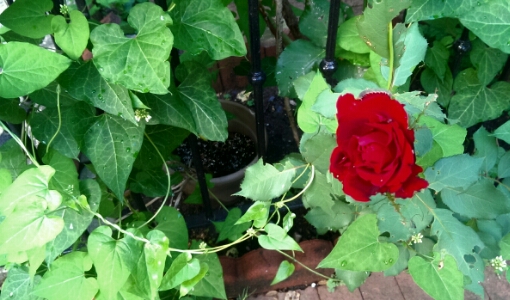
This rose that I see on my route to work has particularly lovely blooms. It is being strangled by weeds.
What am I saying about myself with the inclination to weed and rescue the bush and with the decision to leave well enough alone; plenty of weeding to do in my own garden.