Wolf Moon
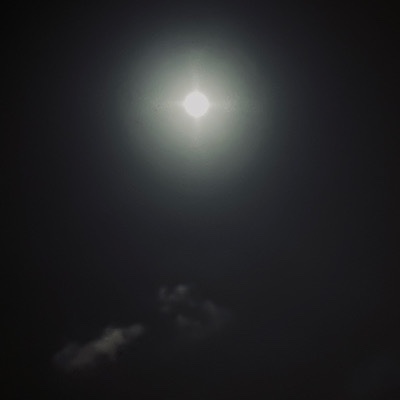
Wolf moon fiercely lit.
Wind howls in response; what might
Be illuminated?
Wolf moon fiercely lit.
Wind howls in response; what might
Be illuminated?

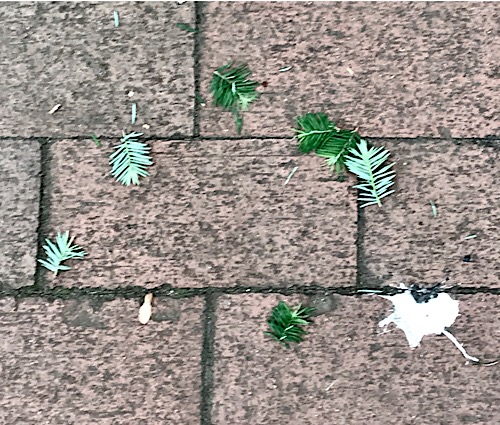
On the last morning of the trip, when we were standing next to the bus (how blessed we were to have a well-driven, air-conditioned bus to take us through southern India; I was most grateful and conscious of its protective bubble) getting ready to head north for Chennai, I noticed that there were limes under the wheels of the bus. I was standing next to Douglas Brooks, the leader of the trip. “Why are there limes under the wheels?” I asked. “To feed the demons,” he replied, “so that they do not feed on you. We make offering (bali dana) for auspicious memories and a safe trip home.” The offering to the demons, bali dana, recognizes, I think, that we cannot eradicate demons. We can feed them, though, avert their gaze with our offering to something they find more desirable and delicious than feeding on us.
On our last day of riding the bus, we were witness to the aftermath of a cyclone that downed trees and shut down power and tore roofs off of houses and rutted roads (thanks to all who noticed that I was in that part of the world and sent emails inquiring about our safety). When it hit, we were far enough south that all we got was a little rain. We flew out long enough after it showed, that it did not impact our flight, which went perfectly smoothly. I do not know whether putting limes under the wheels of the bus made any difference to the external flow of our trip. I do know, though, that I cannot kill off my demons; they are an essential part of me and my history. Shifting the gaze of my demons and shifting my own gaze at my demons, though, is another matter entirely. When we can turn our gaze (drishti) to the auspicious, even when looking through the eyes of our demons, that is when we can truly see what is best in things and better be able to respond with true embrace to whatever life hands us.

Earlier this week, I took a wonderful class with my friend J, who is an Anusara teacher based in NYC. She started class telling a story of a fisherman. The fisherman had worked hard and long during the spring, summer, and fall and was looking forward to a rest during the winter months. He left his boat and went ashore, looking for shelter. He came upon a brightly lit house and was invited in by a friendly host. He was given a delicious meal and then brought to a beautiful bedroom with a fabulously made, soft bed with exquisitely scented linens. He got into the bed, but tossed and turned and could not sleep. Agitated by his inability to sleep, he left the house, went back to his boat, wrapped himself in his fishy-smelling nets and promptly fell sound asleep.
J interpreted the story as saying that our familiar patterns bind us and keep us from discovering and receiving true beauty and bliss. This interpretation resonated with the students; one called out in a conversation about the quantity of nets we have, that she could alphabetize hers, and we all laughed. I heard something different in the story, though perhaps it was because I had seen part of The Wizard of Oz when channel-surfing in my hotel room the night before. What I heard was that when we accept our work and our place, we find a place of true rest. When the fisherman realized that his place was on his boat — at home with his work, instead of seeking ethereal bliss — then he found peace and true rest (“there’s no place like home, there’s no place like home…”)
What is missing from the movie version of The Wizard of Oz, though, is that in later books, Dorothy goes back to the land of Oz, bringing her family and work (albeit that of a child) with her. She, in effect, integrates the importance of prosaic home and work life with being in a land of enchantment. In that, both interpretations of the story of the fisherman are partly true. We need not to let our old habits bind us, but we also need not to cast off work, home, and community as things that interfere with our discovering bliss. Instead, we need to find enchantment in our very being, as we live and work and relate in this world.