Cast-Off Objects Around Town (2 of 2)

Peace and light, E — Posted with WordPress for BlackBerry.
Peace and light, E — Posted with WordPress for BlackBerry.
I spent a few hours this weekend reading Joseph Campbell’s Baksheesh and Brahman, which is Campbell’s journals from a year in India from 1954-55 (I’m now about a third of the way through). Campbell writes that he went to India to find Brahman and instead found politics. He approached his visit from the perspective of a mythologist. In contrast to Allen Ginsberg and the Beats, who went to India to find God, Joseph Campbell went to observe religious practices. Although the journals evidence his own perspective and prejudices, he makes cogent observations on the difference between religiosity and spirituality (not all that dissimilar to the distinctions made in the Bhagavad Gita about the difference between rigidly practicing ritual and truly believing). He also makes very interesting and still timely and cogent comparisons between the relationship of Hinduism and to the then rather new Indian nationalism and American Protestantism to democracy.
Ultimately, though, it is evident that this year was important for Campbell’s life path and work, as it was for the Beats, and has been for many of my friends who have gone, though not for all. I think about going to India. It will be when I have several weeks and don’t have a venerable and ancient cat who cannot be left behind for a long stretch of time. In the meantime, reading of such journeys can stimulate thought and can be applied to other aspects of my life, though reading and studying (especially in the yoga tradition), is never a substitute for experience. Just reading of spiritual experiences, but not doing the practices to open the door to one’s own experience is like reading cooking or gardening books, but never going into the kitchen or the garden.
I found a used copy of Lex Hixon’s Great Swan–Meetings with Ramakrishna, last week that I am reading with delight. Lex Hixon has rendered the teachings from the seminal and extraordinary voice of Ramakrishna very accessible. It also provides in a light-handed and intelligent way, an excellent perspective on the history and dance of the mingling of East and West. Ramakrishna, as Swami Vivekenanda‘s guru, is an incredibly important part of the path of yoga to the West.
As an American drawn to the teachings of yoga, I feel it important for me to know the context of how these teachings reached me, and how they interconnect with the embodiment of religious and social practice in both the society whence they came and the cultures they have reached and shifted. Those who have imbibed the teachings with pure bhakti (devotion) might think it is not necessary to study so much. For me, whose nature and practice includes skepticism and questioning, the more perspective I gain by thinking, exploring, and studying, the more I am able to open in different ways.

Peace and light, E — Posted with WordPress for BlackBerry.
What does it mean to practice yoga asana? Who gets to do it? What does it mean to be good at it?
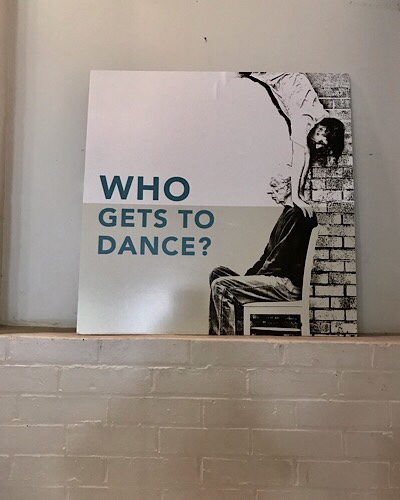
@ Liz Lerman Dance Exchange, 9/19

Yes. I am back in DC.