Untitled
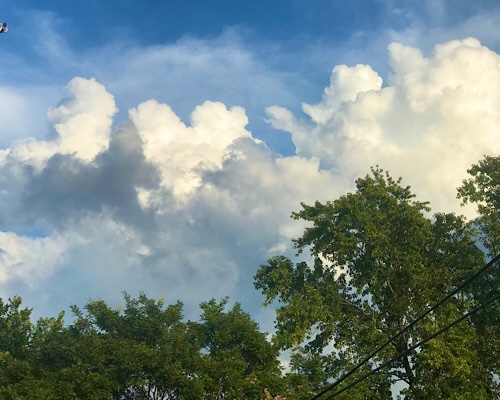

I have been pining for a great adventure that would crack open my heart and remind me of the exalted.
A look at the sky as I did errands in the middle of my work day reminded me that all we need to find that ecstatic sense of awe is to be open to it right where we are.
The sadhana is to stay filled with awe as we do our work and chores, no matter how prosaic or stressful. Easier said than done, but worth every bit of effort (tapas).
What are you going to do about it?
On the Friends Meeting of Washington list serve this week, there has been a fair amount of email exchanged about an upcoming “meeting for discernment for peace.” Very roughly described, a meeting for discernment begins with a period of silent worship in which those present settle into the silence and surrender thought to allow the light of spirit to illuminate a specific subject of contemplation. The subject of the meeting serves to enlighten both the individuals participating and to further both the business and spiritual state of the meeting as a whole.
As I read the emails and invited myself to contemplate the questions offered for the meeting (I will not be able to attend because I had previously committed to volunteer work), it led me to think not only about the topic under discernment, but about how similar it seems to me to the yoga practice of bhavana and how bhavana supports the Anusara teaching method of “heart-oriented posturing language.”
When we practice bhavana ,we invite the fullness of consciousness to illuminate ever deeper levels of understanding of particular teachings from the yoga texts or similar ideas. It is similar to meditation in that we don’t try to think our way through the concept, but rest with it. Bhavana differs from meditation exactly because it is focused on the deepening of a particular concept rather than simply going into the space of meditation as an end in itself.
Although a meeting for discernment is practiced as a form of collective worship rather than an individual practice, it is much like bhavana, and I brought the Quaker method of resting in the light to reveal deeper insight regarding a concept when I first starting teaching Anusara yoga with its emphasis on having a class theme and using heart-oriented language to invite myself and students to experience a heart quality through asana practice.
The queries for contemplation at the meeting for discernment for peace, include the following:
Classical yoga philosophies (as opposed to tantra) teach us that our mind/body are not real; what is real is “God,” and when we truly know this, we will experience freedom. I personally don’t ascribe to teachings that hold a concept real, but ourselves unreal.
I do think, though, that the practice that comes from this theory that advises us to pause, to step back, and to notice when our reactions to things are so bound in previous limited experience or expectation or dogmatic teaching that we’ve created unnecessary constrictions and suffering.
What appears to be caught or bound or stuck might not necessarily be so.

I went tonight to the space at Flashpoint to see a dance performance by people I know from the Sunday contact improv jam. One of the things that I am finding thought-provoking about the jamming with dancers is dancing for the sake of the dance, but also as a practice for those who perform. I went to support friends appearing in a small venue. I know how much I appreciate it when people make an effort to come to workshops, and in the days when I was still exhibiting art, to my openings. I also went to be able to witness from the space of pure observer, my friends in performance mode, so that I could learn and appreciate more about the dialogue and dialect of dancers and the dance. And I went because it was fun.

Peace and light, E — Posted with WordPress for BlackBerry.
This site uses Akismet to reduce spam. Learn how your comment data is processed.

I love your altar.