Breakfast at Home (and for Days to Follow)
Apple gingerbread. Has molasses, but no refined sugar. Based on the apple gingerbread in 1001 Vegetarian Recipes, by Carol Gelles.
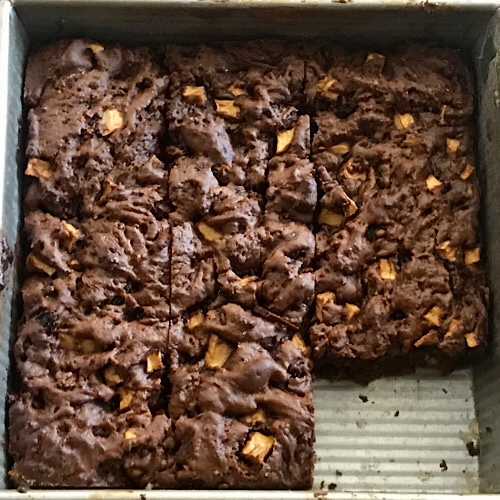
Apple gingerbread. Has molasses, but no refined sugar. Based on the apple gingerbread in 1001 Vegetarian Recipes, by Carol Gelles.
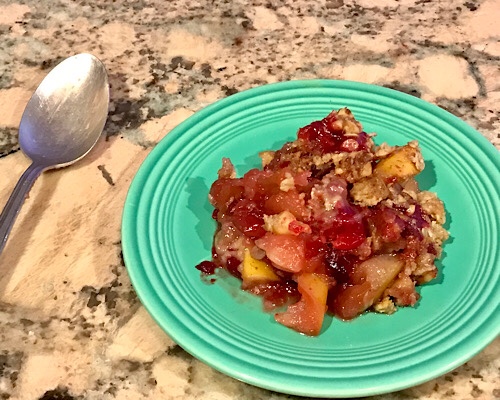
Over-wintered local apples, cranberries put in freezer last fall when fresh in stores, pantry items
This spring I decided to for the second time growing a fig in a container. It has about five figs, all of which I intend to eat before the squirrels can get them (I’ve beaten them and the birds to the three blue berries that have ripened so far; I have high hopes for the figs). I don’t think my fig in its container is suitable for sharing as “Neighborhood Fruit.” Do you have a fruit tree that has too much fruit for you? Let people know.
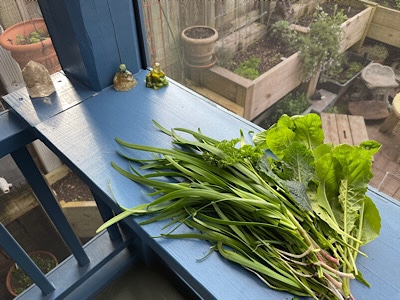
Garlic chives, arugula, parsley. Note that the garden has been reconfigured to allow room for distanced visiting.

On the bulletin board at Baby Cakes (vegan cupcakes, etc). Lower East Side.
My favorite sutra in Patanjali’s Yoga Sutra’s is, II.16, “heyam dukham anagatam.” This translates roughly as “the pain that is yet to come can be avoided.” What does this have to do with a forecast of a hard freeze?
My chard, beets, and turnip greens are still flourishing. They can manage with a night or two in a row in the high 20sF, and that is all we have had so far. The forecast for later in the week, though, is for the first true cold snap since 1994 (you may remember that as the year when lots of people’s pipes froze). My winter garden (which does not have a cold frame due to lack of space — maybe I’ll get more creative next year, and I’ll try an experiement with plastic bags on Thursday night) cannot survive lows in the low teens highs in the twenties.
I could suffer today by bemoaning the coming cold, worrying about the garden, and remembering that I don’t like cold. That would be present suffering in anticipation of potential future suffering. I certainly can avoid that. I can also do what I did yesterday, which was harvest lots of the chard and most of the beets, put the beets into cold storage (vegetable bin in the refrigerator) and make pasta with sauteed garlic and chard. Between now and Wednesday night, I’ll harvest most of the remaining greens. I’ll make a big vegetable soup with the beets and the chard, maybe make chard pie or calzones (truly delicious), and eat the rest over the following days. I’ll feel grateful that in the bitter cold, I can be eating fresh garden greens. I’ll be even more grateful that I can just shop at the grocery store or the farmers’ market and don’t need to rely on my garden feeding me year round. I’ll also be happy for the hard frost. Part of the reason the aphids and the mosquitoes have been so bad is the absence of a hard frost in winter.
Some bitter cold in winter in a temperate zone is inevitable, as are sickness and death. We can avoid suffering by not just getting anxious and unhappy and suffering in the present, but not taking action to alleviate potential suffering. With preparation and practice, we can avoid some suffering. Just has preparing for winter in the garden can allow it to be productive for greater parts of the year, so too, with a steady practice of asana, pranayama, and meditation we can avoid some physical and emotional pain and suffering. Most important, with steady preparation (preparing for the potential for difficulties in the future is not the same as being anxious about it), when the inevitable comes, we will likely suffer less, at least in our hearts, if not in our bodies.
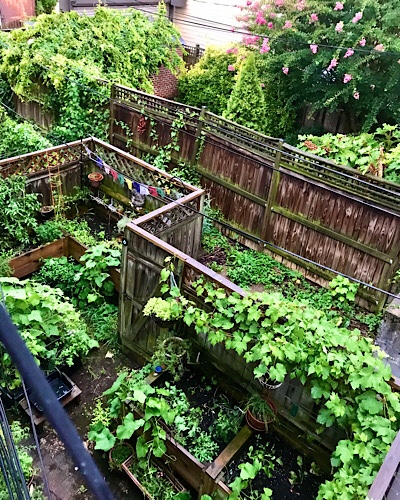
Here’s the garden after the thunderstorm. Please take some healing, grounding breaths and then take action about increasing federal military presence in cities with peaceful protests.