State of the Garden
Garlic chives, arugula, parsley. Note that the garden has been reconfigured to allow room for distanced visiting.
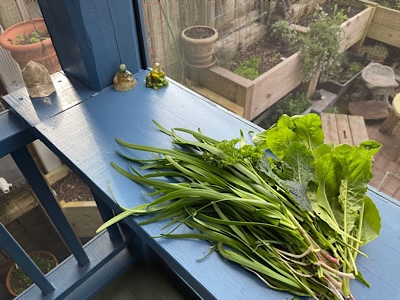
Garlic chives, arugula, parsley. Note that the garden has been reconfigured to allow room for distanced visiting.
When teaching meditation, Paul Muller-Ortega says that we need both to practice with awareness (gain experiential knowledge) and to study the texts and teachings (explore theoretical knowledge).
With the dirt blanketed in snow and ice, it is time for jnana–time to study and theorize about possibilities for the coming gardening season.

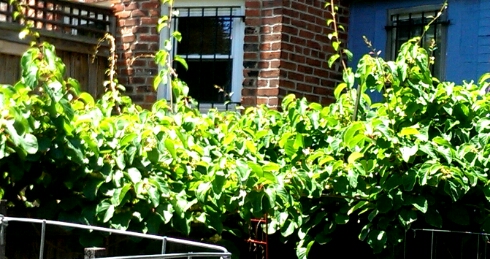
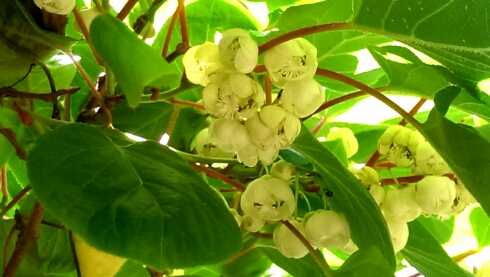
The polar vortices must have been good for the grape kiwi. After years of being barely productive, it is flourishing wildly.
Sometimes it takes, as we can learn from mindfully practiced yoga asana, a stressor to stimulate growth or needed change. It isn’t stress that holds us back, but distress.
As for the kiwi vine, even if the birds get all the fruit, I still had the delightful scent of the flowers.
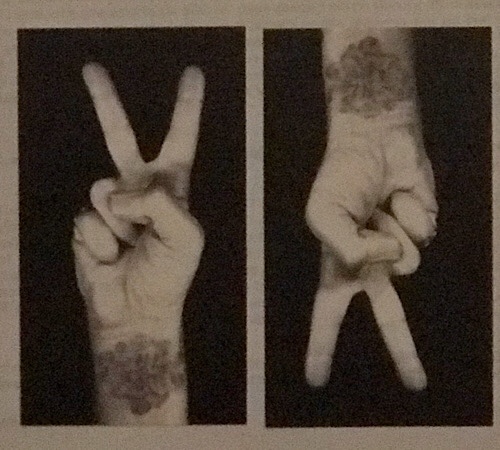
After over a decade of using “rose garden yoga,” I have designed and had printed (on 100% recycled card stock of course) cards for my yoga offering.
By the way, the position of the fingers might look like a peace sign (and it is), but with the fingers pointed down, into the earth, the fingers are in bhu mudra–signifying both the earth element and the earth it/her/theyself.
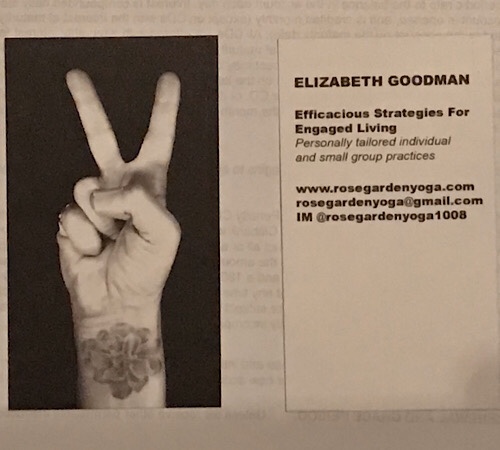
We may not be able to change much of what we get in life–where and when we were born, certain innate talents and physical attributes, but we have the choice at every moment what we will create with what we have been given.
Will we create beauty and happiness where we can? The point of the yoga practices, I think and have been taught, is to lead us to choose what best serves more and more often.
For example, I cannot create a monumental sculpture if the only art material I have is a point and shoot camera. I could do nothing but lament my lack of resources, or I can still make art.
What do you choose with what you have?

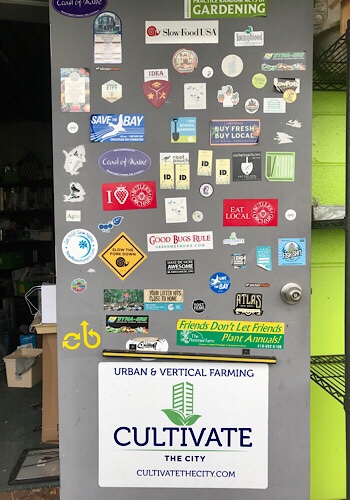
Was to visit and get seedlings to fill out the garden at Cultivate the City (cultivatethecity.com, @cultivatethecity).
What kind of society do want as we come through the pandemic (recognizing the privilege it is to be able to ask this question)?

When is garden statuary merely a decorative object and when is it a murti–an object of devotion, a representation of some aspect of the divine? It may well seem different for the artist, the person who chose its location, and the viewers.
Would you have a different reaction if this angel was on the grounds of a church? What about a temple? A national park? Your workplace? A sculpture museum?