| | |

Neighborhood Fruit

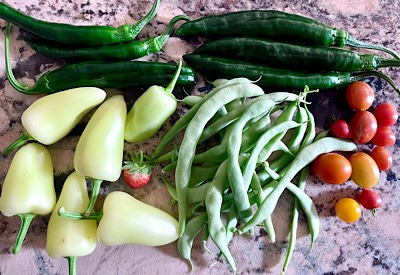
This spring I decided to for the second time growing a fig in a container.  It has about five figs, all of which I intend to eat before the squirrels can get them (I’ve beaten them and the birds to the three blue berries that have ripened so far; I have high hopes for the figs).  I don’t think my fig in its container is suitable for sharing as “Neighborhood Fruit.”  Do you have a fruit tree that has too much fruit for you?  Let people know.

Similar Posts

  • |

    Roasted Brussels Sprouts and Other Vegetables (and the Goddess of Sequencing)

    Cooking is not only an exquisite opportunity to notice and appreciate the various characteristics of the elements of our meal and how they react to heat and fat and cooking times and methods, but a wonderful way to appreciate how everything is ordered in time and space and to honor Kali — the Goddess of Sequencing.

    Brussels sprouts seem to be fashionable this year.  I’ve always liked them.  My preferred method is to braise them:  saute lightly in olive oil and/or butter in a heavy pot with a lid, splash some dry sherry, wine, or vermouth into the cooking pot and stir until the liquid is absorbed, add some broth or water (not quite to cover) plus salt and herbs of your choice, simmer until the brussel sprouts are tender and the liquid is absorbed.

    My friends are gushing about roasted brussels sprouts.  I think the tenderizing, fat-adding delight of roasting has made the much maligned brussels sprout more accessible:  toss with olive oil, salt, garlic, and herbs such as rosemary and thyme.  Roast at 400F until tender and browned (15-20 minutes).  Use peanut oil, ginger, garlic, and soy sauce or Braggs amino liquids for an Asian meal.  Try safflower oil, turmeric, ground ginger, garlic, and ground coriander seeds to serve with Indian food.  Use just butter (or if vegan a light, relatively flavorless oil such as safflower or canola), salt, paprika, and pepper for an Eastern European flavor.

    Whenever I roast vegetables, I toss in an extra head of garlic (separated into cloves), and serve some with the vegetables and reserve some for cooking something else with roasted garlic.  Include a variety of vegetables.  Just remember that different vegetables need different cooking times.  To recognize the mysteries of the Goddess of Sequencing in time and space — you have two choices in roasting vegetables.  You can cut the vegetables into different sizes (so you would leave brussels sprouts whole, cut winter squash or turnips into cubes a little smaller than the brussels sprouts, and potatoes into wedges or rectangles that are narrower than the brussels sprouts for them all to be golden and tender, but not overcooked at the same time.  As an alternative (as we do with sauteing or stir-frying), you can add different vegetables at different times.  You might need a combination of both techniques.  If you wanted to add mushrooms to the mix, since those would need to be larger than brussels sprouts, you would want to add the mushrooms later lest they get withered — how much later depends on the size of the mushrooms relative to the other vegetables.

    Enjoy (and give homage)!

  • | | | | |

    White Heat

    By 8:30 this morning, the sky was already an engorged white, thick with heat and humidity. There is no prospect of a thunderstorm for relief. If any come, they will be to the south and east or north and west of the space inside the Beltway. (I am convinced that the pattern of storms parting and dissipating within the Beltway is due to the hot air generated within the Dome).

    I walked to work earlier than usual this morning and wore a sleeveless dress, sandals, and a sun hat. The co-worker who shared the elevator was wearing a suit, tie, dark socks, and heavy shoes. A few of the men are brave enough to wear short sleeves or go without the tie, but all are wearing long pants, close-toed shoes, and dark socks. In the cafeteria, people are picking out foods heavy with meat, fat, and sugar. The building is air-conditioned to a temperature for the comfort of those who neither dress nor eat for the weather. In the building, I am wearing a wool cardigan over my weather appropriate dress.

    Last year, in response to a call to government workers from the White House for ideas to save money, I suggested that the dress code be changed from “business” attire to seasonally appropriate attire (my sleeveless dress is long and plain and does not expose anything other than my arms; it is perfectly “appropriate” and not beach wear). That way, the temperature in government buildings could be raised a few degrees in summer and lowered in winter, saving millions of dollars in heating and cooling expenses, as well as helping the environment.

    It needs to be a policy to wear clothing right for the weather. If it is not policy, those who want to get ahead will continue to believe that there is no possibility of succeeding without wearing the suit and tie/lined skirt and jacket, pantyhose and heels. (Why is it that people believe that our brains focus better when our clothing is uncomfortable?)

    I did not get a response. The winner was someone who suggested storing their office’s records electronically–something that is gradually happening every where in any event.

    Being seasonally appropriate in our dress and diet can make an enormous difference in our comfort and in our impact on the environment. Same, too, for how we exercise. When it is over 90F, please do not crank up the air conditioning so that you can do a fiery practice. Instead, practice quieter poses. Concentrate on seated poses, cooling pranayama practices, and meditation. Enjoy the invitation to stillness and the fact that by virtue of the heat, you are already warmed up.

    Peace and light, E — Posted with WordPress for BlackBerry.

Leave a Reply

Your email address will not be published. Required fields are marked *

This site uses Akismet to reduce spam. Learn how your comment data is processed.