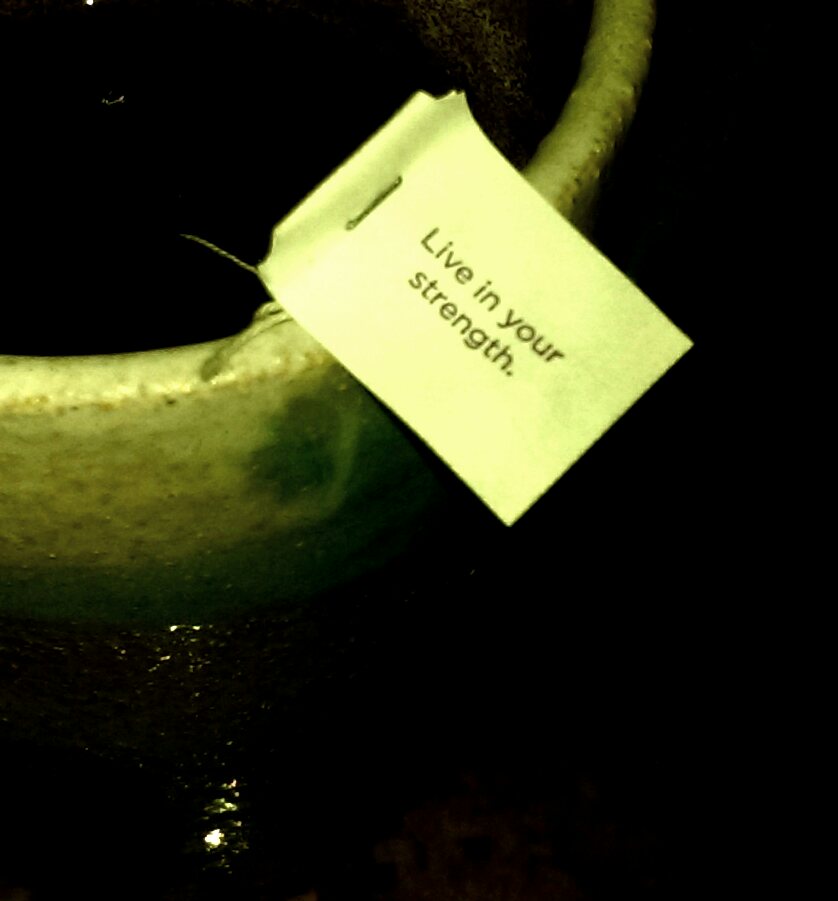
Signs Around Town

I am reading Philip Goldberg’s American Veda–From Emerson and the Beatles to Yoga and Meditation; How Indian Spirituality Changed the West. It is another of the recently published works on the interplay and inter-influence of east and west. What distinguishes American Veda is that it is more about how Indian spirituality influenced western/American society overall, than an analysis of the yoga that we practice in the west. Much that one might expect to be in the book is there: Emerson, Thoreau, Swami Vivekananda (and the Parliament of the World’s Religions), Ramakrishna, Paramahamsa Yogananda, Osho, Muktananda, the Beatles, Maharishi Mahesh Yogi, but there are other connections that are less well-known.
As one generally familiar with the history of Indian philosophy and yoga practices coming to the West, it reads more like a survey or overview than an analysis to the extent that it tries not to leave out any one who could have been an influence and goes into little depth regarding any particular influence. (Note: the author himself says that the book is limited to Vedic/Hindu influences; he refers the reader to other sources, in particular, How the Swans Came to the Lake, for the transmission of Buddhism to the west).
What is most interesting to me about reading American Veda is that it reads like old home week. I recognize the names and the philosophies and the way people speak about spirituality and religion, and the author lovingly and thoroughly shows how profound and widespread is the influence of Vedic thought in America, even where no attribution is given. I recognized even when I first discovered Indian philosophy texts in high school the interplay between how me and my fellow unprogrammed. liberal Quaker friends were talking about mystical experience and understanding of God/Spirit and the Indian philosophy, and it is lovely to have a book where someone went out and did all the research and gathered the sources. By the time I was thinking about anything at all really, Indian philosophy was already something in my consciousness thanks to the Beatles and the Beats. The Beatles discovered Maharishi Mahesh Yogi when I was six, which was the year that Sgt Pepper’s Lonely Hearts Club Band and Magical Mystery Tour came out and my parents for some now unfathomable reason gave them to me for my Christmas present. My older sister and I played those albums over and over again on our portable record player, whirling ourselves into states of dizzy ecstasy with the sitar grooving in the background on our favorite songs.
I was moved to read the Bhagavad Gita by reading J.D. Salinger’s Franny and Zooey. I do not remember whether this was in 9th or 10th grade, but I read Salinger because was what cool, smart kids read. What I remember is that I read both Franny and Zooey and Catcher in the Rye (probably read the latter first) before Catcher in the Rye was assigned reading in 10th or 11th grade and that while I was not particularly impressed with Holden Caulfield, I really wanted to be as brilliant and educated and extraordinary and talented and philosophical as the children in the Glass family, and so I tried to read what they read (though alas, I read it in translation, where they were able to read the Greek and Latin and Sanskrit, etc.) By 11th grade, a teacher had given me J. Krishnamurti to read, and his anti-guru guruness appealed to my Quaker sensibilities.

Peace and light, E — Posted with WordPress for BlackBerry.
This weekend’s work in the garden continues on removing summer plants that are no longer productive to make way for cold weather planting (various greens and root vegetables).
The cherry tomatoes and a couple of the hot peppers are still flowering in addition to fruiting. Those I will leave in place as long as they are producing or until a frost, whichever comes first.
I ruthlessly pulled up all of the other pepper plants, gleaning the last of that cycle of the harvest (some years there are lots of peppers to pickle and roast and enjoy into winter, but not with this summer’s weeks of blasting, arid heat followed by the flooding storms).
With the limited space in my tiny garden, frittering away time or space from sentimentality, attachment, neglect, or lack of knowledge, has a significant impact on the possibility of flourishing. Sometimes I relish my ability to be ruthless in the garden–to tear things up that do not serve, let them go, and invite in new and more nourishing and productive things.
When thought about in relationship to the vastness of possibility, my life is not unlike a tiny and limited garden, the limits being space and time and the particular and peculiar collection of quirks, challenges, and talents that came in this incarnation. Oh to be as ruthless in discarding what does not serve in this life as I can be in the garden.

Peace and light, E — Posted with WordPress for BlackBerry.
It is a fine thing to reminded to love, but for the most part fruitless to be commanded to love a certain thing or person.

Peace and light, E — Posted with WordPress for BlackBerry.