Winter Weather Comfort Food (Lentil and Roasted Chestnut Ragu with Spaghetti Squash Cake)
Not just warming and delicious, but also inexpensive and healthy, and a great way to use up leftover table wine . Lots of variations possible.
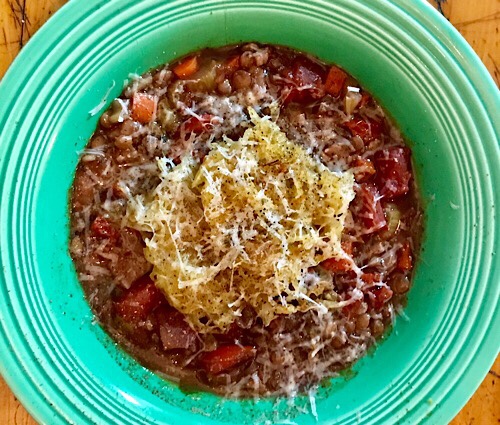
Not just warming and delicious, but also inexpensive and healthy, and a great way to use up leftover table wine . Lots of variations possible.
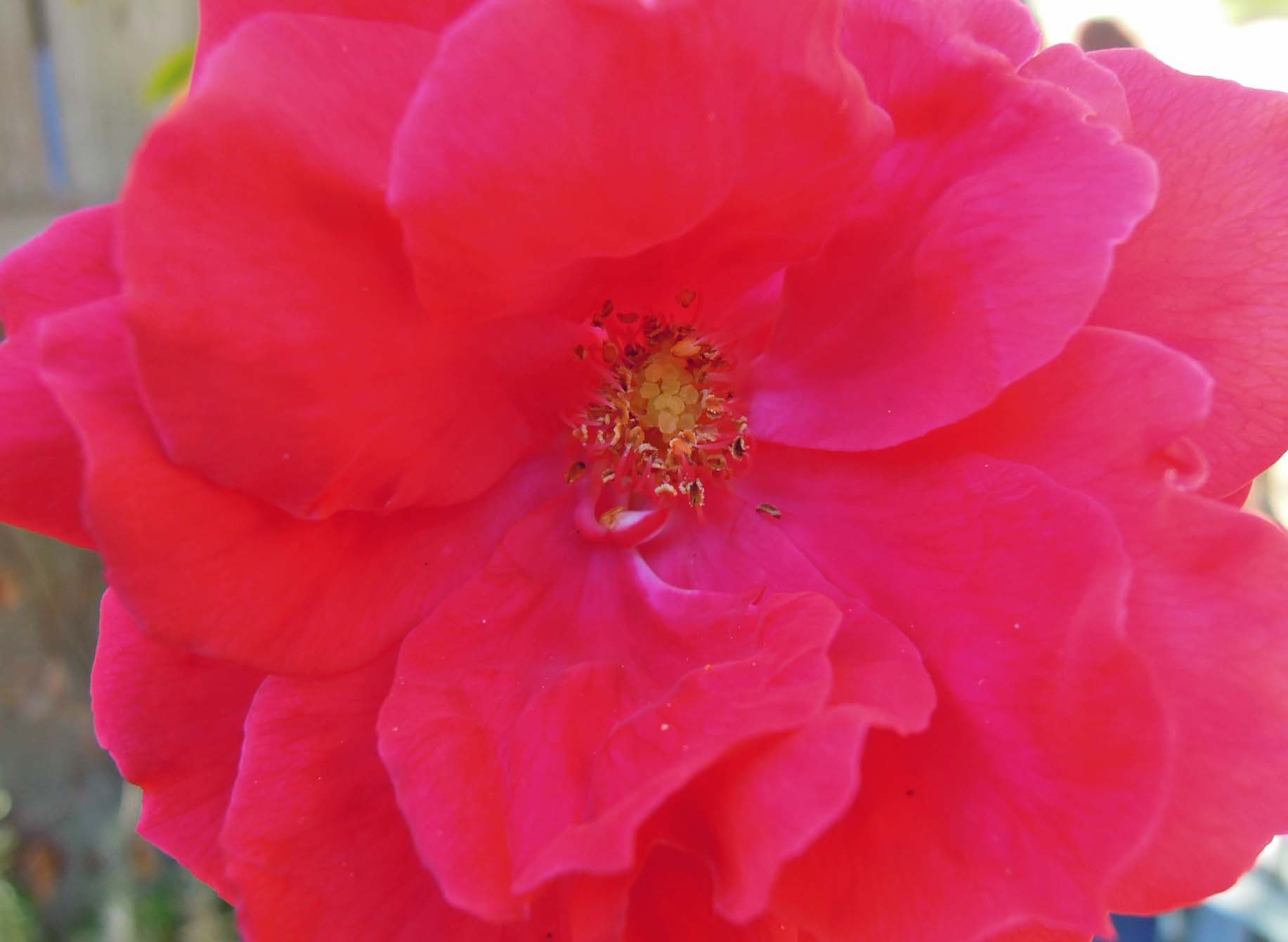
ripe cayenne, unripe cayenne, arugula, black cherokee tomato, kale, red leaf lettuce, snow pea shoots, grape tomatoes, spinach, leaf lettuce, carrots, more snow peas, licorice mint, marigold, romaine lettuce, turnip, beets, green garlic, rose, orchids, night-blooming cereus, various tropical plants, spider plants, oregano, rosemary, lemon grass, lemon verbena
Having grown up in the New York metropolitan area without much in the way of traditions of any kind, I was not familiar with Hoppin’ John. I am fairly certain that the first time I heard of it was from a college friend whose family has been in South Carolina since before the Revolution. As it is not part of my tradition, I do not feel bound to any particular recipe (I am sure it is sacrilege in some circles to leave out the ham/bacon) or to eating it at any particular time of day (e.g., immediately after the clock strikes 12 midnight). It would not be Hoppin’ John, though, if I did not know its tradition and know where I was deviating from tradition. (Though this would entail a much longer blog than is within my time frame today, this balance of freedom from tradition and needing to know and honor tradition is very much an issue for the Western yoga practitioner.)
1. Soak a cup of dried black-eyed peas for at least several hours or overnight.
2. Dice one small onion or 1/2 large onion (about a cup), a few celery stalks, including the leaves, and mince a couple of cloves of garlic.
3. Heat a few tablespoons of a flavorless oil (peanut, corn, or safflower) in a pressure cooker (my preferred method for saving energy and time) or a stock/stew pot.
4. Saute seasoning vegetables along with a few hot peppers until onion is translucent. I used the last habanero from my harvest and so left it whole. You can use fresh or dried chilis in an amount to your taste/tolerance for spiciness.
5. Stir in a cup of brown rice until rice is coated with oil.
6. Pour in 1/4-1/2 cup of white wine and stir until absorbed (as if making risotto). [You could use stock instead. If you are using white rice, skip this step, which serves to partially cook the brown rice, so that it will take the same amount of time as the black-eyed peas.]
7. Crumble in some dried thyme (preferably from your own garden) and a bay leaf or two.
8. Drain and rinse the soaked black-eyed peas and stir into the cooking pot until all ingredients are combined.
9. Add one 28 ounce can of diced tomatoes and 2 1/2 – 3 cups of vegetable stock or water. How much liquid depends on (a) whether you want a soupy consistency or one more like pilaf or risotto; (b) how liquid are the tomatoes; (c) whether you are using a pressure cooker (less liquid needed) or cooking in a pot.
10. If using a pressure cooker, cover and bring to full pressure, then lower heat and cook at full pressure for 28 minutes. Allow natural pressure release (about 15-20 minutes additional). If cooking in a regular pot, bring to a boil, stir, then lower heat and cook for an hour or more until rice and peas are tender, stirring occasionally.
11. While rice and peas are cooking, mince a few cloves of garlic.
12. Rinse and chop several handfuls of greens (collard or curly kale are best; don’t use spinach or chard, they are too tender). Heat oil and garlic together. When garlic start sizzle, add damp greens and saute until greens are wilted and dry.
13. When rice and peas have finished cooking, stir in sauteed greens and bring back up to full heat. Adjust seasonings, adding more salt and your favorite hot sauce to taste (or allow guests to add their own hot sauce at the table).
I don’t know whether having eaten this will bring me luck and prosperity, but I’ve started the year with lots of vitamins, minerals, fiber, flavor, and cooking, which for me means health, love, technique, tradition, flexibility, and joy! Try this, make your own, read all about Hoppin’ John, or call a friend from the South who must eat Hoppin’ John on the New Year and learn about the tradition and what it means.
Plenty of divides available for those in the neighborhood.
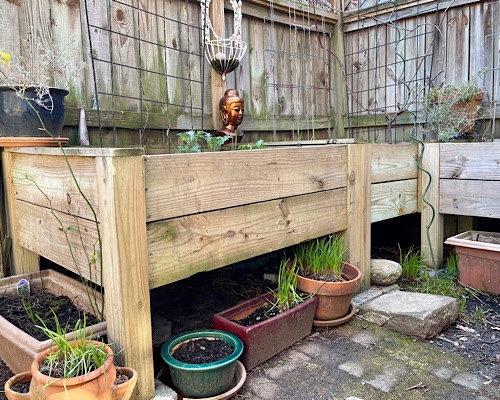

The cherry tomatoes keep coming. After 32 summers gardening in the same spot, I have observed the shifting weather due to global climate change.
When my friend Mac asked if I would let my readers know that his dance group Human Landscape Dance will be performing at Dance Place on Saturday and Sunday, July 9th and 10th, I agreed without hesitation. As I was contemplating what to write, I found myself thinking about the koshas–the energetic sheaths of the body. The yogis claim that the individual has five koshas. The outermost, the annamaya kosha, is the “food body.” “Food” in this context encompasses everything that comes into our body through all of our senses–touch, taste, sight, hearing, smell. I thought about what it might mean to “eat local” if eating meant everything that we encounter with our senses.
I am not a locavore (I too thoroughly enjoy avocado, coconut and, in winter, citrus), but I do try to emphasize local food as the mainstay of my diet. I do it mostly for energetic reasons. I want fresh food to have been picked as recently as possible and not to have grown weary from travel. I want as few hands as possible to have touched the food I buy, and those hands to be those of a person who is happy with farming and is paid a living wage by the sale of the produce. When your food growers, transporters, and preparers live nearby you are getting to know your neighbors and community, and not just getting food from a faceless corporate entity. Over the years, you get to know each other a bit and learn what friends you have in common. More threads are woven into the fabric of your community.
Just as knowing the person who grows and sells you food means you can be more certain that it was raised and offered for sale with nourishment intended at every stage, so too having the art and entertainment we bring into our senses be created within our community creates a network of connection and support that we do not get when we only consume commercially prepared entertainment (though I cheerfully buy music from my favorite “stars,” go to the movies, and enjoy trips to Lincoln Center,and London’s West End, etc., just as I get avocados and citrus along with the greens from my garden and the fruits from the local farmers’ market).
I feel blessed to be able to connect with Mac as a neighbor (Mac, his wife Jennifer Mueller, who is a student of mine and fellow yoga teacher on the Hill, and their delightful daughter live several blocks from me) and others who are performing next Saturday as fellow dancers at the Sunday Contact Improv Jam. My dancing and personal explorations are raised up by the company of the wonderful dancers and friends who share that space, including those who will be performing next weekend.
Why wouldn’t I want to both support my friends and learn more about them by going to Dance Place to receive the dance offering they are so lovingly preparing for all of us? Such is the nature of feeding mindfully the annamaya kosha to help lead us to the opening and nurturing of our innermost spirit, finding and creating more bliss in ourselves and in the very essence of our community.
FYI. I’m looking for company to carpool or walk together to and from the Brookland Metro (for safety on the way home). Perhaps Sunday CI Jam, dinner on the Hill, and the Sunday night show?
 Photo courtesy of Human Landscape Dance.