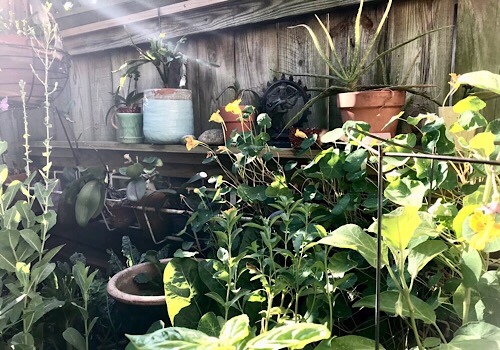
State of the Garden (Puja)
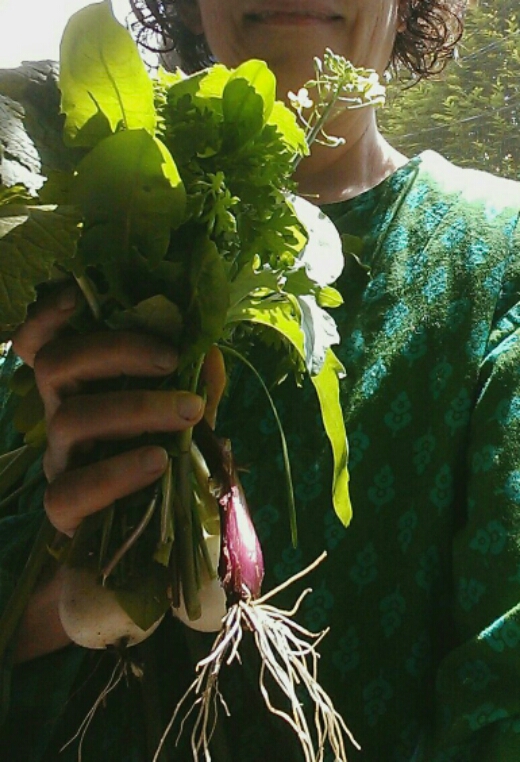
Turnips, red spring onion, kale, arugula, dandelion greens, parsley, garlic chives
Turnips, red spring onion, kale, arugula, dandelion greens, parsley, garlic chives
Secretary Hilda Solis sent workers at the Department of Labor an email invitation yesterday to do some volunteer activity today to honor those who lost their lives in the tragedy of 9-11. She did not remind us of terror or enmity or need for war.
It resonated with what my teacher John Friend, who often discusses the need to serve as part of our practice, counsels in times of distress. He admits that it is not, as the t-shirt would have it, “all good.” We can choose, though, how to respond to violence, to suffering, to meanness, to evil. We can, he urges, seek to respond from “the highest.” We personally have the choice to try to bring light when we encounter darkness.
I do not always succeed, particularly with the small things, but I continue to try, and I deeply appreciate all the teachings and reminders I get.

In the yoga stories, all of those who work, who commit to the arduous practices get boons, including the demons. If it looks like the demons are winning the day because of their efforts, the only way to change the game is to commit and surrender more deeply to our own work and practice.
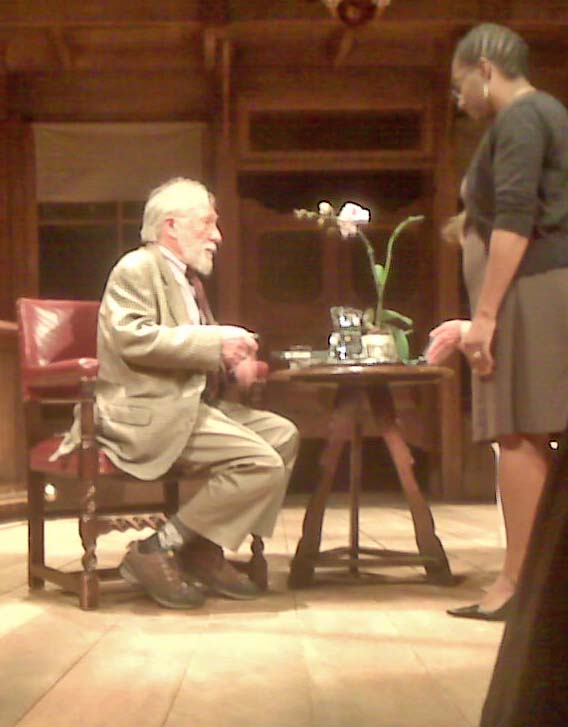
Last night I had the singular pleasure of hearing Gary Snyder read his poetry at the Folger Shakespeare Library. At the end of the reading, Mr. Snyder answered a few questions. In response to one question about advice he gives to aspiring poets, he said: “Don’t be journalists. Do hard physical labor that leaves y0ur mind open.” This is not surprising advice, coming from one who has chosen a life requiring regular manual labor. “Meditate only for its own sake,” he added, in an apparent non sequitur and without elaboration.
Gary Snyder’s poetry is evidently influenced by his dedicated study and practice of Buddhism. The insight and clarity of his poetry surely reflects not only his intellectual study, but the deep wisdom of a dedicated, long-standing, and steady meditation practice. The advice to “meditate for its own sake” seemed almost the offering of a koan by the master (poet) to his pupils. Meditation, in my experience, definitely enhances clarity, insight, creativity, and health. Meditation is not meditation, though, unless when engaging in meditation that is all one is doing and without any goal (like the “actionless action” of the Bhagavad Gita). It is the deepest of practices to engage fully, but not be doing except for the sake of doing itself (and in alignment with the deepest truths).