Asana, Pranayama, and Yoga Practice | Community and Family | Food for the Mind (Yoga Philosophy, etc) | Meditation
Found Exhortation

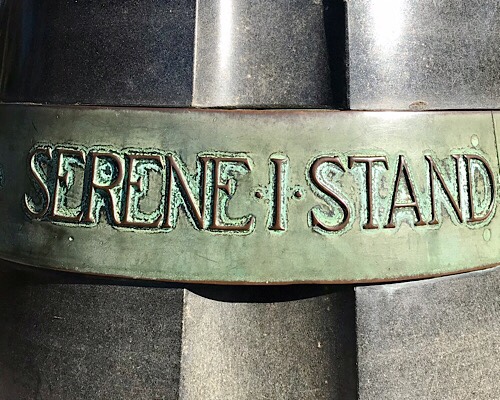
 Diana with a hound at the National Gallery of Art
My walk in the neighborhood led me to Eastern Market this morning although I was not looking for anything in particular. A small group of people were standing at the four corners of 7th and C Streets Southeast, standing vigil for the children in Gaza and asking for ceasefire.
I asked if I might join them and they offered me a sign. The demonstrator next to whom I was standing was most curious about what led me to be supportive of Palestine and we mostly talked about Quakers and Quaker emphasis on peaceful and fair solutions.
How could I not, in this small way, not add my voice and add my physical presence when I imagine how much more brave to be speaking out and how much more painful for those with friends and family and familiar places under siege.

When I first got to my room on the fourth floor of the hotel, the airconditioner was straining noisily, and the room was very stuffy. To My great delight — the windows not only open, but have screen and look out onto an unveveloped tract of land with trees higher than my window. I immediately opened the windows and let in the smell of fresh air and the sounds of the forest. There is occasional car noise, but it is muffled by the sounds of wind and rain in the trees.
I thought this morning how often I end up in an office building or hotel where the windows do not open. That cutting off access to the realities of nature, of what is greater than our little world, in order to have a controlled climate seems like much of modern life.
Many I know do not even notice that the windows do not open. Others of us, see the windows and want to know what is outside and to be with the greater energies. We seek to oprn the windows and know. Those who are able and so moved and who are able — rare beings — leave behind the buildings and go entirely on the renunciate path. The rest of us who live the life of householders, seek to have windows that open and spend time each day breathing in the sweetness of what is greater.