| |

9-11 (and personal choice)

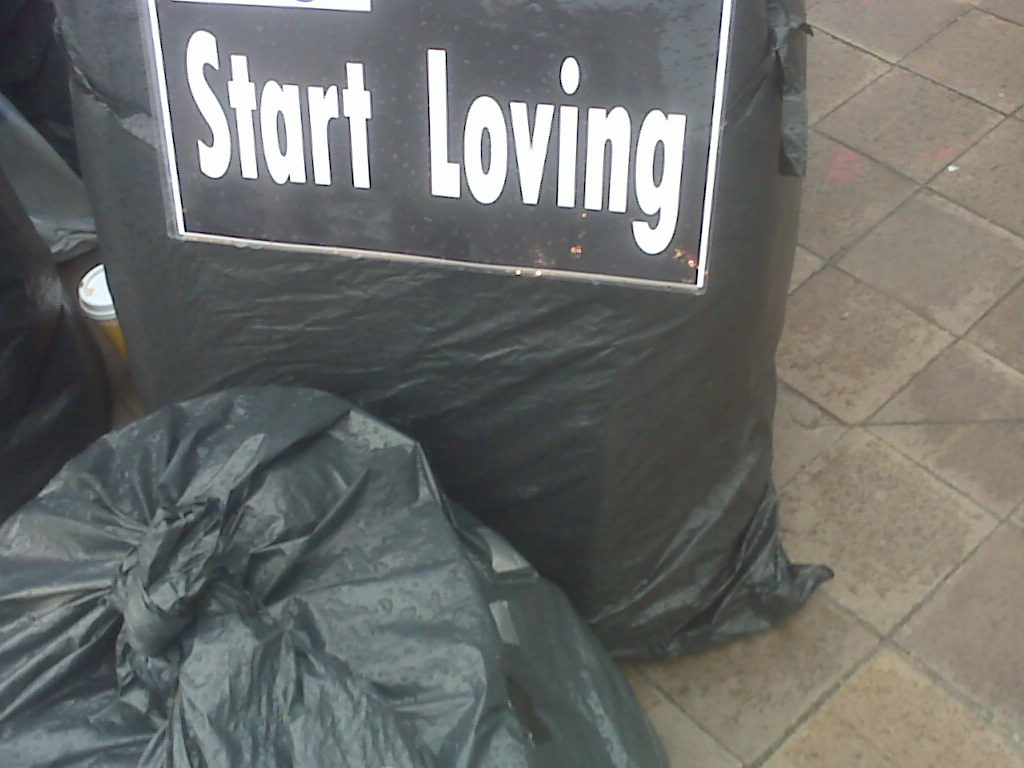
Secretary Hilda Solis sent workers at the Department of Labor an email invitation yesterday to do some volunteer activity today to honor those who lost their lives in the tragedy of 9-11.  She did not remind us of terror or enmity or need for war.

It resonated with what my teacher John Friend, who often discusses the need to serve as part of our practice, counsels in times of distress.  He admits that it is not, as the t-shirt would have it, “all good.”  We can choose, though, how to respond to violence, to suffering, to meanness, to evil.  We can, he urges, seek to respond from “the highest.”  We personally have the choice to try to bring light when we encounter darkness.

I do not always succeed, particularly with the small things, but I continue to try, and I deeply appreciate all the teachings and reminders I get.


Similar Posts

  • |

    “The Yoga That Destroys Sorrow”

    “For him who is moderate in food and play, moderate in performing actons, moderate in sleep and waking, for him is the yoga which destroys sorrow.”  Bhagavad Gita, 6.18 (trans. Gitartha Samgraha, in Abhinavagupta’s Commentary on the Bhagavad Gita).

    Food here, of course, is more than what we put into our mouth.  It is everything that comes in through the senses.  Play, too, is beyond what we do for “fun” in this society.  How much these words have kept their truth since written; what different meanings they carry in our time of technological marvels.  What does “moderation” mean to us?  Does moderation have an implicit relativeness?

    Since I first read the Gita in high school, I have been contemplating this sloka and resonating with it.  Now, I come back to it over and over again, as my understanding of the rest of the text deepens and my practice grows.  It is still giving me food for thought. (Pun intended).

  • | |

    Letter from FCNL on How You Can Help Shape the Budget

    I just received this letter and wanted to pass it on to those who have senators and members of Congress (those of us in DC still do not):

    Dear Elizabeth Goodman,One of our lobbyists just reported to me that some members of the supercommittee are telling us they are open to cutting Pentagon spending. “We need to hear what the folks back home in our state have to say about this,” we heard.The most important voice in this budget debate is your voices as constituents. As they make their decision, your members of Congress need to hear your side of this story. They need to hear about the consequences in your communities when money isn’t invested in schools, roads, jobs, and other local priorities.Today, will you write a letter to the editor of your local newspaper? Refer to your members of Congress by name and point out the needs in your local community.Communities around the country are being squeezed. More people are relying on food banks; local governments are copying with both the neighborhood and family stress of foreclosure; schools are increasing class sizes and shortening the school year; and critical maintenance on bridges and roadways. Police and firefighters are losing their jobs.  Yet, the Pentagon budget continues to grow.Congress will take action to reduce the deficit, which means budget cuts. But if Congress doesn’t act to cut at Pentagon spending by a significant amount — FCNL and others believe that number is $1 trillion over the next ten years — then the cuts to other programs will be much deeper. Cutting the Pentagon budget and potentially making more funds available to meet the needs of state and local communities.  There is an opportunity to make this change.Thank you for your action.Sincerely,Diane RandallExecutive Secretary  P.S. If you want to know more about how much Pentagon spending is slated to rise, or more on FCNL’s views on the debt, deficit and supercommittee, visit our website. 

    Peace and light, E — Posted with WordPress for BlackBerry.

  • | | |

    Some Musings on Guru Purnima

    This full moon is both the one called by some “guru purnima“–with rituals to honor the teacher–and also  the relatively rare blue moon. I’ve been seeing lots of postings on social media about guru purnima by my friends who are engaged in the practice, study, and teaching of yoga.  The variations in the postings about guru purnima are as wide as what the person believes is the guru–from recognition of a person who has been named a guru; to teachers, recognized as such; to simply the invocation of our own teacher within.  Suggestions for ritual range from specific puja to just an invitation to think about the concept and to recognize those who have imparted wisdom to us that has enhanced our lives (even if we have to do a lot of work to know that).

    I’ve never personally been called to have a guru (among other things, it is too counter to my unprogrammed Quaker upbringing).  I do, though, have many teachers, some more formally serving in that role than others and I cheerfully honor them today.

    I invite you to think about what it means to have teachers, i.e., to be a true student.  How we might be living if we consciously interrelate with all around us, human and not, as both a student and teacher all of the time?  What quality of listening and openness would that require?  What might we be learning?  What might we teach?

    Dakshinamurti


  • | |

    Coming Snowstorm (and Heyam Dukham Anagatam)

    As I think about whether I will be able to get up to Willow Street to teach my last classes of the session, how much shoveling I will need to do , whether the next forecast storm (middle of next week) might create challenges for my planned trip to NY, etc, etc, my favorite (well, in the top 10) sutra of Patanjali, sprang to mind:  heyam dukham anagatam, 2.16, which means roughly:  the pain that has yet to come can be avoided.

    I have several translations/commentaries of the Patanjali’s Yoga Sutras in my library.  All have a different spin on what this means in practice.  What I know is that it is at least partly about being in the present and taking things as they come.  One should still practice and plan.  By practicing and planning, we are better prepared for inevitable pains and challenges.  (For those of you who are giddy with excitement with the thought of a “white Christmas,” this Sutra still helps.  Part of the pain that can be avoided is disappointment when expectations are not realized the way we hoped they would be realized.)  Once we have prepared in a healthy way, though, there is no point in agonizing about what might come, in being in pain in the present because of the possibility (or even inevitability) of a future pain.

    The snow seems inevitable.  I am charging my camera battery.  I’m picking what is probably the last of the chard and the baby leeks from the garden, and I am getting ready for Serenity Saturday restoratives.  As long as I can walk to the studio — eight inches is just plain fun, not impassable — I’ll be there with a warm and full offering.  In the meantime, I am enjoying my day instead of worrying about the potential barriers to enjoyment.

  • | | | | |

    What Are You Going to Do?

    Now is not the time for avoidance or passivity. What can you do or do more? Who are you going to support? These are the questions for an engaged yogi. Meditation, asana, and pranayama are life balance and support not ends in themselves for a householder yogi.

Leave a Reply

Your email address will not be published. Required fields are marked *

This site uses Akismet to reduce spam. Learn how your comment data is processed.