Opportunity for Extra Meditation?
When your day starts like this.
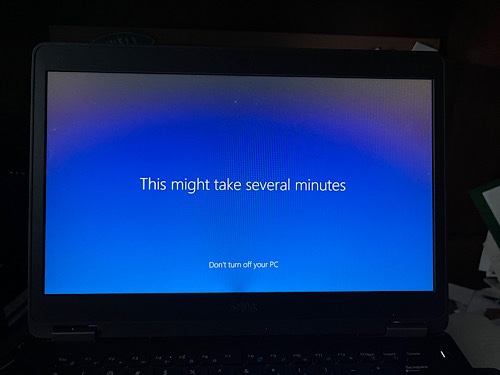
When your day starts like this.
“Write more, that’s all I have to say.” There were several more lines of text, but none so coherent or compelling as this.
Yes, spammer, I would like to be writing more imaginatively and more about the yoga here and elsewhere. I am fully occupied, though, with a technical writing of quite some magnitude if magnitude were to be measured only by the number of words and ideas included. With the social and substantive complexity relating to the project and how it fits within the fabric of creating the rules that govern our society, it is a creative in its own way, but it is more draining than inspiring.
The exercise involves many drafters who come from a wide range of perspectives, training and background, and who have different responsibilities and senses of responsibility. Most everyone is feeling stressed and under-supported in their own way and acting in the multifarious ways people act when that’s how they are experiencing things. I am struggling to stay compassionately present for myself and all who are engaged in the endeavor.
Reminding myself of reasons to be grateful always helps. The yoga and meditation practices, in addition to my creative pursuits, are at the top of the list. The practices are the only truly steady back up that I have. Perhaps that is true for everyone to a greater or lesser degree. The philosophies that inform the practices–whether renunciate or tantra–ultimately would not, I think, disagree.
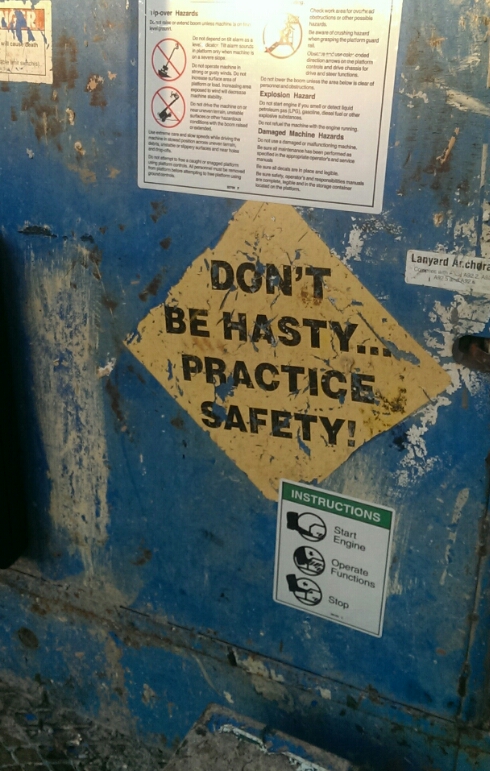
Stated another way: act only at speeds in which you can be fully mindful.
It’s almost time for Wednesday evening house yoga practice, and I still have my work computer on and open to a couple of documents that I need to review by Monday morning.
I try a practice from the non-violent communication course I have been taking: Since I cannot change the work situation in the short term, I am choosing to think about what needs are being met by my feeling compelled to work by the enormity of upcoming deadlines instead of getting to enjoy the two hours of administrative leave granted in honor of Thanksgiving.
I come up with this tentative list: it is good to feel needed, to be engaged, to experience a sense of competence and responsibility. As I am working from home, I get peaceful quiet and solitude while still feeling connected through the work. This does not mean that I don’t want or shouldn’t take action to change my work situation to better meet other needs, or even these needs better.
I am truly grateful that I am being brought to my yoga mat for an hour and a half tonight and that I’m looking forward to a weekend of friends and food and walks (and more work).
I wish you all the best holiday possible. May you experience gratitude.
Look forward to a longer newsletter and a new look to the website in coming weeks.
It’s a call for these times.
Svadharma, from sva (self) and dharma (duty) means our personal path, duty, calling, or place. The principle of svadharma is a significant teaching in various yoga texts, such as the Bhagavad Gita, especially emphasizing the importance in acting in accordance with one’s caste (for example, Arjuna needing to act in accordance with his dharma as a warrior) or one’s sex (consider Sita’s role in the Ramayana).
Extrapolating this teaching and taking it onto the mat, during one of the practice sessions the previous week at the Certified Teachers’ Gathering, John Friend said that “every part of the the body has its own svadharma to increase the pranic flow.” He then said that if you just took a photo of the feet of an Anusara yoga practitioner in any pose, you should be able to see that the whole body was fully engaged and active. John Friend’s teaching here was not just using the yoga philosophy as a catalyst to better understand the body. By using the principle to illuminate the practice, the practice reflectively illuminated the principle itself, without denying or denigrating its original context or getting bogged down in its historical baggage of perpetuating the caste system and demarcated, subservient roles for women.
Thinking about the svadharma of the pinky toe has no such baggage. The pinky toes are homely looking things, they do not fit well into most women’s shoes, they rather painfully bump into things, and they are hard to move independently. They are not essential for living and do not have the emotional charge of the heart and brain, the exquisite connection to the world of the sense organs, or the connection to life itself of the lungs. Despite this, the call to lift and spread the toes, to draw the pinky toe toward the heel, or the hip happens just about every time I go to the mat in my practice or teach a class. Activating the pinky toe by opening it and spreading it apart from the other toes is a conscious act of opening that helps hug the shins to the midline. In hugging the shins in by means of activating the pinky toe, the yogi on the mat can then safely move the thighs back and apart, creating an expansion of the pelvic floor that provides room for more strongly tucking under the tailbone to access core power. The pinky toe thus is an important part of our practice, even if we could manage to get by without it.
But the svadharma of the pinky toe on the mat is not just to be able to help us access the movement of “shins in” so that we can better do “thighs out,” although that is an important physical part of its essence. The toe does not move on its own. We have to start by bringing our awareness and consciousness to the toe. Part of the pinky toe’s svadharma, then, is to invite the infusion of consciousness to show how full participation of even an apparently insignificant part of the body can lead us to a better understanding and personal experience of the pulsation between reaching out and hugging in and affirming ourselves. By intentionally bringing our awareness to the power we can unleash in the pose by the movement of the pinky toe, we bring the opportunity for greater strength, expansion, and flow of energies. This is why, I think, John Friend suggested that by just seeing the toes we should be able to know the engagement of the whole body and mind in a particular pose.
As a practical and therapeutic matter, recognizing and bringing into play the svadharma of each and every part of the body serves to help us increase the flow of energy and expand our range of movement. In addition, activating the parts of the body that are inclined to slack (for example, the pinky toe or the adductor and abdominal muscles) will bring ease to the muscles that tend to overwork to compensate, such as the neck and low back muscles. We are not just stronger and more flexible when every part of the body does fulfills its svadharma, but we eliminate much pain and suffering. (More to come on this particular concept in other posts.)
Off the mat, when all parts of the whole are fully conscious of and know their svadharma, the whole will itself have more consciousness, more light, and better experience the bliss of being. It is easy to see, without judgment or question, that the pinky toe cannot do the work of the heart, although when the pinky toe is working it can help contribute to an integration of mind and body that will further the opening of the heart and thus the whole person. Finding our svadharma as a whole person within society does not have to be about conforming to preconceived social norms that no longer serve. The better we are able to understand where we are in time, space, and the interconnected web of being, though, the more fully we can participate in leading society itself to a more conscious and light-filled place, just as bringing our conscious awareness to the actions of the pinky toe can do the same for us as individual yogis on the mat. When we recognize and live out our true svadharma as such, we radically affirm ourselves, the community, and the very essence of all being.
Dear Friends,
My apologies for any potential confusion. William Penn House IS able to accommodate Tuesday night yoga classes in June and the conference people. Please disregard previous notice, or, in the immortal words of Gilda Radnor, “never mind.”
Hope to see many of you soon.
Peace and light,
Elizabeth
ps While you are on YouTube, check out some of the other great videos of Gilda Radnor. She was an extraordinary spirit.