Untitled

When I have not looked at my email for several days, I am faced with dozens of emails in my two regular accounts, plus the spam folders. The first thing I do is see what in the spam folder is not spam. In doing that, I give some attention to everything in the folder. Then I go through my in box to figure out what should have gone to spam. Then I delete the spam. Then I decide what emails from list serves there is no point in reading because if I have not read them immediately, I will have missed the letter-writing, petition-signing, event-going, offering-enjoying that is described in the email. Those get deleted without being opened. There is another level of emails that I open, but just skim. Then I either delete quickly or leave to be read after I get to the important stuff. Then there are the personal and business emails that I want to read and require my attention. I look at them to see if they need immediate attention or can wait.
The thoughts that arise during meditation have a similar filter. Some are spam. There is a certain almost mesmerizing quality about the quantity and array of the thoughts, but I just let them go — returning to my mantra or the breath because the mantra is far more delightful than the thoughts. Other thoughts, I acknowledge, but leave for later (i.e., the proverbial “to do” list), again finding more delight in the spaciousness and light of meditation. Sometimes particular thoughts relevant to my practice and very being will start resonating in the light itself and becomes messages. These thoughts sometimes dissolve again into the light of meditation and do not come with me from the session in a tangible form. Others stay with me and give me fruit for contemplation, for investigation and study, for illumination of my day, or for discussion with others for further refinement.
Always, though, there is an acceptance that thoughts will arise as inevitably as one with multiple active email accounts and many list serves will get email. The practice is learning which thoughts I should give heed, which to discard, and when and how to listen to those that will serve and inform.

I have been meditating more in recent weeks than I had been for quite some time. It is providing a balance to all the intensity.
Classical yoga philosophies (as opposed to tantra) teach us that our mind/body are not real; what is real is “God,” and when we truly know this, we will experience freedom. I personally don’t ascribe to teachings that hold a concept real, but ourselves unreal.
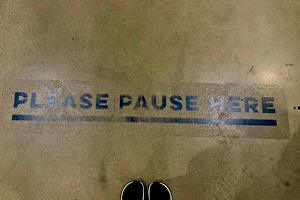
I do think, though, that the practice that comes from this theory that advises us to pause, to step back, and to notice when our reactions to things are so bound in previous limited experience or expectation or dogmatic teaching that we’ve created unnecessary constrictions and suffering.
What appears to be caught or bound or stuck might not necessarily be so.